
Where Are Stomata Located on Snake Plant Leaves?
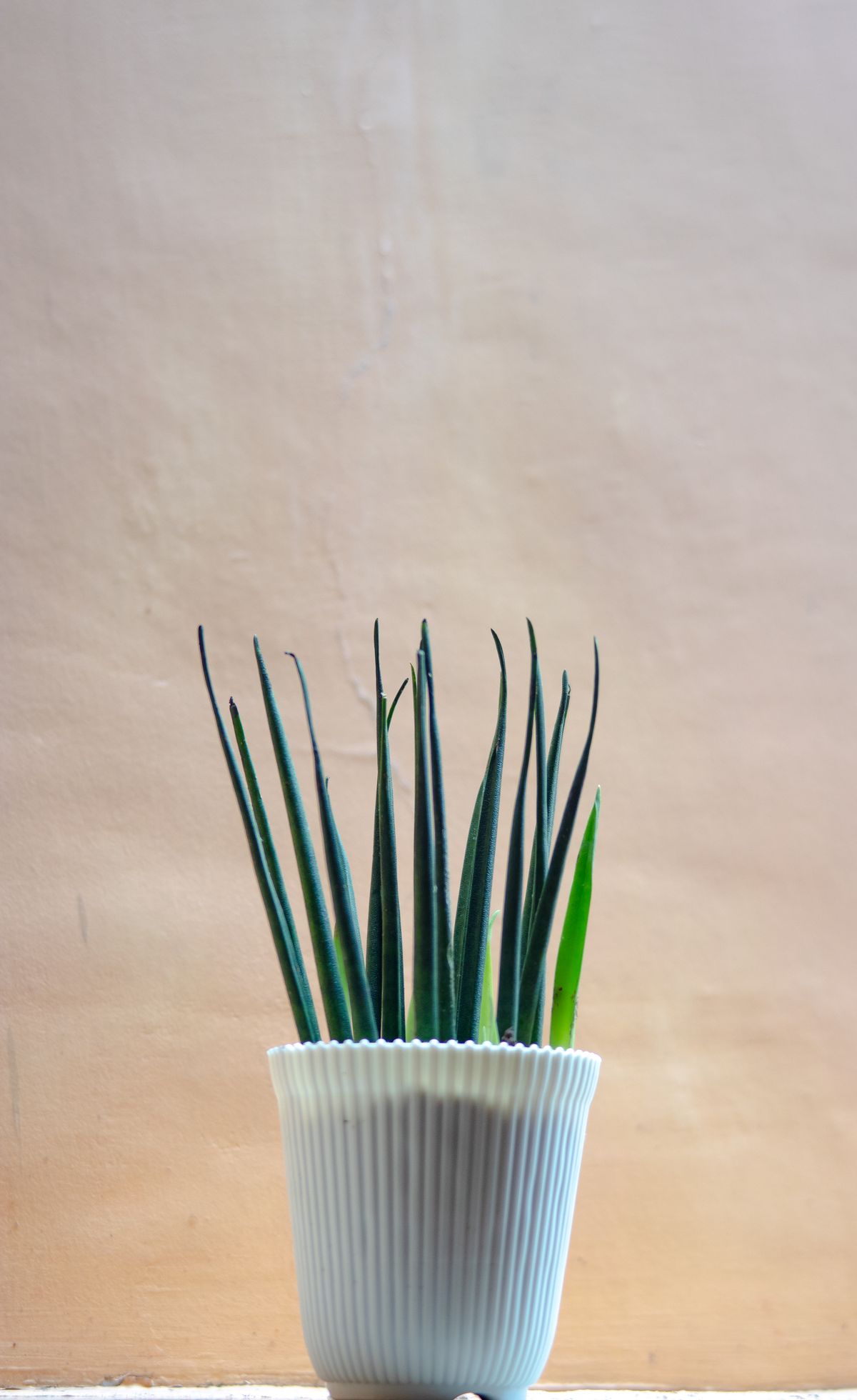
Snake plant stomata sit on both leaf surfaces in most common flat-leaved cultivars like Laurentii, sunk into shallow grooves for water conservation. Cylindrical species such as Sansevieria cylindrica place stomata only on the lower surface instead, distributed around the leaf's rounded circumference. The difference comes down to leaf shape: a flat leaf has a clear top and bottom to distribute stomata across, while a cylindrical leaf does not work the same way.
Most general plant-anatomy explanations assume every leaf has a simple top-and-bottom stomata arrangement. Snake plants are a genuinely useful case for seeing why that assumption does not hold across an entire genus. (For how stomata fit into the leaf's other tissue layers, the Snake Plant Leaf Cross-Section guide maps the full structure; this article goes deeper on stomata location specifically.)
Where Are Stomata Located on Snake Plant Leaves, Species by Species?
The honest answer depends on which kind of snake plant you are looking at, because the genus is not uniform here. Flat-leaved cultivars — Laurentii, standard Dracaena trifasciata, and most of what is commonly sold — are amphistomatic, carrying stomata on both the upper and lower leaf surfaces. Several cylindrical species, including Sansevieria cylindrica, S. canaliculata, and S. suffruticosa, are hypostomatic instead, restricting stomata to the lower surface only. This is not a minor technicality. It reflects a real, documented structural split within the genus, and it means a blanket "stomata are on both sides" answer is only correct for part of the family tree.
Why Leaf Shape Changes Where Stomata Sit
Here is the logic behind that split, and it is more intuitive than it first sounds. A flat leaf has two genuinely distinct faces — an upper and a lower surface, each exposed to a different amount of direct light and airflow — so it makes functional sense to place gas-exchange machinery on both. A cylindrical or channel-shaped leaf does not have that same clean two-sided geometry. Its entire surface curves around a single continuous circumference, exposed to light and air from every angle roughly equally as the plant grows upright, rather than one persistently sun-facing side and one persistently shaded side. For a hypostomatic cylindrical species, concentrating stomata on the more sheltered side of that circumference — generally correlating with what would be the "lower" surface if the leaf were flattened out — still achieves the water-conservation goal without needing to distribute the same density everywhere around the leaf.
How Many Stomata Are We Actually Talking About?
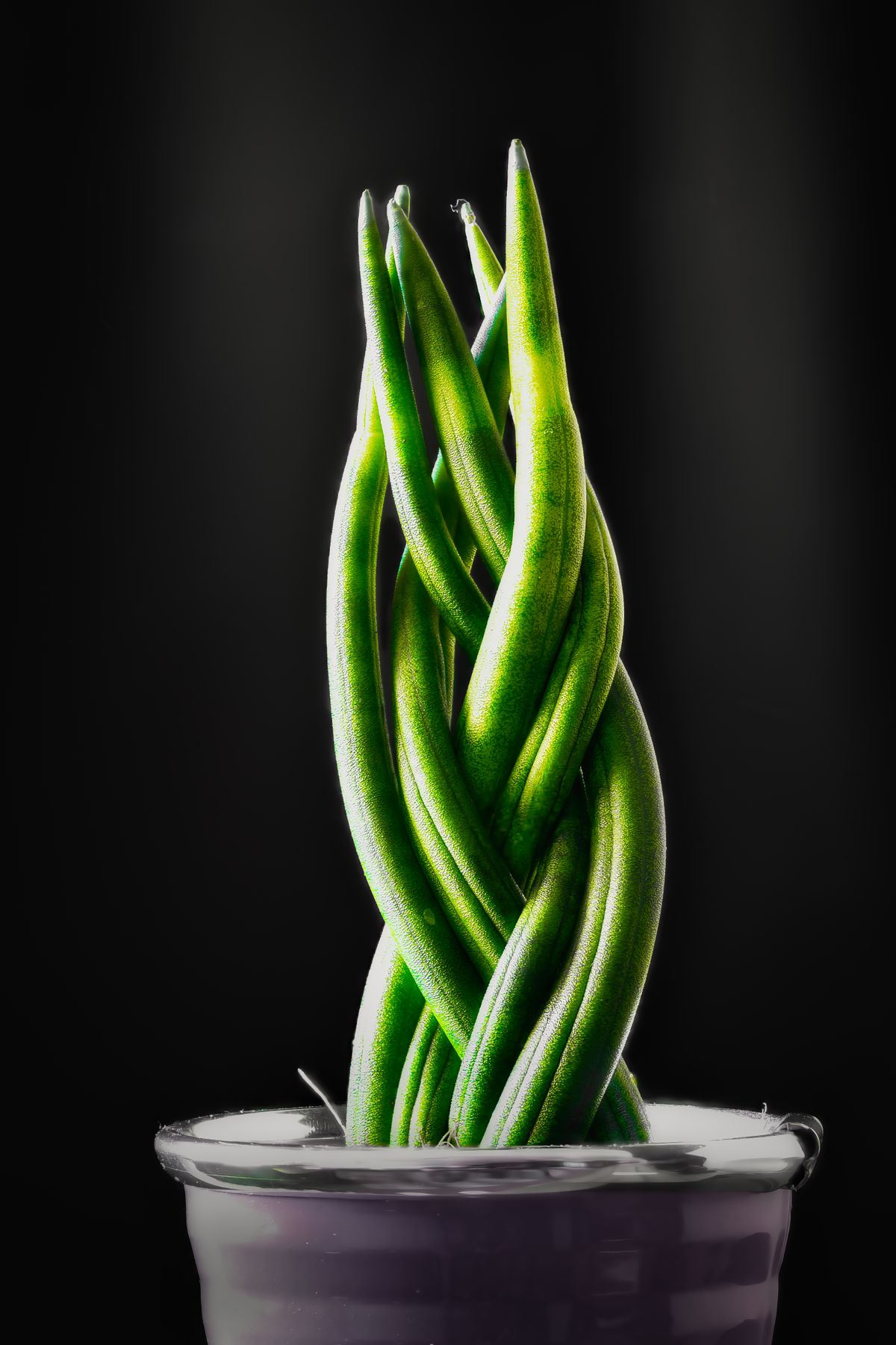
More than a casual glance suggests. Documented stomatal density on the lower leaf surface across different Sansevieria species ranges from roughly 9 to 27 per square millimeter — meaning a single square millimeter of leaf surface, an area smaller than this letter "o," can carry dozens of individual pores. Density is not uniform across the genus; it scales with species, leaf thickness, and shape, which is part of why a single number for "how many stomata does a snake plant have" does not really exist as a fixed fact.
Density is not a free choice, either — it is a genuine trade-off. More stomata per square millimeter means more potential capacity for gas exchange, but also more individual openings that can lose water vapor. Species and cultivars adapted to the driest, most exposed native habitats tend to sit toward the lower end of that 9-27 range, prioritizing water conservation over maximum gas-exchange throughput, consistent with the same drought-first priority that shows up in this plant's CAM photosynthesis and thick waxy cuticle.
Can You Actually See Stomata on a Snake Plant Leaf?
Not with the naked eye, and this is worth clarifying because people sometimes mistake other visible leaf features for stomata. Individual stomata are far too small to resolve without at least a hand lens or a basic microscope — the small dots, flecks, or slightly rough patches sometimes visible on a leaf surface are usually mineral deposits, healed insect damage, or normal surface texture, not stomata themselves. If you want to actually see them, a simple trick used in plant biology labs works here too: press a thin layer of clear nail polish onto the leaf surface, peel it off once dry, and examine the impression under a microscope — the stomatal outlines transfer cleanly onto the peeled film.
Why Are They Sunk Into Grooves Instead of Sitting Flush?
This detail applies across the genus regardless of which surface the stomata occupy. Sunken stomata sit inside shallow pits rather than flush with the leaf surface, an arrangement that traps a small pocket of still, humid air directly over each pore. UBC's plant biology lab materials on xerophyte adaptations describe this same principle in other drought-adapted plants: the recessed position reduces the concentration gradient driving water vapor loss and shields the opening from drying air currents that would otherwise pull moisture out faster. This sunken placement works alongside the leaf's waxy cuticle rather than replacing it — two separate water-conservation strategies operating at the same time, on the same surface.
An Unexpected Angle: Stomata and Chromosome Count
This is a genuinely unusual research thread worth mentioning, since it rarely comes up outside specialist literature. Research positioning Sansevieria as a model genetic organism has explored a possible correlation between stomatal number and chromosome count across several species, with documented diploid chromosome numbers ranging from 36 to 42 depending on species. The researchers note this connection needs further quantification before it counts as settled, but the underlying idea — that a visible surface feature like stomatal density might track with genetic differences between species — is a reminder that this "simple" houseplant has attracted real cytogenetic research interest.
Does This Actually Change How You Care for the Plant?
In one practical way, yes. Since stomata sit on both surfaces in most common cultivars, dust accumulating on the underside of a leaf interferes with gas exchange there just as much as dust on the more visible top surface — even though almost nobody wipes the underside of a snake plant leaf in practice.
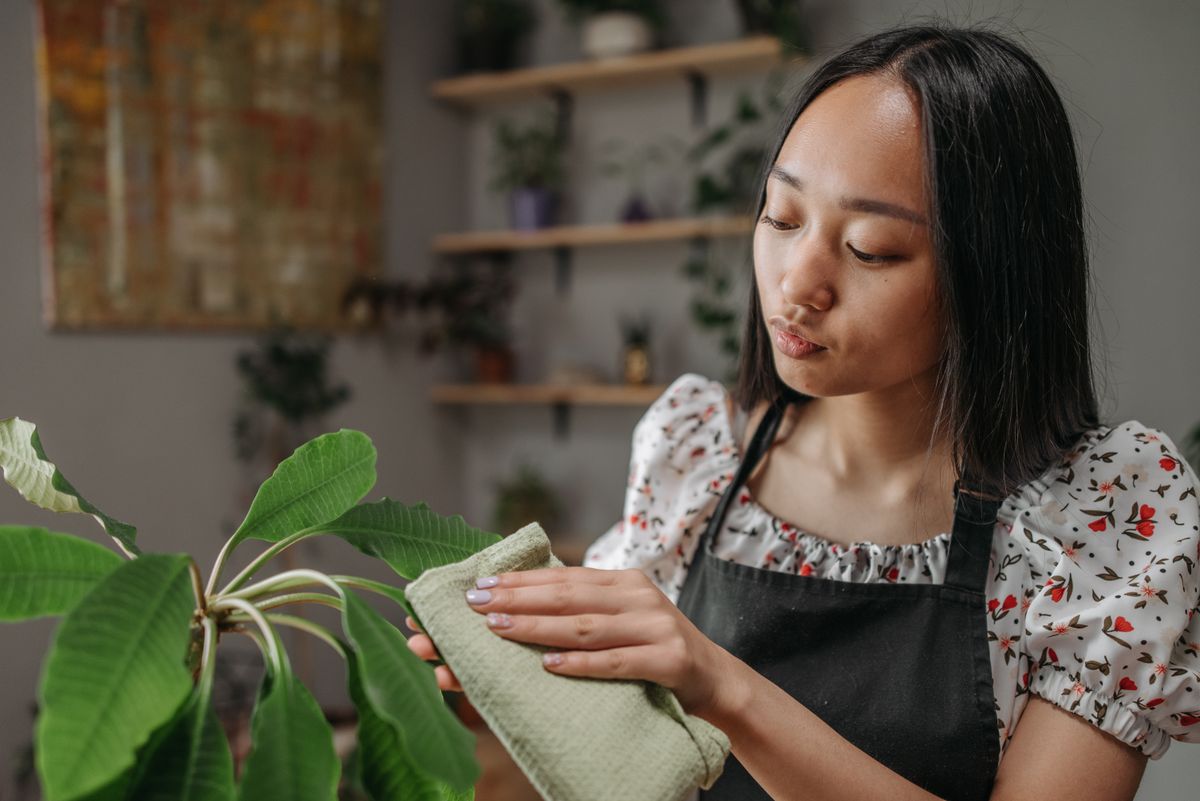
Wiping both sides of the leaves occasionally, not just the top, keeps both sets of stomata functioning as intended — a small, easy adjustment to a habit most people already do for one side only.
For the complete species picture and how this fits into the plant's overall drought biology, the Sansevieria Plant Botanical Guide, the Sansevieria Trifasciata guide, and the Sansevieria Adaptations guide cover it in full.
Next time you clean your snake plant's leaves, flip one over and wipe the underside too — if it is a flat-leaved cultivar, that surface is doing exactly as much gas-exchange work as the side you usually remember.
Care FAQ
Where are stomata located on snake plant leaves?
On flat-leaved cultivars like Laurentii and standard Dracaena trifasciata, stomata sit on both the upper and lower leaf surfaces, sunk into shallow grooves. On cylindrical species such as Sansevieria cylindrica and S. canaliculata, stomata are confined to the lower (abaxial) surface only, distributed around the leaf's rounded, grooved circumference.
Do all snake plant species have stomata on both sides of the leaf?
No. Most flat-leaved species and cultivars are amphistomatic, with stomata on both surfaces. Several cylindrical species, including S. cylindrica, S. canaliculata, and S. suffruticosa, are hypostomatic, with stomata restricted to one surface. The distinction tracks leaf shape rather than being universal across the genus.
How many stomata does a snake plant leaf have?
Density varies by species, with documented ranges of roughly 9 to 27 stomata per square millimeter on the lower leaf surface across different Sansevieria species. There is no single figure for the whole genus, since leaf thickness, shape, and species all affect the count.
Why are snake plant stomata sunk into grooves instead of sitting flat?
Sunken stomata trap a small pocket of still, humid air directly over the pore, reducing the concentration gradient that drives water vapor loss and shielding the opening from drying air currents. This is a common xerophytic adaptation, also seen in other drought-tolerant plants, and it works alongside the leaf's waxy cuticle rather than replacing it.
Does dusting a snake plant's leaves actually matter for its stomata?
Yes, and it matters on both surfaces for flat-leaved cultivars, not just the visible top. Since stomata sit on both sides in most common varieties, dust building up on the underside can interfere with gas exchange there just as much as dust on top, even though the underside is rarely wiped in practice.
Are snake plant stomata a normal type, or something unusual?
Structurally they are anomocytic — surrounded by ordinary epidermal cells arranged irregularly, rather than the specialized guard-cell patterns seen in some other plant families. What is unusual is their density and sunken placement, both consistent with a plant built for minimizing water loss rather than maximizing gas exchange speed.