Adaptations of Sansevieria in Dry Environments
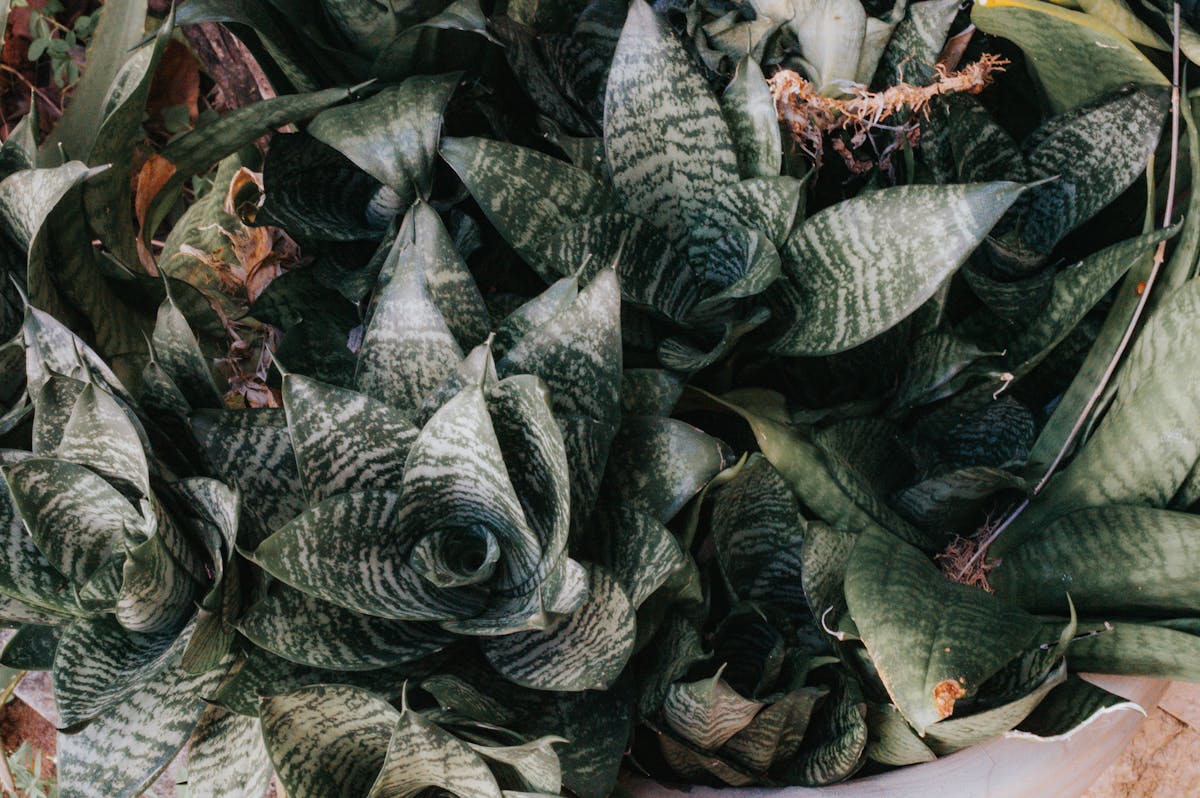
Sansevieria can go weeks without water because it has specific physiological adaptations for surviving dry conditions — not because it is forgiving of neglect, but because drought is what it evolved for. Five distinct mechanisms work together to let this plant outlast conditions that would kill almost anything else in your home.
Understanding those mechanisms is not just botany. It is the shortest path to understanding why every care rule for this plant is what it is.
TL;DR: Sansevieria is a true xerophyte with five key drought adaptations: CAM photosynthesis (night-only stomata opening), a thick waxy cuticle, hypodermal water-storage tissue in the leaves, an underground rhizome that stores both water and carbohydrates, and leaf geometry that minimises heat and moisture loss. Together they make it 3–6 times more water-efficient than a standard houseplant.
What It Means for a Plant to Be Drought-Adapted
A drought-adapted plant — technically a xerophyte — is not simply a plant that can handle being underwatered occasionally. It is a plant whose entire physiology is oriented around conserving, storing, and efficiently using water in an environment where water is reliably scarce.
Sansevieria is native to tropical West Africa, where it grows on rocky, fast-draining soil through a climate with a defined wet season of roughly 4–6 months and a dry season of equal length with close to zero rainfall. The plant did not evolve to tolerate the occasional missed watering. It evolved to go without water for half the year as a normal annual event. The full picture of that native environment is covered in the Sansevieria Habitat guide.
The adaptations that came out of that history are structural, chemical, and metabolic. None of them is incidental. Each one is doing a specific job in a specific part of the water-conservation system.
CAM Photosynthesis: The Night-Breathing Strategy
This is the most important adaptation, and the one most plant guides mention without explaining properly. Most plants open their stomata during the day to absorb CO₂ — but in a hot, dry climate, every open pore also lets water vapour escape. Sansevieria avoids that tradeoff with Crassulacean Acid Metabolism (CAM): stomata open only at night, when temperatures are lower and evaporative demand drops, absorbing CO₂ and storing it as malic acid. During the day, stomata stay shut while that stored acid fuels photosynthesis — no gas exchange, no water loss.
Research shows CAM plants achieve 3–6 times better water-use efficiency than standard C3 plants — at the cost of slower growth, since daytime photosynthesis with stomata open is inherently faster than the CAM night-storage system. The full night/day cycle and the CAM-idling survival mode are covered in the CAM Photosynthesis guide.
The Waxy Cuticle: The First Line of Defence
Even with stomata closed, water can still escape through the leaf surface directly — a process called cuticular transpiration. In most plants this is a minor factor. In arid-adapted plants, controlling it matters.
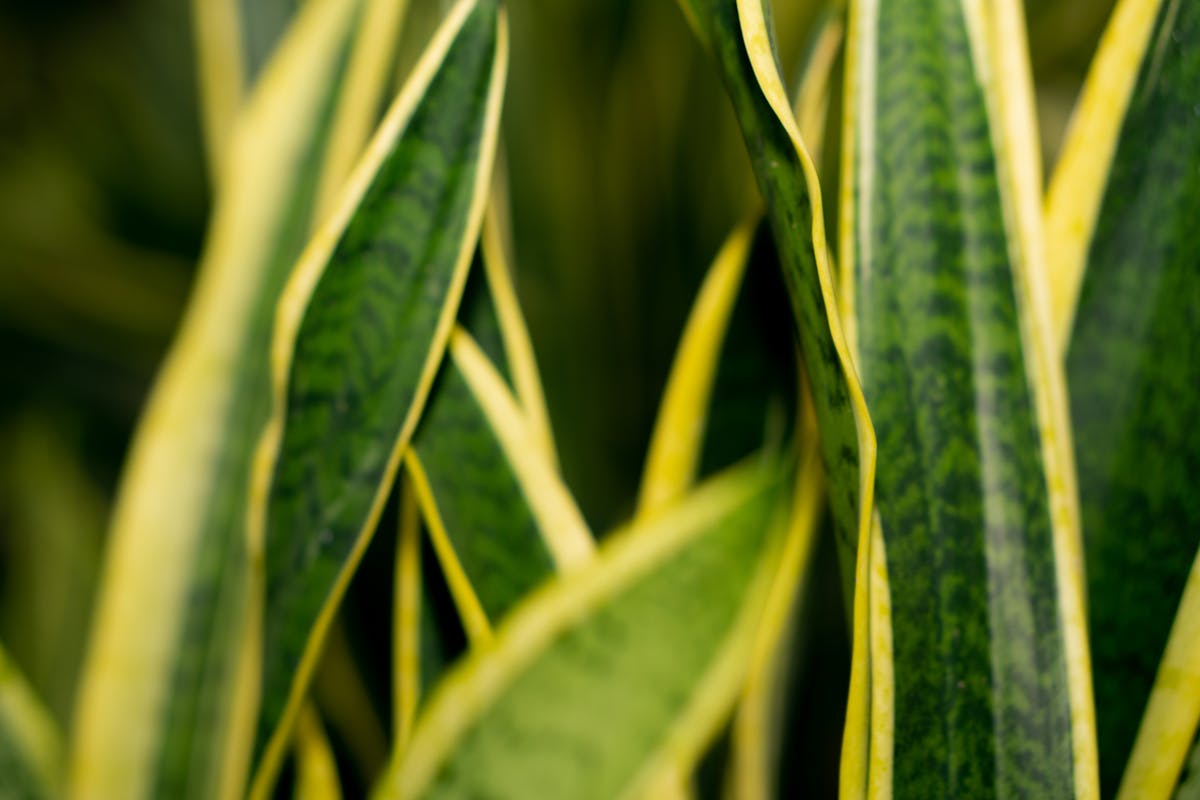
Sansevieria leaves are coated in a thick layer of wax — the cuticle — that sits on top of the epidermal cells and dramatically reduces direct water loss through the leaf surface. This is the waxy sheen visible on healthy leaves and the reason the surface feels almost polished when you run a finger across it.
The cuticle does not eliminate transpiration entirely. But combined with closed daytime stomata, it makes the total water loss rate of the leaf extremely low compared to a typical broadleaf plant. This is the practical reason sansevieria handles low indoor humidity, central heating, and air conditioning so much better than most other houseplants — conditions that would stress plants relying on stomatal regulation alone. Water retention is only one of this layer's jobs — the Snake Plant Waxy Cuticle guide covers its UV-filtering and pathogen-defense functions as well.
A maintenance note from this: the cuticle can be blocked by dust, which reduces its function and also impairs light absorption. Wiping leaves with a damp cloth once every few weeks is not cosmetic. It keeps both the cuticle and the leaf surface functioning correctly.
Thick Leaves as Water Reservoirs
A sansevieria leaf is not just a flat panel for capturing sunlight. Beneath the waxy outer surface is a layer of specialised hypodermal water-storage tissue — cells packed with water, held behind the cuticle, available for the plant to draw down when external water is not available.
This is why the leaves feel firm and slightly heavy: they are genuinely holding water. The turgor pressure in these cells is what keeps the leaves upright without a woody support structure.
When the reservoir is depleted, the leaves give you a visible signal. They start to wrinkle slightly, often at the base first, and may begin to curl inward. This is not disease. It is the leaf tissue losing water pressure as the reserves drain. Water the plant thoroughly when you see this, and allow the water to drain completely. Improvement — the leaves firming back up — typically appears within 2–3 days. (Yes, that quickly. The storage cells refill fast once water is available.) The Snake Plant Leaves Curling Inward guide covers the curling response specifically — why it happens, how it differs from wrinkling, and whether a curled leaf ever flattens out again.
The leaf reservoir is a short-to-medium term buffer. It handles dry spells of a few weeks without issue. For longer dry periods — the months-long dry season in the wild — the plant draws on a deeper reserve.
The Rhizome: Underground Emergency Storage
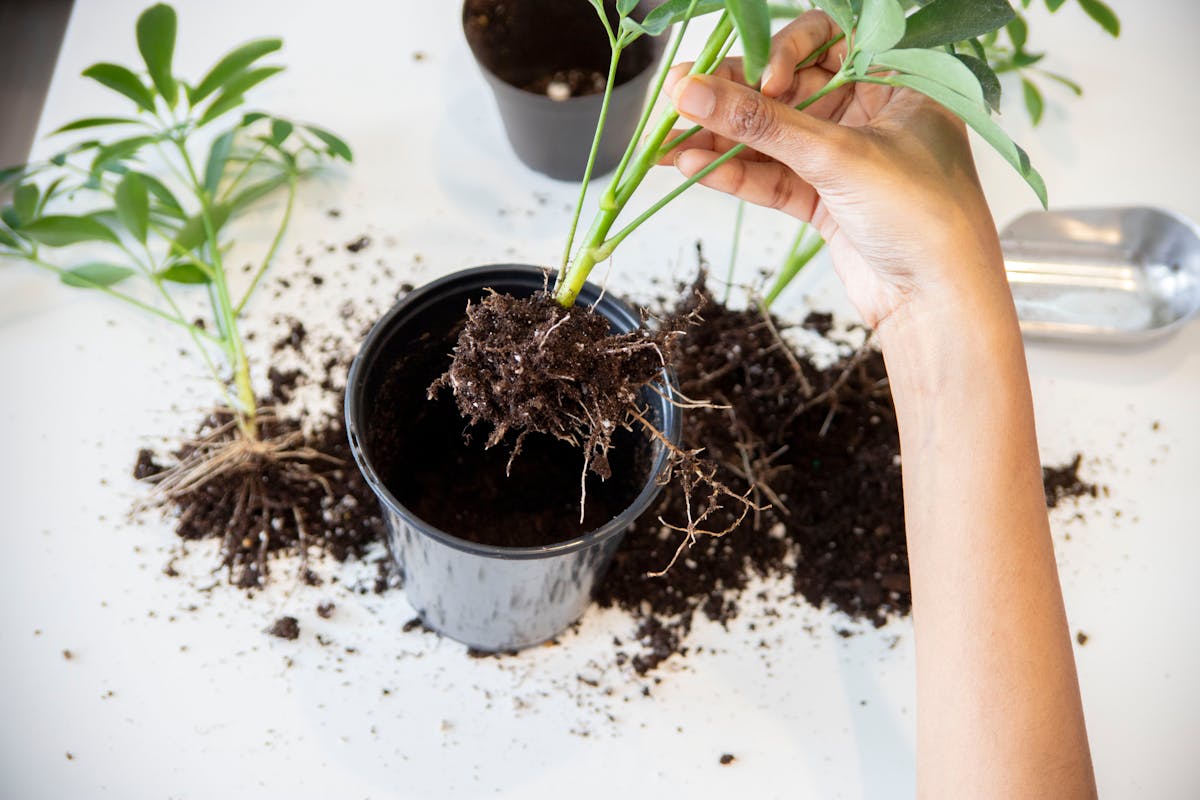
Below ground, sansevieria grows from horizontal underground stems called rhizomes. Most people know the rhizome as the spreading mechanism — the reason the plant produces new clusters around its base and can crack plastic pots over time. But the rhizome is also a significant storage organ.
Rhizomes accumulate both water and carbohydrates. During the wet season — or during a period of consistent watering indoors — the rhizome fills up. During the dry season — or during the extended period you forgot to water the plant — it draws down those reserves to keep the above-ground growth alive.
This is the mechanism behind the stories of sansevieria surviving extreme neglect. A plant that looks half-dead with wrinkled leaves and dry soil may still have a functioning rhizome with months of reserves. I have heard from readers who assumed their plant was dead after six weeks of being ignored, only to find it recovering fully within a week of watering. The rhizome had been maintaining the plant quietly the entire time.
One practical consequence: root-bound is not a problem for this plant the way it is for others. The rhizome does not need extensive soil to function. Sansevieria actively does better slightly root-bound — repot every 2–3 years only, and only when roots are visibly escaping the drainage holes. More soil means more moisture retained around roots that are not actively using it. That is how root rot starts.
The Sansevieria Morphology guide covers the full structural picture — rhizome architecture, root anatomy, and internal leaf organisation.
Leaf Geometry and Structural Fibre
This is the adaptation most guides miss entirely, and I think it is one of the more interesting ones.
Most plants maintain leaf rigidity through turgor pressure — the water pressure inside leaf cells pushing outward against the cell walls. When a plant wilts, it is losing turgor pressure: the cells are low on water and can no longer hold the leaf upright. The leaf flops.
Sansevieria does not rely primarily on turgor for rigidity. The leaves contain dense structural fibres — cellulose bundles running the full length of the leaf — that hold the leaf upright regardless of internal water pressure. This is the same fibrous tissue historically extracted to make rope, bowstrings, and woven textiles across West Africa (the source of the common name "viper's bowstring hemp").
The significance for drought adaptation is direct: the plant does not wilt in the conventional sense. It can sustain substantial water deficit without the visible collapse that signals distress in most plants. A sansevieria that is genuinely water-stressed does not go limp — it wrinkles. That is a much later and more gradual signal, which means the plant can endure longer periods of water deficit before showing visible damage.
Cylindrical leaf forms — like those in Dracaena angolensis (formerly Sansevieria cylindrica) — take this geometry further. A cylinder has a lower surface-area-to-volume ratio than a flat blade, reducing the amount of leaf surface exposed to hot, dry air relative to the volume of water-storage tissue inside. This is the same strategy cacti use. The engineering is convergent.
Sansevieria, Agave, and Convergent Adaptation
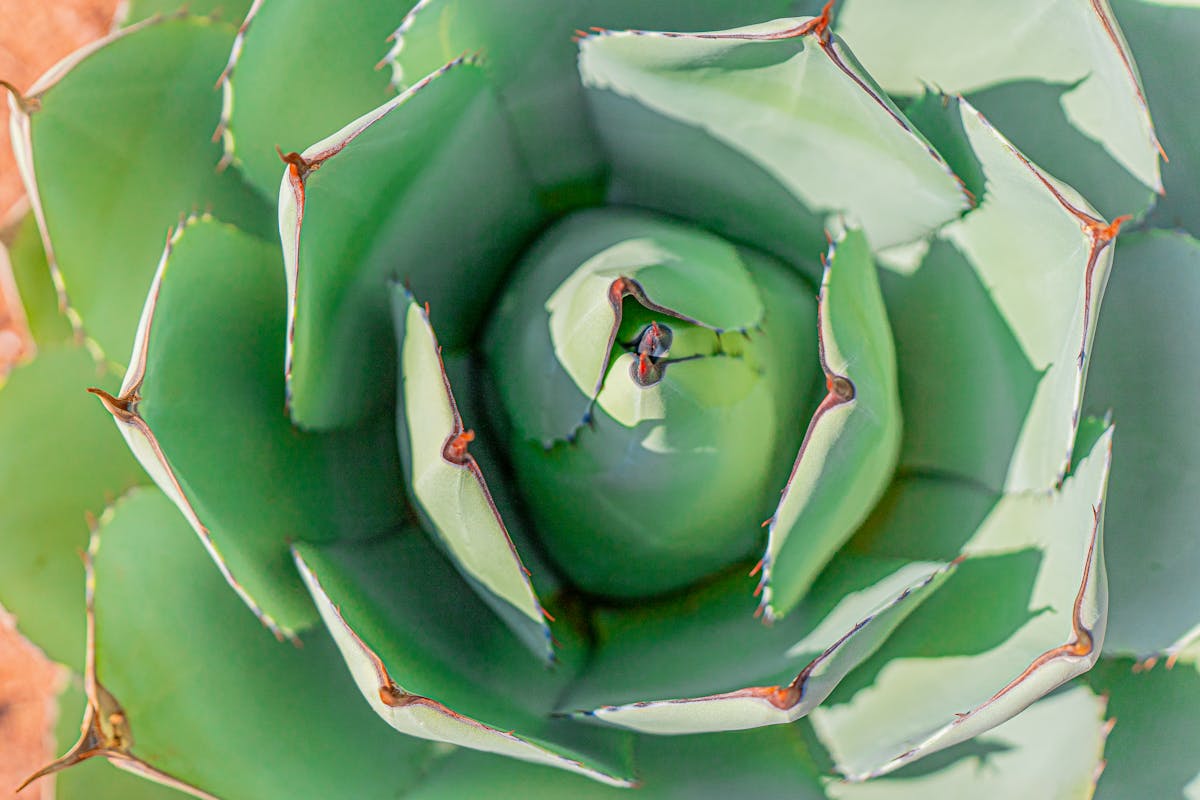
Sansevieria is not the only plant to have arrived at these solutions. Agave, aloe, and yucca are not related to sansevieria — they evolved on different continents from different plant lineages — but they share a striking set of adaptations: thick succulent leaves, waxy cuticles, CAM photosynthesis, fibrous leaf structure, and underground storage organs.
This is convergent evolution. When different organisms face the same environmental problem and have enough generations to adapt, they often arrive at similar solutions independently. The dry-environment problem has one set of physics regardless of which continent you are on: high temperatures, limited water, the constant threat of desiccation. The plants that survived developed the same toolkit.
The practical lesson from this is that sansevieria's adaptations are not quirks. They are tried-and-tested solutions to a real physical challenge, refined over millions of years in the same conditions that shaped agave in Mexico and aloe in South Africa. When you understand that, the care rules stop feeling arbitrary. They are just the indoor translation of the same constraints that produced the plant in the first place.
The RHS growing guide for sansevieria at rhs.org.uk/plants/sansevieria/growing-guide is worth reading for a concise summary of how these adaptations translate to cultivation requirements.
What These Adaptations Mean for How You Water
Every care rule for sansevieria follows from one of the five adaptations above. None of it is arbitrary.
Water every 2–6 weeks, not weekly. The leaf reservoir, rhizome storage, and CAM system are built to carry the plant through extended dry periods. Weekly watering does not give any of those systems a chance to operate — it keeps the root zone in a state of sustained moisture the plant was never designed for, and that sustained moisture is where root rot starts.
Check the soil before every watering. Push your finger two inches in. Any moisture at all means the plant is still drawing from its most recent watering. Come back in a week. The CAM system and leaf reserves are handling things.
Use fast-draining soil. The adaptations work together, not in isolation. The waxy cuticle and CAM system conserve water in the plant. The well-draining soil prevents water from sitting around the roots between waterings. Remove the drainage and the conservation mechanisms cannot protect the root system from what sits outside them.
Do not mist. The CAM system opens stomata at night at naturally lower humidity. Artificially raising humidity during the day does not help the plant's photosynthesis and adds moisture around the leaves and crown that can encourage fungal problems. The plant handles low humidity — that is an adaptation, not a weakness.
One reader I heard from had kept a sansevieria on her office desk for eleven years — watered when she remembered, sometimes every six weeks, never fertilised, never in direct sun. It was still alive. That is not luck. That is what five co-evolved drought adaptations look like in practice.
Before you water next, check the soil. Two inches down. If there is any moisture at all, close the watering can and come back next week. The plant's reserves — leaf, rhizome, and the chemistry running through both — have things handled until then.
Care FAQ
Is sansevieria a xerophyte?
Yes. Sansevieria is a xerophyte — a plant physiologically adapted for survival in dry environments. Its xerophytic adaptations include CAM photosynthesis, a thick waxy cuticle, hypodermal water-storage tissue in the leaves, and an underground rhizome that stores water and carbohydrates. These traits evolved in the plant native West African habitat, where dry seasons last 5–6 months.
How does CAM photosynthesis help sansevieria survive drought?
CAM photosynthesis allows sansevieria to open its stomata only at night, when temperatures are lower and evaporative demand is reduced. CO₂ absorbed at night is stored as malic acid and used for photosynthesis during the day, with stomata closed. This makes the plant 3–6 times more water-efficient than standard C3 plants and is the primary mechanism behind its drought tolerance.
Why are sansevieria leaves so thick?
The thickness comes from hypodermal water-storage tissue — a layer of water-holding cells just beneath the leaf outer surface. This acts as an internal reservoir the plant draws on during dry periods. The leaves feel firm and heavy because they are holding water. When severely underwatered, the leaves wrinkle and curl as this reservoir depletes — improvement appears within 2–3 days of watering.
What is the waxy coating on sansevieria leaves for?
The thick waxy cuticle dramatically reduces water loss through the leaf epidermis — separate from stomatal water loss. Combined with closed daytime stomata, it makes the plant exceptionally efficient at retaining water. This is why sansevieria tolerates low humidity that would stress most other houseplants.
Can sansevieria survive without water for months?
Yes. In its native West African habitat, sansevieria survives dry seasons of 5–6 months without rainfall. Indoors, a healthy plant in a cool room can go 6–8 weeks or more without water without damage. The exact limit depends on pot size, temperature, and light — but the combined reserves in leaves and rhizome give it drought tolerance no standard houseplant can match.