
Morphology of Sansevieria Plants
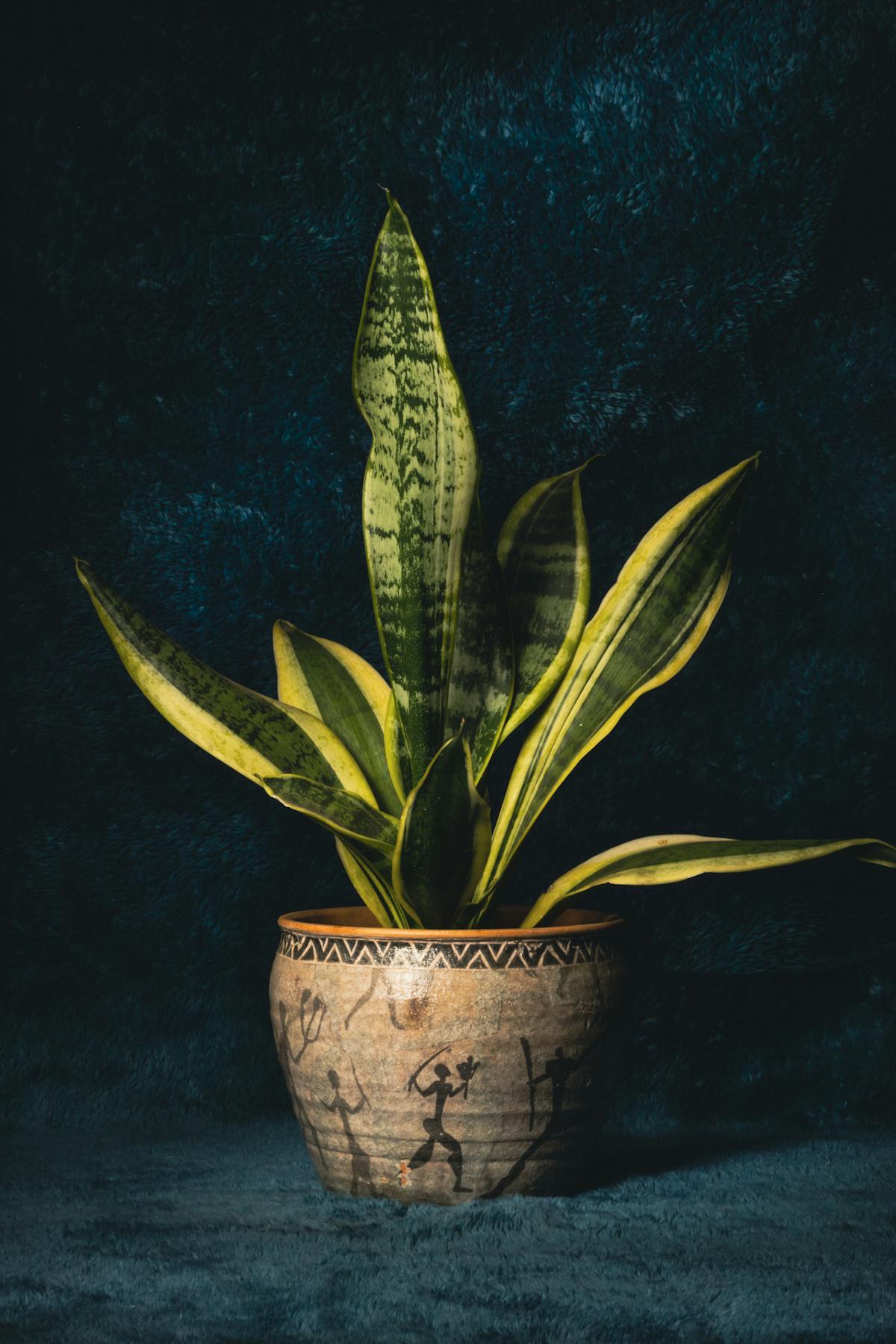
Sansevieria (Dracaena trifasciata) is a stemless, evergreen, succulent perennial with sword-shaped leaves that grow directly from a horizontal underground rhizome. The leaves are coated in a thick waxy cuticle, carry internal water-storage tissue, and house dense structural fibres. Stomata open at night, not during the day. All of these features exist because the plant evolved in rocky, seasonally dry habitat in West Africa — and every care rule you have ever read about this plant traces back to that structure.
Most articles will tell you sansevieria "tolerates low light" and "hates overwatering." Both are true. What they skip is the reason — the specific physical architecture that makes this plant behave the way it does. Understanding sansevieria morphology does not require a botany degree. It requires knowing what the plant is actually made of, and why.
What Does 'Morphology' Mean for a Sansevieria?
Morphology is the study of a plant's physical form — what it looks like, how it is structured, and how its parts are arranged. For sansevieria, this covers the leaf shape and internal anatomy, the growth habit, the underground root and rhizome system, and the reproductive structures (flowers, fruit).
The short version: sansevieria morphology is the reason this plant can sit in a dimly lit corner for six weeks without water and still be alive when you remember it. Nothing about that survival is luck. It is structure.
Over 70 species formerly placed in the genus Sansevieria — now reclassified into Dracaena — show considerable variation in form. But they share the same core architecture: rosette-forming, rhizomatous, succulent-leaved, and built for drought. For the taxonomy behind that reclassification, the Sansevieria Classification guide covers the full picture from kingdom to species.
Two Leaf Types: Hard-Leaved and Soft-Leaved Species
All former Sansevieria species fall into one of two leaf categories, and knowing which one you have tells you a great deal about its care needs.
Hard-leaved species come from arid climates. Their leaves are thick, stiff, and succulent — designed to store water and resist moisture loss. In some species like Dracaena angolensis (formerly Sansevieria cylindrica), the leaves are cylindrical rather than flat, which reduces the exposed surface area. These plants are generally shorter, more compact, and more drought-tolerant even by sansevieria standards.
Soft-leaved species come from tropical and subtropical regions with more reliable rainfall. Their leaves are wider, strap-like, and thinner by comparison. They tolerate lower light better than the arid-climate species but are also somewhat more sensitive to cold.
Dracaena trifasciata — the common snake plant — sits firmly in the hard-leaved category. Its leaves are linear-lanceolate: long, flat, tapering to a sharp point. The horizontal dark and light green banding across the leaf surface is the pattern described in the species name: trifasciata means "three-banded" in Latin.
In the wild, plants can reach 2 metres tall. Indoors, most cultivated specimens stay under 1 metre — depending on variety, anywhere from 6–8 inches for the compact Bird's Nest (D. trifasciata 'Hahnii') to 3–4 feet for the common Laurentii.
Leaf Anatomy Up Close: Cuticle, Fibres, and Water Storage

Cutting a sansevieria leaf in cross-section reveals a specific layered structure — each component doing a distinct job.
The cuticle is the outermost layer. It is thick, waxy, and continuous across the leaf surface. Its job is straightforward: block uncontrolled water vapour from escaping through the leaf. In most sansevieria species, the abaxial (lower) cuticle is noticeably thicker than the upper surface — particularly pronounced in hard-leaved species like D. angolensis and D. cylindrica. Species from drier habitats have heavier cuticle deposits. You can feel this if you run a finger across a snake plant leaf — it is not just smooth; it has a subtle waxy resistance that a philodendron leaf does not.
Water-storage tissue (hypodermal parenchyma) sits just beneath the epidermis. These cells do not photosynthesize — they hold water. When soil moisture runs out, the plant draws on this internal reservoir. This is why a snake plant can look perfectly fine for several weeks after the soil has dried completely: it is running on stored leaf water, not soil water.
Structural fibres run lengthwise through the leaf. Dense, thick-walled cells that give the leaves their characteristic stiffness. These fibres are strong enough to be useful — in parts of Africa, sansevieria leaf fibres have been used for centuries to make rope, yarn, mats, and bowstrings. This is the origin of one of the plant's common names: African bowstring hemp. The fibre quality comes directly from the same cell structure that makes the leaves stand upright without any mechanical support. It is also why a stressed leaf splits in a straight line rather than tearing randomly — the Why Do Snake Plant Leaves Split or Crack? guide covers that failure mode in detail.
Stomata are present on both leaf surfaces in most species (amphistomatic), though some species — including D. cylindrica — are hypostomatic, with stomata primarily on the lower surface. Either way, the stomata follow the same unusual schedule: closed during the day, open at night. This is CAM photosynthesis in action, covered in the next section.
Stomata and CAM Photosynthesis: Why the Night Schedule Matters

Most plants open their stomata during the day to take in CO₂. The problem in a hot, dry environment is that open stomata also let water vapour out. Every molecule of carbon dioxide absorbed costs water.
Sansevieria sidesteps this tradeoff using Crassulacean Acid Metabolism (CAM). At night, when temperatures are lower and the air less dry, stomata open and CO₂ is absorbed and stored as malic acid in leaf cells. During the day, stomata stay closed — conserving water — while the stored acid releases CO₂ internally for photosynthesis.
The practical result: this plant fixes carbon while using a fraction of the water a standard houseplant would. It is the metabolic basis for why sansevieria can go 2–6 weeks between waterings in spring and summer, and 4–8 weeks in winter, without stress.
It also explains the night-time oxygen release that makes snake plant a popular bedroom plant. Since stomata open at night and CO₂ is being absorbed, the byproduct oxygen is released nocturnally — the reverse of most houseplants. The NASA 1989 Clean Air Study documented this alongside the plant's air-filtering properties (formaldehyde, benzene, xylene). The night-time oxygen effect is genuine plant biology, not marketing — though in a ventilated room, the impact on air quality is modest.
The care implication is direct: permanent moisture at the root is incompatible with how this plant processes water. CAM photosynthesis evolved alongside a seasonal wet–dry rhythm. Constant soil moisture disrupts that rhythm and causes root rot long before the leaves show any visible symptoms. For a full breakdown of what the biology means for care, the Sansevieria Plant Botanical Guide covers the mechanisms in detail.
Growth Habit: Stemless, Clumping, Rosette-Forming
Sansevieria is effectively stemless. There is no central trunk, no woody support structure, no above-ground stem. What you see is leaves — emerging directly from the soil from underground rhizomes.
Leaves are typically arranged in a rosette around the growing point (apical meristem), though some species are distichous — arranged in two opposite ranks rather than a spiral. The common D. trifasciata grows in a fairly loose rosette, with leaves emerging from a central cluster rather than in a strict opposing pattern.
New growth appears from the base of existing clumps, not from a central growing tip the way a palm or agave grows. As the plant matures and the rhizome spreads, new rosettes form around the edges. This clumping habit is what gives mature snake plants their distinctive clustered appearance — multiple upright leaf groups filling the pot from the edges inward.
Because leaves emerge from the base rather than from a central stem, they cannot regenerate if damaged at the tip. A leaf that loses its tip stops growing from that point. The growing tissue is at the base, not the apex. (This is different from, say, a grass that regenerates from the base when grazed. Sansevieria leaves are determinate — once the tip is cut, that leaf ends there.)
Underground Architecture: Rhizomes and Root System
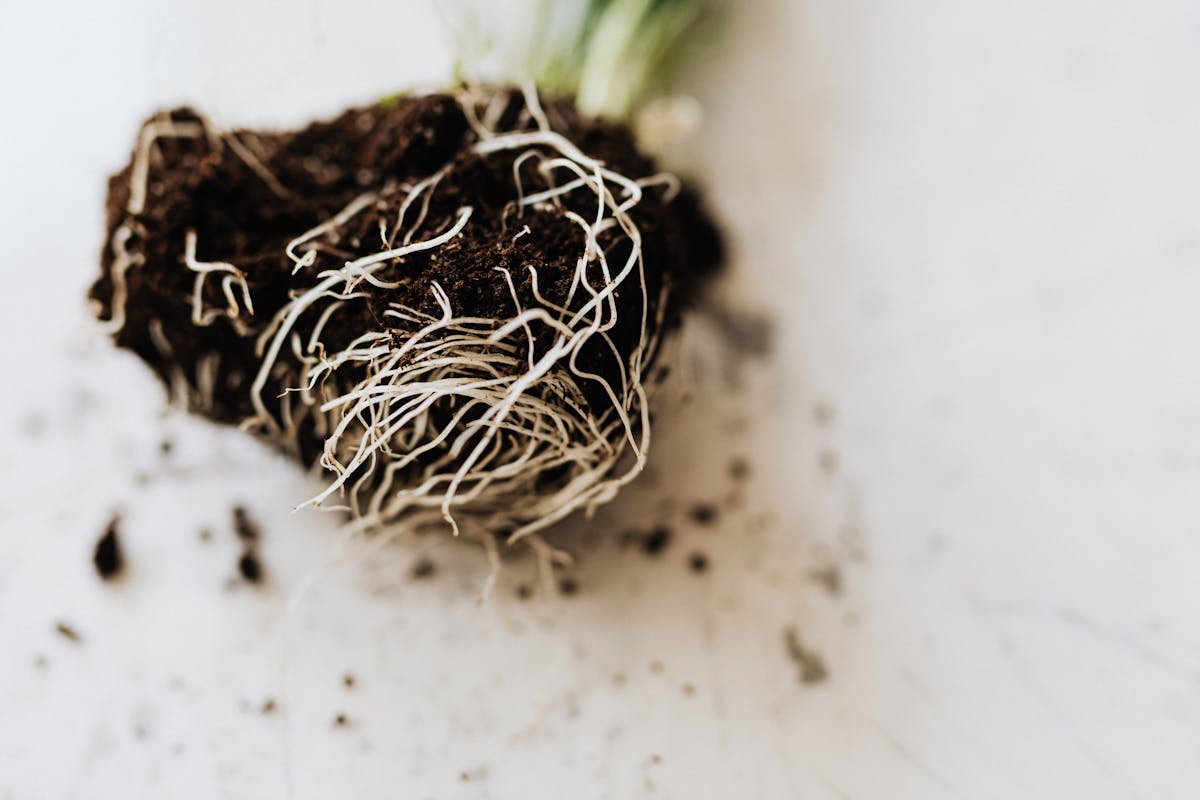
The real structure of this plant is underground. What runs the show is the rhizome — a horizontal, storage-rich stem that creeps through the soil, producing new leaf clusters and adventitious roots at intervals.
Rhizomes in sansevieria are thick, white or pale, and fleshy. They store carbohydrates and water. When you unpot a mature snake plant, the rhizomes typically fan out horizontally from the original planting point — which explains why a plant that looks modest above ground can have a surprisingly packed root system. It is also why the roots can crack plastic pots: the rhizome expands laterally with force.
Adventitious roots grow downward from the rhizome — anchoring the plant and absorbing water. These are not roots from a central taproot; they grow directly from stem tissue. This is why division works as a propagation method: each rhizome section already has its own roots attached and is an independent functional unit.
A colleague at a previous workplace had a snake plant on his desk for eleven years across three different offices. It was watered whenever someone remembered, never fertilized, repotted once. It is still alive. That kind of persistence does not come from the leaves — it comes from the rhizome holding energy in reserve underground, waiting out the neglect.
This underground architecture also explains why root-bound is fine for this plant. The rhizome system is designed for a contained architecture. Unlike many plants that become stressed when roots fill the pot, sansevieria tolerates — and often prefers — being slightly root-bound. Repot every 2–3 years, and only when roots are visibly escaping the drainage holes or beginning to crack the pot.
Flowers, Fruit, and Reproduction
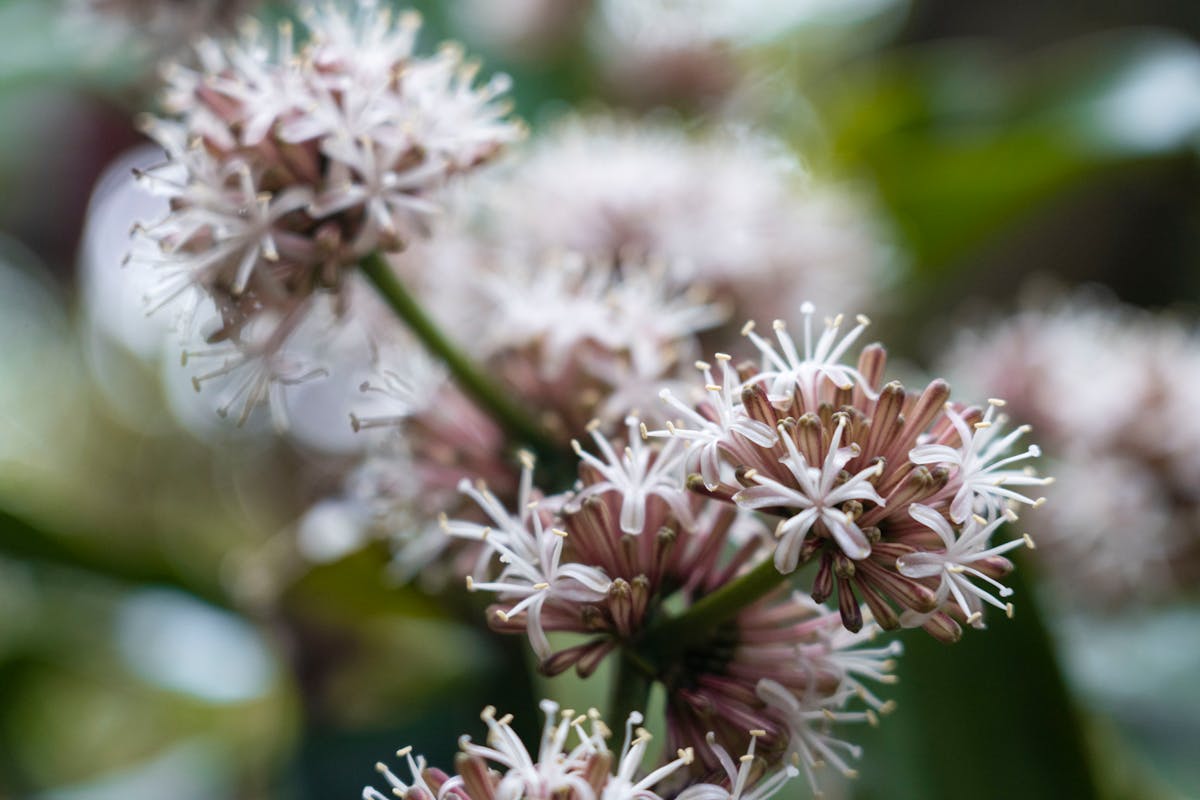
Sansevieria flowers are produced on a vertical spike — a simple or branched raceme — that grows up from the base of the plant. The flowers are typically greenish-white, sometimes tinged rose or lilac-red, tubular, and strongly fragrant. The scent is most noticeable at night.
This is not coincidence. In its native range, the flowers are pollinated by moths and other night-flying insects. Pale colouring (visible in low light), intense fragrance (detectable over distance in darkness), and nocturnal opening — these are traits directly selected by night pollinators. The plant evolved its flower timing around the animals that use it.
After pollination, the plant produces small, orange or red berries. Sexual reproduction is rare and unreliable in cultivation — sansevieria produces few seeds and flowering itself is unpredictable. The plant's dominant reproductive strategy is vegetative spread via rhizomes.
There is one structural difference from agave that catches gardeners off-guard: in agave, flowering is terminal — the plant dies after producing its flower. Sansevieria does not die after flowering. The shoot that flowers ceases to produce new leaves, but the plant continues growing via its rhizome, producing new rosettes. One reader I heard from had owned her plant for over a decade before a tall spike appeared one warm summer. It has never flowered again. That is entirely normal — the rhizome kept growing long after the flowering event.
If your own plant has just sent up a spike and you're wondering whether that's normal, the Why Is My Snake Plant Flowering? guide covers the specific triggers — maturity, root-bound conditions, and light — behind an unexpected bloom.
How Morphology Varies Across Species
The Plants of the World Online database at Kew Science lists over 70 former Sansevieria species, now all placed in Dracaena. The morphological variation is considerable:
- Dracaena trifasciata — the standard form. Flat, sword-shaped leaves 30–120 cm long, dark green horizontal banding, stiff upright posture. The plant most people mean when they say "snake plant."
- D. trifasciata 'Laurentii' — identical structure to the species, plus a yellow-gold marginal stripe that runs the length of each leaf. The stripe is a chimaeric characteristic in the outer cell layer — not heritable through leaf cuttings, which is why propagating Laurentii by leaf cutting produces plain green offspring.
- D. trifasciata 'Hahnii' — the Bird's Nest form. Leaves are shorter and curve inward, forming a low rosette 6–8 inches tall rather than growing upright. The internal anatomy is identical; the growth direction is the only real difference.
- Dracaena angolensis (formerly Sansevieria cylindrica) — cylindrical leaves, not flat. Round in cross-section, tapering to a sharp tip, growing upright in a fan formation. The cylindrical form reduces exposed surface area — the same water-conservation logic taken to its extreme.
- D. trifasciata 'Moonshine' — pale silvery-green leaves, softer in colour than the standard form. Structurally identical; the difference is in chlorophyll distribution across the leaf.
Despite these variations in leaf shape, size, and markings, the core morphological features — rhizomatous base, succulent leaves with waxy cuticle, CAM photosynthesis, clumping rosette habit — are consistent across the group. The care requirements follow the same pattern regardless of variety.
What the Morphology Tells You About Care
Sansevieria morphology is not an academic topic. Every structural feature maps onto a specific care practice:
Waxy cuticle + water-storage tissue → water less. The plant carries its own drought buffer in the leaf itself. There is no urgency to the next watering. Check soil at least 2 inches deep before watering — if any moisture remains, wait. Water every 2–6 weeks in growing season; every 4–8 weeks in winter.
CAM photosynthesis → drainage matters biologically. Permanent root moisture is not just inconvenient — it disrupts the wet–dry metabolic rhythm the plant evolved for. Use a cactus or succulent mix, or a 1:1 blend of standard potting soil and perlite. Roots need oxygen between waterings.
Rhizome architecture → root-bound is fine. The rhizome spreads laterally and is designed for contained growth. Repot only when roots are visibly escaping drainage holes. Repotting into an oversized pot gives the extra soil time to stay wet, which is the most common cause of root rot in otherwise well-cared-for plants.
Leaf fibre structure → tips cannot regenerate. If a leaf tip is brown or damaged, trim it with clean scissors. The cut is cosmetic — the leaf will not grow back from the cut point. But trimming at an angle to mimic the original taper looks better and does not stress the plant.
Stemless growth from rhizome → propagate by division. The fastest and most reliable propagation for this plant is splitting the rhizome at the base. You get a rooted plant immediately. Leaf cuttings work but take 4–8 weeks to develop roots — and variegated forms like Laurentii will lose their colouring through cuttings. Division is always the first recommendation.
The RHS Sansevieria Plant Guide provides a practical species-by-species reference if you want to check the specific size and care parameters for a particular variety.
Every care recommendation for this plant is downstream of its structure. The watering schedule, the soil type, the repotting frequency, the propagation method — they all trace back to the rhizome, the cuticle, the CAM stomata, and the fibrous leaf that evolved in a place where rain was unreliable and drainage was built into the ground. Start with the simplest thing: push your finger two inches into the soil before you water next. If it is dry all the way down, water thoroughly. If not, come back in a week.
Care FAQ
What is the morphology of sansevieria?
Sansevieria is a stemless, evergreen, succulent perennial with sword-shaped or cylindrical leaves arranged in a rosette around a central growing point. It grows from horizontal underground rhizomes, carries water-storage tissue beneath a thick waxy cuticle, and uses CAM photosynthesis — opening stomata at night to minimise water loss. These structural features collectively explain its unusual drought tolerance.
What type of leaves does a snake plant have?
Snake plant leaves are typically linear-lanceolate (flat, sword-shaped) in most species, or cylindrical in species like Dracaena angolensis. All forms share a thick waxy cuticle, hypodermal water-storage tissue, and parallel venation typical of monocots. In hard-leaved species from arid climates, leaves are also stiffer, shorter, and more succulent.
Does sansevieria have a stem?
No. Sansevieria is effectively stemless — its leaves grow directly from an underground rhizome system. What appears to be a stem at the base of the plant is actually the tightly packed bases of the leaves. The true stem structure is the horizontal rhizome running beneath the soil.
How do sansevieria roots grow?
Sansevieria grows from horizontal underground rhizomes — storage stems that spread through the soil and produce new leaf clusters at intervals. From these rhizomes, adventitious roots grow downward to anchor the plant and absorb water. This system allows the plant to spread vegetatively and survive drought by drawing on underground reserves.
Why are sansevieria leaves so stiff?
The stiffness comes from dense fibrous tissue running through the leaf alongside water-storage cells and vascular bundles. This structural fibre is the same material historically used to make rope and bowstrings in Africa — which is the origin of the common name African bowstring hemp. The stiffness also helps the leaves stay upright without a woody support structure.
What is the growth habit of sansevieria?
Sansevieria has a clumping growth habit, forming rosettes of leaves that emerge from a spreading underground rhizome. New leaf clusters appear around the base of the plant as the rhizome spreads. The plant does not build a central trunk or woody stem — all upward growth comes directly from the rhizome.