
Natural Habitat of Sansevieria Plants
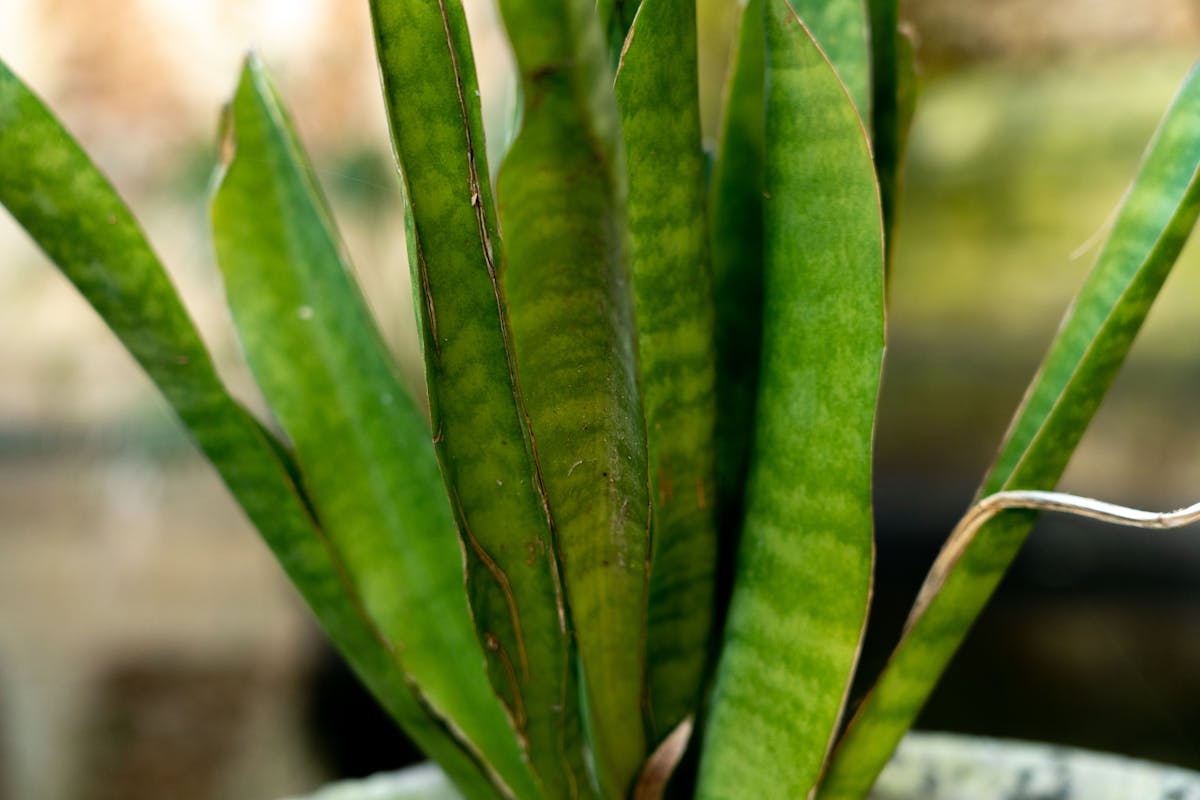
Sansevieria is native to tropical West Africa — rocky, seasonally dry terrain running from Nigeria east to the Democratic Republic of Congo. In the wild it grows on fast-draining stony soil, under open canopy or in full sun, through a climate with a long dry season and a short wet one. That is the habitat.
Every care rule you have ever read about this plant — water infrequently, use gritty soil, keep it warm, never let it sit in moisture — is a direct translation of what that native habitat looks like. Understanding where this plant comes from is the fastest way to understand why it behaves the way it does indoors.
TL;DR: Sansevieria habitat is tropical West and Central Africa — specifically rocky savanna and open woodland with a pronounced 5–6 month dry season. The most common species, Dracaena trifasciata, is native to Nigeria and the DRC. It grows in fast-draining, rocky ground and survives extended drought through CAM photosynthesis and water stored in its thick leaves and underground rhizomes.
Where Does Sansevieria Actually Come From?
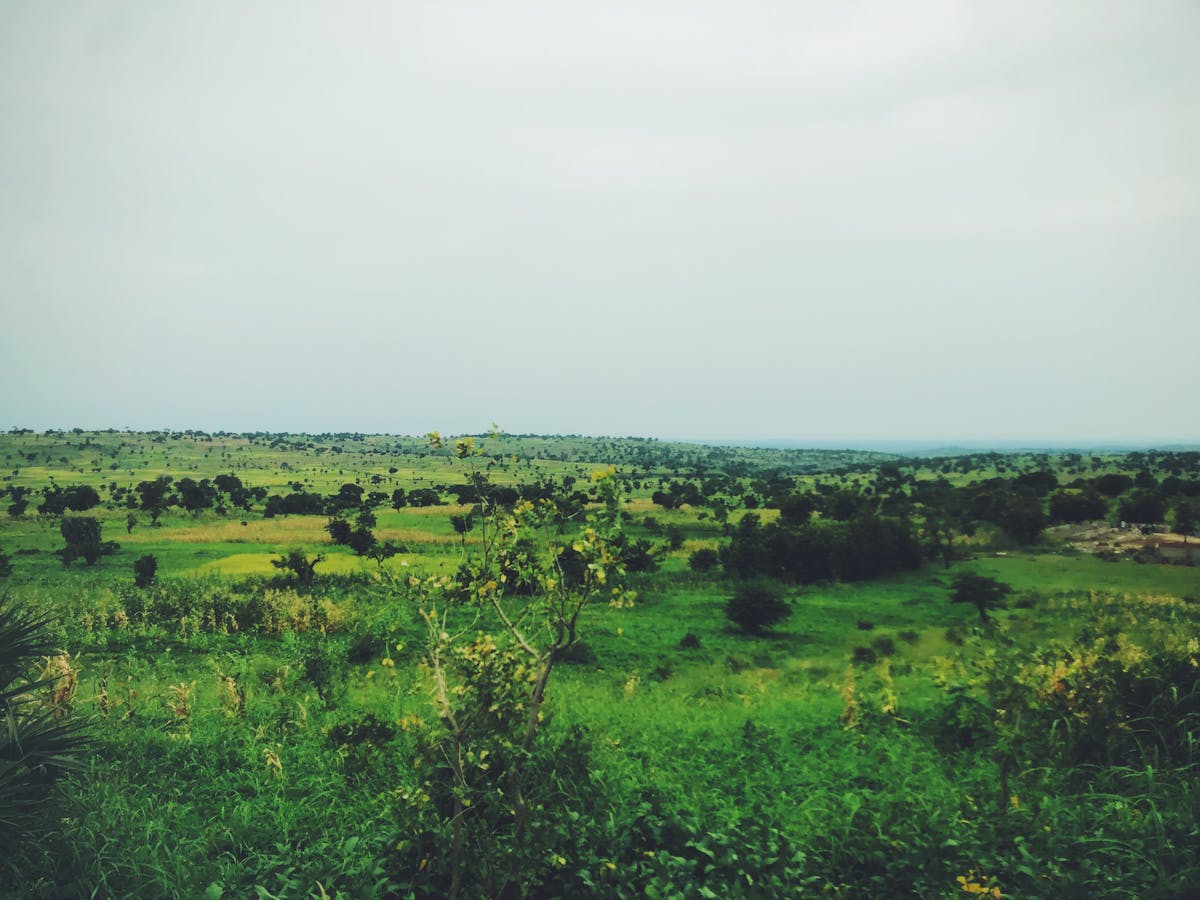
Dracaena trifasciata — the species sold in almost every garden centre under the name sansevieria or snake plant — is native to tropical West and Central Africa. The core native range covers Nigeria, the Democratic Republic of Congo, Gabon, Cameroon, Togo, and Benin. The species was first formally collected and described from Nigerian specimens by botanist David Prain in 1903.
Beyond D. trifasciata, the over 70 formerly classified Sansevieria species collectively span a much wider territory. Several species are native to East Africa — Kenya, Tanzania, and Ethiopia. Dracaena hanningtonii and related species grow across East African savanna regions. A cluster of species is endemic to Madagascar. Others are native to the Arabian Peninsula, particularly southern Arabia and Yemen. Some populations exist in South Asia, including Sri Lanka and India, though many of these are thought to be naturalized through historical trade and cultivation rather than native range.
The practical point for most plant owners: the species you almost certainly own is Dracaena trifasciata, and it is a West African plant. Every habitat detail that matters for care comes from that origin. The full species and cultivar breakdown is covered in the Types of Sansevieria guide.
What the Native Habitat Actually Looks Like
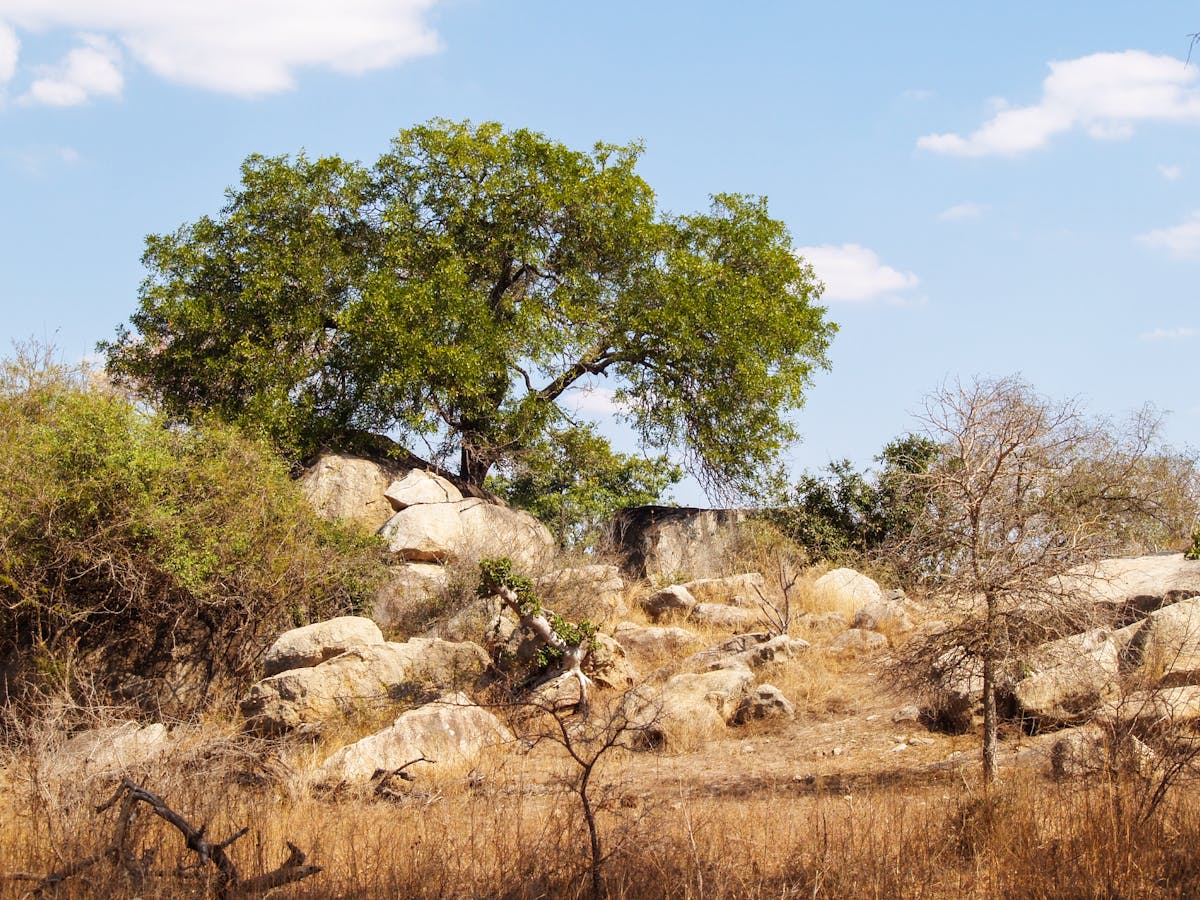
The natural habitat of D. trifasciata is tropical savanna and open woodland — not lush rainforest, not barren desert. The vegetation type is sometimes called Guinea savanna: an open landscape with scattered trees, a continuous grass layer, and enough dry season to prevent closed-canopy forest from developing.
The soil is the defining feature. Sansevieria in the wild grows on rocky, fast-draining substrate — slopes, outcroppings, and stony plains where water moves through quickly and roots never sit in standing water between rains. The parent material is often laterite: a highly weathered tropical soil with low nutrient content and excellent drainage. What it lacks in fertility it more than compensates for in the one thing sansevieria needs most.
In this landscape, the plant occupies two distinct microhabitats:
Open exposures. Directly on rocky slopes, cliff faces, and open ground in full sun. Plants here are compact, often clumping tightly, and expose themselves to harsh afternoon heat and intense light. Leaf texture in full-sun specimens tends to be heavier and the cross-banding more defined.
Dappled shade. Beneath the partial canopy of larger trees and shrubs, where light is irregular and broken. In this microhabitat, sansevieria grows taller and broader — reaching upward for available light. This is the microhabitat most closely resembling a position near a window with good indirect light, which helps explain why the plant performs reasonably well indoors without direct sun.
Both microhabitats share one constant: fast-draining, non-waterlogged soil. You will not find D. trifasciata growing in bottomland soil, beside standing water, or anywhere that stays reliably moist after rain. That is not the environment it evolved in, and when you recreate those conditions indoors — heavy potting soil, no drainage hole, regular watering — you recreate the conditions that kill it.
The Wet Season and Dry Season Cycle
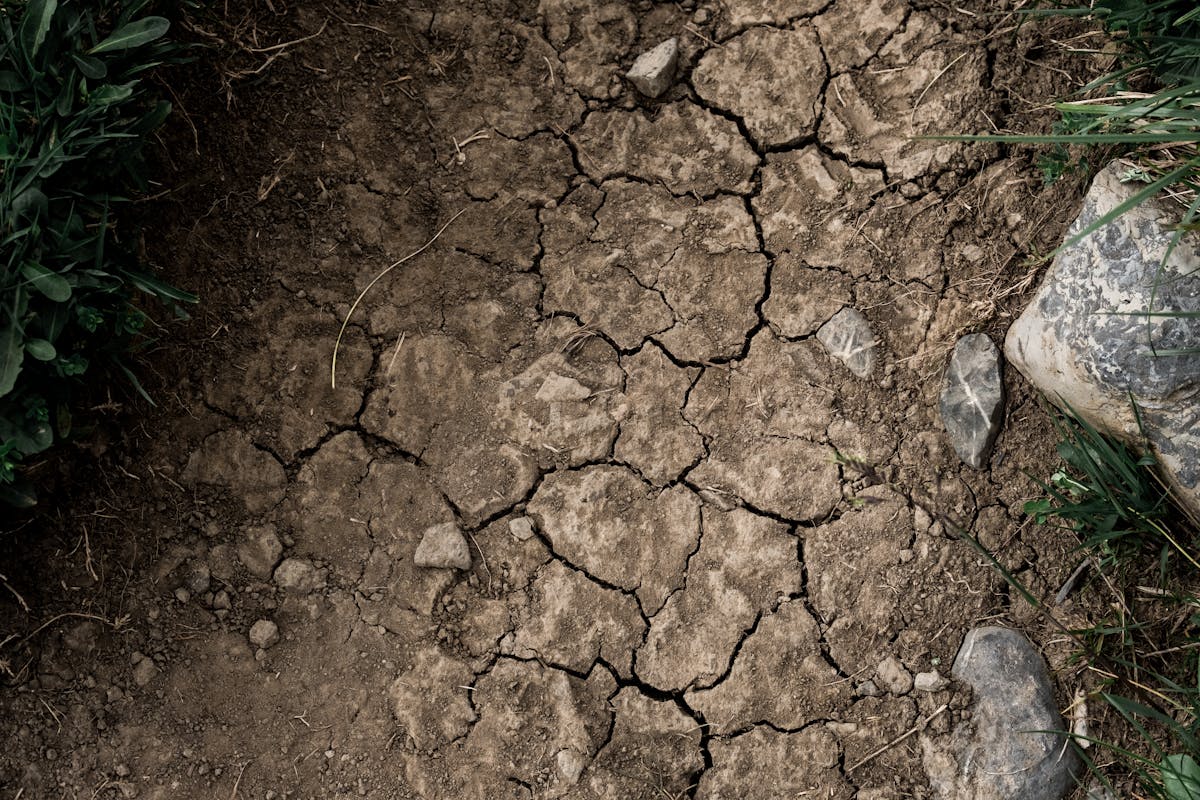
Nigeria's Guinea savanna belt runs on two seasons: a wet season from roughly April to October, and a dry season from November to March — approximately six months of each. Across the DRC, the timing shifts somewhat by latitude, but the structure is the same: an active wet period and a long dry one.
During the wet season, total annual rainfall across the core native range sits at around 1,000–1,400 mm. The soil stays moist more regularly. Growth is active. New leaves emerge from the rhizome. The plant is doing what most plants do when conditions are favourable.
Then the dry season arrives. Rainfall drops close to zero for five to six consecutive months. Temperatures stay warm — there is no frost, but the air and soil become sharply drier. The plant has no one to water it when it looks stressed. It waits.
This rhythm is embedded in the plant's biology, not borrowed from it. The underground rhizome accumulates water and carbohydrates during the wet season and draws on them through the dry. The thick leaves act as above-ground reservoirs. The plant does not merely tolerate drought — it evolved to expect a six-month drought as a normal annual event.
This is why the recommended indoor watering interval of every 2–6 weeks in summer and every 4–8 weeks in winter is not arbitrary caution. It loosely mirrors the wet-dry rhythm of the native climate. In the wild, the plant goes without water for six consecutive months. Watering it every two to three weeks is already a significant improvement on what it evolved to handle. Watering it weekly is not generosity — it is recreating the one condition the plant's entire physiology is built to avoid.
How Sansevieria Adapted to Survive Its Habitat
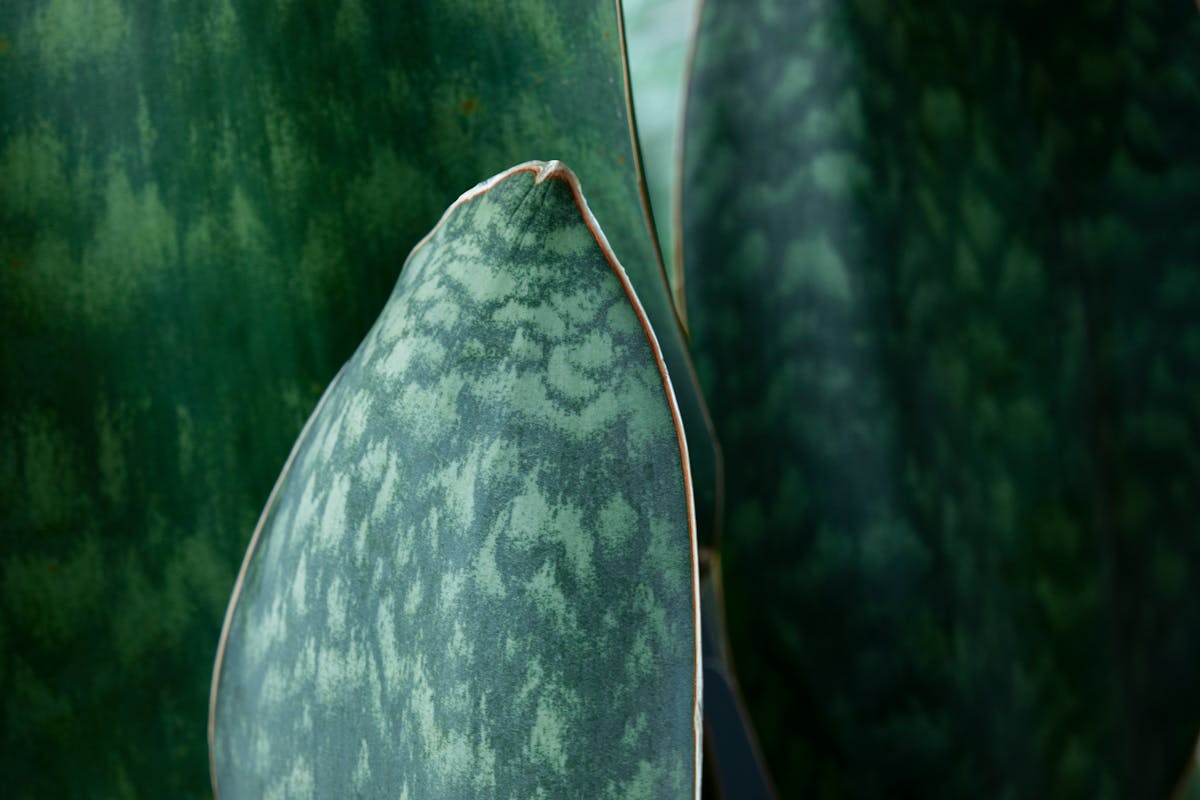
The adaptations that make sansevieria unusual as a houseplant are all direct responses to what the native habitat demands.
CAM photosynthesis. Unlike most plants, sansevieria opens its stomata at night rather than during the day. During the day, stomata are closed — this prevents water evaporation through the leaf surface during the hottest hours. At night, the stomata open to absorb CO₂, which is stored as malic acid and used for photosynthesis the next day, with stomata still closed. This makes sansevieria 6–10 times more water-efficient than standard C3 plants and is a direct evolutionary response to the six-month dry season. The mechanism is explained in full in the CAM photosynthesis guide.
Water storage in leaves. The thick, stiff leaves are not purely structural. Beneath the waxy outer cuticle is a layer of hypodermal water-storage tissue — a reservoir the plant draws on when external water is unavailable. This is why the leaves feel firm and slightly heavy: they are holding water. When severely underwatered, the leaves wrinkle and curl as the reservoir depletes. Water thoroughly when you see this and improvement appears within 2–3 days.
Rhizome energy reserves. The underground rhizome stores both water and carbohydrates as a deeper reserve. A plant with a healthy rhizome can survive extended dry periods even when the above-ground leaves look stressed. This is also why sansevieria recovers from what looks like terminal neglect — the rhizome was holding reserves the owner could not see.
Thick waxy cuticle. The wax coating on the leaf surface dramatically reduces transpiration. Combined with closed daytime stomata, it means the plant loses very little water even in dry, low-humidity indoor conditions. This is why the plant thrives in rooms most houseplants find too dry.
The full structural picture — leaf anatomy, rhizome architecture, root system — is covered in the Sansevieria Morphology guide.
The Range Is Wider Than Most Guides Suggest
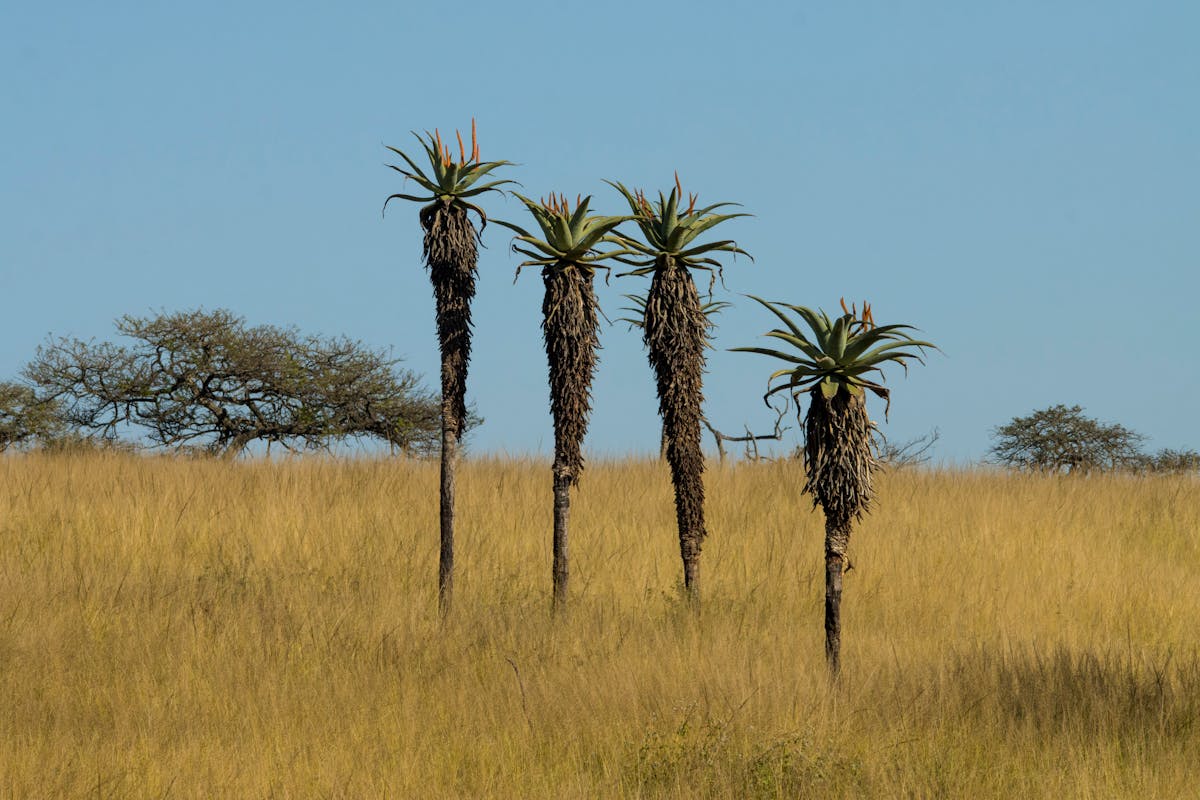
Most habitat guides treat sansevieria as a single type of place. The reality across the genus is more varied than that.
The over 70 formerly recognised species span substantially different African environments. Desert-edge species like Dracaena pinguicula — native to arid northern Kenya and Somalia — grow on exposed rocky ground with minimal annual rainfall and extremely shallow soil. At the other end, species like Dracaena hyacinthoides from coastal South Africa grow in scrub and open woodland where the dry season is less severe and soil moisture is higher.
This diversity matters for one reason: it explains why sansevieria as a genus is genuinely adaptable indoors. The collective native range spans arid rock face to subtropical woodland. Individual species have specific preferences, but the genus as a whole covers a wide environmental range. A plant from the arid extreme — cylindrica, for example — will be more drought-tolerant and slower growing than one from the woodland edge. But both share the fundamental trait of disliking waterlogged soil and performing poorly in extended shade. Those are the two traits that matter most indoors.
What Happens When Sansevieria Leaves Its Native Habitat
This is the part most habitat guides skip. It is also the most revealing evidence of how effective the plant's adaptations actually are.
In warm, frost-free climates outside its native range, Dracaena trifasciata does not behave like a polite garden ornamental. It behaves like an ecological problem. The same drought tolerance, vigorous rhizome system, and ability to regenerate from discarded leaf fragments that make it an excellent houseplant make it a serious weed in the wrong landscape.
In Australia, the plant is classified as an environmental weed in Queensland, New South Wales, and the Northern Territory. In the remaining states it is listed as a sleeper weed — established but not yet spreading aggressively. The rhizome system allows it to form dense thickets that outcompete native vegetation, and removal is complicated by the fact that any rhizome fragment left in the soil regenerates into a new plant.
In Florida, the plant was introduced in the early 1800s for fibre production and landscaping. By 1951 it had been classified as a nuisance. It has also naturalised in Bermuda, Ecuador, and Guam. In Hawaii, it grows in disturbed areas and coastal habitats.
This is not a contradiction of the care advice. It is an illustration of what happens when the plant's habitat adaptations have no constraint placed on them. In temperate climates where winter temperatures drop below freezing, it cannot establish outdoors — no concern. But in USDA Zone 10–12 or any consistently frost-free outdoor climate, planting sansevieria in open ground warrants serious consideration before you do it. A detailed guide to management in these zones is at Gardener's Path.
What Native Habitat Means for Your Indoor Plant
Every care instruction that follows from the native habitat is either about recreating what the plant evolved for, or about not recreating the conditions that would kill it.
Use gritty, fast-draining soil. This recreates the rocky, low-nutrient substrate of the savanna. Standard potting mix holds too much moisture and does not drain quickly enough. Cactus mix, or a 1:1 blend of potting soil and perlite, is the correct approximation. The soil is not just preference — it is the difference between a root system that functions and one that rots.
Water every 2–6 weeks. This reflects the plant's expectation of intermittent water followed by dry intervals. In the native habitat, rain falls in bursts during the wet season with dry days between events and a six-month dry season at the end. Weekly watering recreates the one moisture condition the plant has no defence against: sustained wetness at the root.
Keep it warm (55°F to 85°F / 13°C to 29°C). The native climate has no frost, no cold season, and no sustained temperatures below 50°F. Cold damage appears as soft, grey-green patches where leaf tissue essentially collapses. It is not being fragile — it genuinely never encountered frost in the wild.
Accept imperfect light. The plant grew under tree canopy as well as in open sun. It tolerates low light and will survive it. But the word is survive, not grow. In the native dappled-shade habitat, the plant compensates by growing taller toward available light. Indoors without that option, it simply stalls. If yours has not produced a leaf in twelve months, the light is probably the reason.
The Kew Gardens botanical profile for the snake plant is the most thorough reference for native range and distribution data: kew.org/plants/snake-plant.
The habitat is not background information. It is the operating manual. If you understand that this plant spent millions of years on rocky slopes in West Africa, waiting out six-month droughts, you understand why it behaves the way it does on your windowsill — and why the single most useful thing you can do for it right now is check the soil, not water it.
Push your finger two inches in. If there is any moisture, put the watering can down. Come back in a week.
Care FAQ
Where does sansevieria grow in the wild?
Sansevieria (Dracaena trifasciata) is native to tropical West and Central Africa — primarily Nigeria, the Democratic Republic of Congo, Gabon, and neighbouring countries. In the wild it grows in tropical savanna and open woodland, on rocky fast-draining soil with a pronounced dry season. Several other sansevieria species extend into East Africa, Madagascar, and southern Arabia.
What climate does sansevieria come from?
Sansevieria is native to a tropical savanna climate with distinct wet and dry seasons. Temperatures in its native range stay warm year-round — generally 65°F to 95°F (18°C to 35°C) — with no frost and rainfall concentrated in a wet season of roughly 4–6 months, followed by a dry period of equal length. The plant evolved to survive dry seasons of 5–6 months without water.
Does sansevieria grow in the forest or in the open?
Both. Dracaena trifasciata colonizes a wide range of habitats — from open rocky outcrops in full sun to dappled shade beneath larger trees in open woodland. Some species grow at the forest understory edge. The key constant across all habitats is fast-draining soil: sansevieria does not grow in boggy or consistently moist ground in the wild.
Why does knowing sansevieria native habitat matter for care?
The native habitat explains every care rule. Rocky fast-draining soil explains why standard potting mix causes root rot. A 5–6 month dry season explains why you water every 2–6 weeks, not weekly. Warm year-round temperatures explain why the plant cannot survive frost. Understanding where it came from removes the guesswork from care.
Is sansevieria invasive outside its native habitat?
Yes, in warm frost-free climates. In Australia, Dracaena trifasciata is classified as an environmental weed in Queensland, New South Wales, and the Northern Territory. In Florida it was introduced in the early 1800s and later classified as a nuisance plant. It has also naturalised in Bermuda, Ecuador, and Guam. This only applies outdoors in USDA Zone 10–12 equivalent climates — as a houseplant in temperate regions it cannot spread.