
Types of Sansevieria Plants (Scientific Overview)
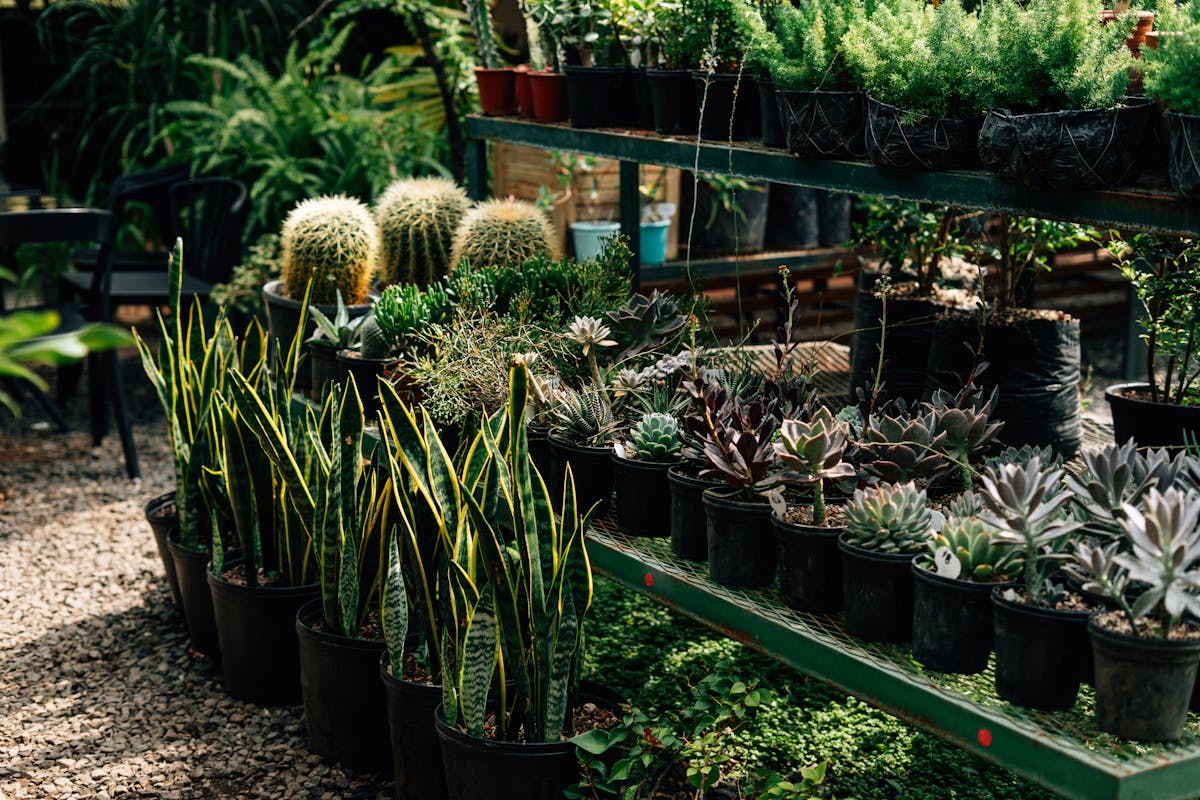
There are over 70 species formerly classified as Sansevieria — all now placed in the genus Dracaena following a 2017 reclassification. They fall into three structural groups: tall upright varieties (the Dracaena trifasciata cultivars and close relatives), cylindrical and architectural species (D. angolensis and kin), and compact rosette types (the 'Hahnii' group and dwarf collector species). Within those groups, about a dozen varieties are reliably available at nurseries. The remaining 60-plus are for collectors and specialists.
Most people encounter sansevieria as a single entity — the tall plant with yellow-edged leaves in a restaurant corner. In reality, the genus has produced one of the widest ranges of leaf form in any popular houseplant group: cylindrical spears, compact rosettes, broad paddle-shaped single leaves, spiralling fans, and classic upright sword clusters. They are all sansevieria. They are all easy to care for. They look almost nothing alike.
A Note on Names Before We Start
In 2017, molecular phylogenetic analysis led the scientific community to merge the entire Sansevieria genus into Dracaena. Every snake plant species — including the classic Sansevieria trifasciata — is now formally Dracaena trifasciata. You will still find "Sansevieria" on nearly every nursery label because most growers have not updated their stock tags. Both names refer to the same plants.
Throughout this guide I use the Sansevieria name in parallel with the current Dracaena name, since that is what you will encounter in the wild. For the full taxonomy behind the reclassification, the Sansevieria Classification guide covers the DNA evidence and naming history in detail. For the authoritative current name list, the Plants of the World Online database at Kew is the reference.
The Three Structural Groups
Before listing individual varieties, it helps to understand how the genus organises itself physically. The International Sansevieria Society divides cultivated sansevieria into three size and form groups:
Normal full-size — the tall, upright varieties from 1–4 feet, typically with sword-shaped flat leaves. D. trifasciata and its cultivars dominate this group.
Medium size with wide leaves ('Futura' type) — shorter and broader-leaved than standard trifasciata, often more compact. The Whale Fin (D. masoniana) fits here at the extreme end.
Dwarf bird's-nest size ('Hahnii' type) — compact rosette forms, typically under 12 inches. The Hahnii cultivars and several collector species fall into this category.
A parallel classification divides the genus by leaf cross-section: flat flexible leaves, flat stiff leaves, and rounded/cylindrical leaves. For this guide, I'll use the structural form groups as the organising principle — it maps most directly to what you see on a nursery bench.
Group 1: Dracaena trifasciata and Its Cultivars
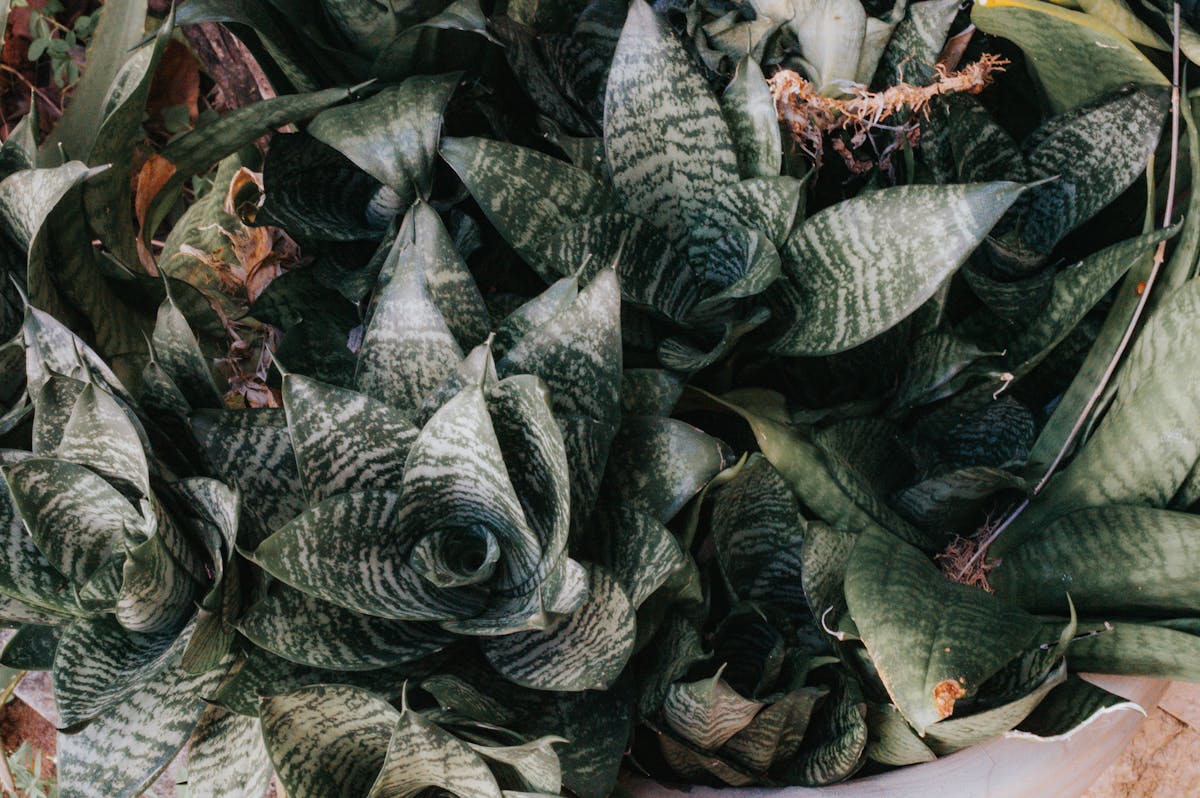
Dracaena trifasciata is the most cultivated sansevieria by a wide margin. Over 60 named cultivars exist within this single species — more variation than most plant genera produce across dozens of species. They share identical care requirements and the same basic structure: sword-shaped flat leaves in upright rosette clusters from a rhizomatous base.
Dracaena trifasciata 'Laurentii' (formerly Sansevieria trifasciata 'Laurentii') The iconic snake plant. Tall, sword-shaped leaves in dark green with horizontal zig-zag banding and bold gold-yellow margins running the full length of each leaf. Indoor height: 3–4 feet. This is the plant most people picture when they hear "snake plant" — and it accounts for the majority of snake plants sold worldwide.
One important care detail about Laurentii that most buyers learn the hard way: the yellow margins are a chimeric characteristic — present only in the outer cell layer of the leaf. If you propagate Laurentii from leaf cuttings, the new plants will emerge plain green, with no yellow at all. I heard from a reader who propagated her Laurentii from leaf cuttings, watched the cuttings root successfully over 8 weeks, and potted up perfectly healthy new plants — only to find the gold edges had vanished entirely. Nothing went wrong. The colour simply cannot pass through leaf tissue. To get yellow-margined offspring, always propagate Laurentii by division at the root. This applies to all chimeric variegated cultivars.
Dracaena trifasciata 'Hahnii' (Bird's Nest) A compact dwarf mutation discovered in 1939 at a New Orleans nursery. Instead of growing upright, Hahnii forms a tight low rosette — the "bird's nest" shape — that rarely exceeds 6–8 inches. Leaves are shorter, wider at the base, and curve inward. Ideal for desks, bookshelves, and small spaces where a standard snake plant would overpower the room.
Several Hahnii cultivars exist: 'Golden Hahnii' has yellow margins like a miniature Laurentii; 'Silver Hahnii' has pale silvery-green leaves. Both variegated forms need bright indirect light to hold their colour — in sustained low light, new leaves emerge noticeably greener.
Dracaena trifasciata 'Moonshine' Broad, upright leaves in uniform silvery sage-green — so pale they appear almost white in certain light, with extremely faint horizontal banding visible only at close range. Height: up to 2 feet. The silvery colour is light-dependent: in sustained low light, new leaves emerge standard green and the moonshine effect fades within a few months. Unlike margin-based variegation in Laurentii, the Moonshine colour is structural (related to wax and chlorophyll distribution) and is more stable — but it still requires bright indirect light to maintain.
Dracaena trifasciata 'Bantel's Sensation' The collector's trifasciata cultivar. Narrow, upright leaves with irregular vertical white, cream, and green striping — no two leaves look exactly alike. Height: up to 2.5–3 feet. Growth is slower than most varieties because the white-striped sections contain reduced chlorophyll. The white striping is chimeric — lost through leaf cuttings, preserved only by division. More sensitive to overwatering than robust green cultivars.
Dracaena trifasciata 'Black Gold' Laurentii's darker sibling. Deep green-to-black leaf centres with rich gold margins. The contrast is sharper and more dramatic than standard Laurentii. Height: 2.5–3 feet. Very stable variegation — the gold holds well even in moderate light.
Dracaena zeylanica (Ceylon Bowstring Hemp) Closely related to D. trifasciata and frequently mislabelled at nurseries. The leaves have a more pronounced silver-green mottled pattern across the full leaf width rather than just horizontal cross-banding. Tends to produce a bushier, more densely leafed plant. Height: similar to standard trifasciata. Care is identical. Tolerates lower light conditions than most trifasciata cultivars. The practical difference: if you propagate Laurentii by leaf cuttings and get plain green offspring, the result looks almost identical to zeylanica. They are different species — but unless you have a very established plant, they are genuinely difficult to tell apart.
Group 2: Cylindrical and Structural Species
These species break from the flat sword-leaf template entirely. They share the same CAM physiology and drought tolerance, but their leaf architecture is either cylindrical (round in cross-section) or dramatically different in width from standard trifasciata.
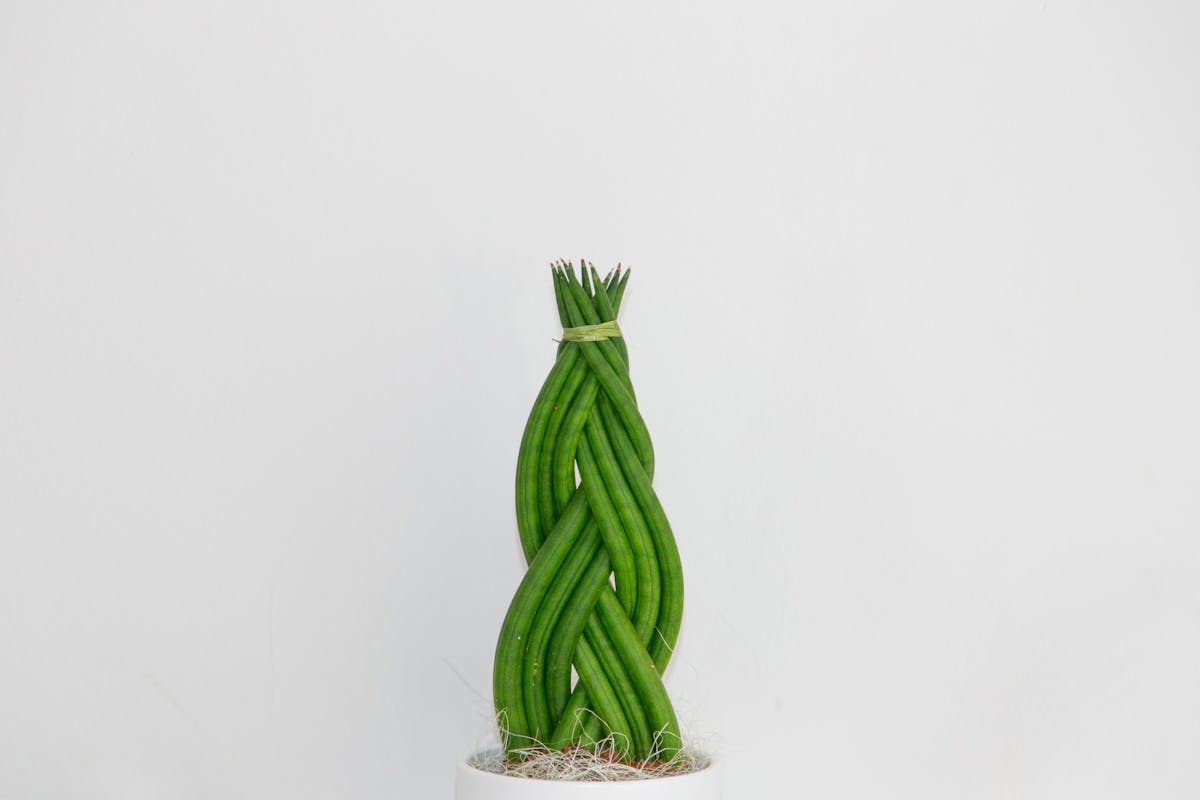
Dracaena angolensis (formerly Sansevieria cylindrica, African Spear) Round, pencil-thick spears grow straight upward from the base, each tapering to a sharp point. Dark green with lighter horizontal ring markings. Indoor height: typically 2–3 feet, occasionally to 5 feet. The cylindrical form minimises surface area exposed to evaporation — making this one of the most drought-tolerant types in the group. Water even less frequently than flat-leaved varieties: every 3–6 weeks in summer. Often sold with leaves braided or woven — this is purely cosmetic and does not harm the plant, though the braided shape cannot be undone as the leaves mature.
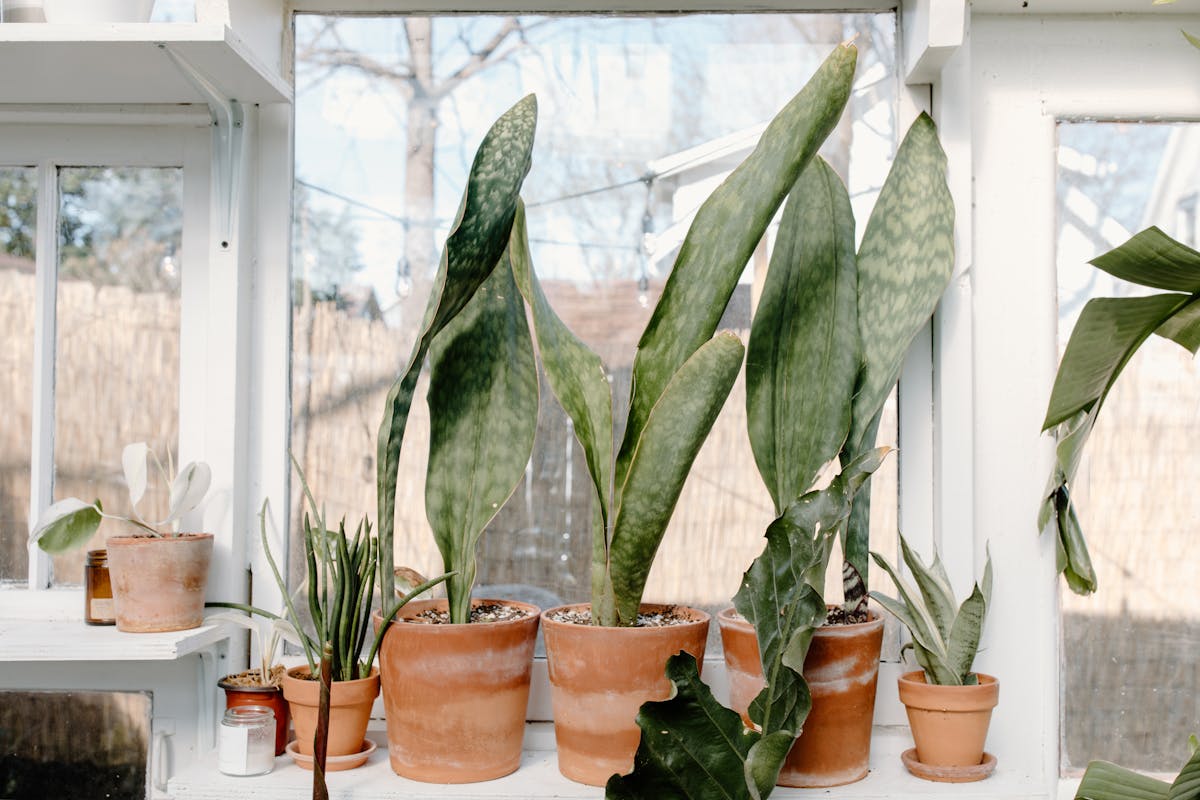
Dracaena masoniana (Whale Fin / Shark Fin) Single broad paddle-shaped leaves, often sold as a single leaf rather than a cluster. Each leaf is deep green with a faint mottled pattern and a thin red or orange edge margin. Leaf dimensions at maturity: up to 4 feet tall and 10 inches wide — proportions unlike any other commonly grown sansevieria. New leaves grow slowly from the base, typically one or two per year.
There is a variegated form (Whale Fin variegata) with yellow or grey streaking through the leaf — rarer, more expensive, and more sensitive to strong direct sun.
Dracaena parva × suffruticosa 'Fernwood' (Fernwood Hybrid) A modern hybrid developed at Fernwood Nursery in California, crossing Sansevieria parva with Sansevieria suffruticosa. Narrow, concave leaves with a central channel running lengthwise, growing in dense arching clumps. More compact than the trifasciata cultivars and well suited to spots where a standard snake plant would look oversized. The dark green leaves with lighter green banding hold their marking well in lower light conditions. Among the easiest sansevieria hybrids to find in nurseries.
Dracaena bacularis 'Mikado' Similar in form to Cylindrica but more compact and elegant. Slender cylindrical leaves grow individually rather than in dense clusters, giving the pot a sparse, minimalist look. Often described as architectural or modern. Height stays compact indoors. Handles lower light well, though like all cylindrical types it needs very infrequent watering.
Group 3: Collector and Specialist Species
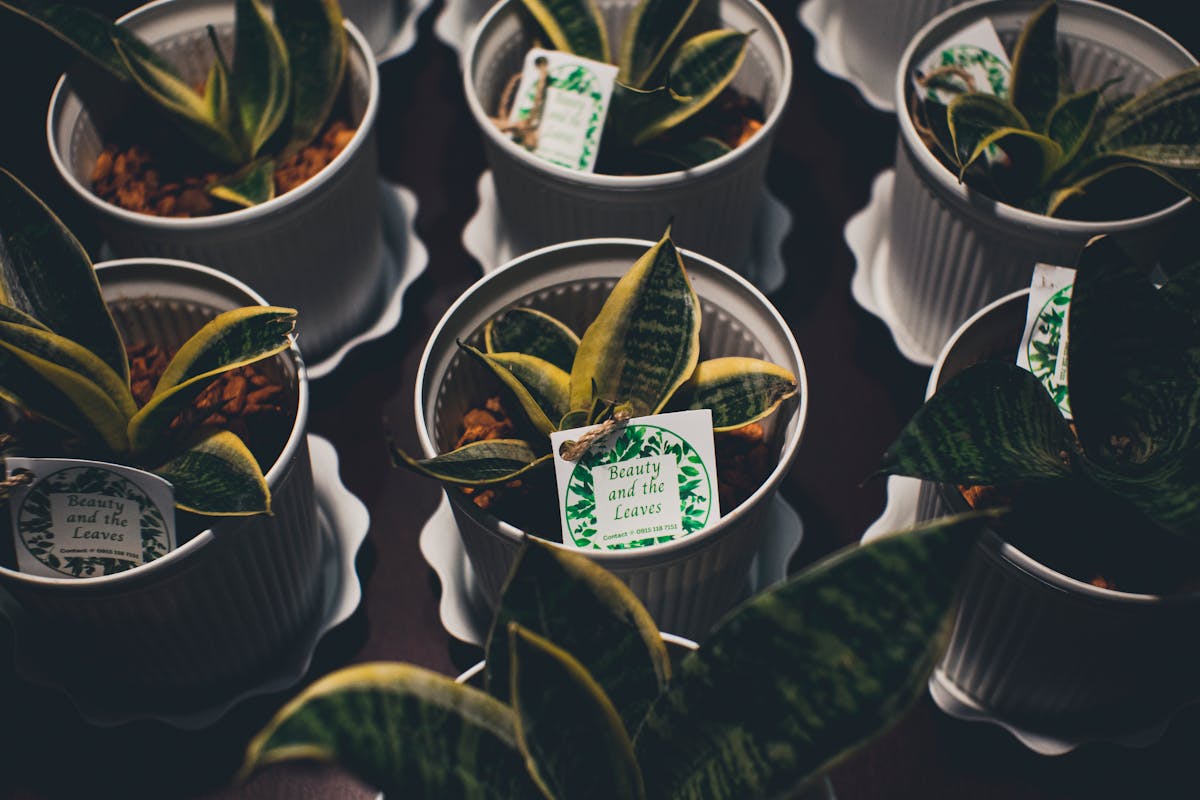
These species are less commonly found in standard nurseries but are widely sought by collectors. They are all equally easy to care for — the rarity is about aesthetics and limited distribution, not difficulty.
Dracaena kirkii (formerly Sansevieria kirkii, Star Sansevieria) Forms a spreading, low star-shaped rosette rather than an upright cluster. Leaves are wavy-margined with a slightly rough texture and an unusual spreading habit that distinguishes it from every upright trifasciata variety. Two common cultivars:
- 'Silver Blue' — compact leaves with a silver-grey sheen and subtle banding. Very slow growing.
- 'Coppertone' — similar form but with copper-brown leaf colouring, unusual among sansevierias.
Both kirkii cultivars need even less watering than standard trifasciata types and grow very slowly — typically one to two new leaves per year.
Dracaena pinguicula (formerly Sansevieria pinguicula, Walking Sansevieria) One of the most botanically unusual former Sansevieria species. Unlike all others in the group, it does not grow from a horizontal rhizome. Instead it produces aerial roots that lift the leaf cluster slightly above the soil — giving it the appearance of walking on stilts. Thick, succulent, blue-green leaves with red margins. Needs very fast-draining substrate and less water than almost any other species. Rare in standard retail but worth seeking if you want something genuinely unusual.
Dracaena hanningtonii 'Samurai Dwarf' (formerly Sansevieria ehrenbergii 'Samurai Dwarf') A very compact species with thick, boat-shaped leaves stacked in a fan arrangement. The red margins are more pronounced than on most species due to the deep green of the leaf interior providing high contrast. Rarely exceeds 6 inches. A strong architectural statement for a desk plant or windowsill. Tends to be found through specialist nurseries rather than general retailers.
How to Choose the Right Type for Your Space
Most guides list every variety without helping you decide. Here is a practical decision framework:
Limited space (desk, shelf, small room): Choose Bird's Nest 'Hahnii' (6–8 inches, compact rosette) or Bacularis 'Mikado' (slender, elegant, small footprint). Both tolerate lower light and infrequent watering.
Floor plant for a living room or hallway: Choose standard Laurentii or Black Gold for bold vertical impact with reliable variegation, or Cylindrica (D. angolensis) if you want something architecturally unusual. All three stay between 2–4 feet.
Single statement piece: Whale Fin (D. masoniana) — a single enormous leaf can anchor a corner. Grow one in a low, wide ceramic pot.
Low light (north-facing room or windowless corridor): Zeylanica or a plain-green Trifasciata. Variegated varieties like Moonshine and Laurentii will lose their colour in sustained low light. Plain green types tolerate it better and still grow slowly but healthily.
Collector or design-focused buyer: Bantel's Sensation (narrow leaves with vertical white streaking), Moonshine (silvery minimalist palette), or Kirkii 'Silver Blue' or 'Coppertone' (unusual colours and spreading habit). All need brighter indirect light to maintain their best appearance.
Children or pets in the household: All types of sansevieria contain saponins and are mildly toxic to cats, dogs, and humans if ingested — causing mouth irritation and stomach upset. No type is safe for nibbling. Choose placement accordingly, regardless of which variety you select.
Why Identification Is Harder Than It Looks
Two things make sansevieria identification genuinely difficult, even for experienced growers.
Juvenile vs. mature form. Many sansevieria species look dramatically different as young plants versus established specimens. A juvenile Whale Fin looks like a narrow, rather ordinary snake plant. The characteristic broad paddle shape only develops as the plant matures and produces leaves at full size. The International Sansevieria Society notes this as a specific difficulty in their species catalogue — where possible, they show both juvenile and mature photographs for exactly this reason.
Widespread mislabelling. Nursery labels are unreliable for sansevieria. The most common confusion: plain trifasciata sold as Sansevieria zeylanica, Laurentii leaf-cutting offspring (which emerge plain green) mistaken for zeylanica, and 'Moonshine' sometimes labelled simply as "silver snake plant." If the label matters to you, buy from a specialist grower or check the botanical name against the RHS Sansevieria growing guide species descriptions.
Chimera confusion. The yellow margins on Laurentii, the white streaking on Bantel's Sensation, and the yellow edging on Golden Hahnii are all chimeric — present only in specific cell layers. This means they can be unstable, can fade in low light, and cannot be propagated through leaf cuttings. A plant sold as Laurentii that produces plain green pups is not defective — that is normal chimera behaviour.
Understanding which features are stable (leaf shape, plant height, growth habit) and which are not (marginal colouring, pale tones in low light) makes it much easier to maintain realistic expectations across your collection. For the underlying biology that governs all of these types — why the leaves store water, how the rhizome spreads, what drives the growth pattern — the Sansevieria Morphology guide covers the structure in detail.
The type you already own is almost certainly doing fine. The type you should buy next depends on one question: how much floor space do you have, and how close is it to a window? Answer that, and the choice mostly makes itself. Start there — then narrow it down by leaf shape and colour preference. Every type on this list is easy to keep alive. The only honest mistake is choosing a Moonshine for a dark corner, or a Whale Fin for a desk.
Care FAQ
How many types of sansevieria are there?
There are over 70 known species formerly classified as Sansevieria, now all placed in the genus Dracaena. Beyond the species, there are 130–140 named species and cultivars in total, including over 60 cultivars of Dracaena trifasciata alone. For most home growers, about 10–12 varieties are commonly available at nurseries.
What is the most common type of sansevieria?
Dracaena trifasciata 'Laurentii' — the tall snake plant with dark green leaves and gold-yellow margins — is by far the most widely sold type worldwide. It accounts for the majority of snake plants in homes, offices, and public spaces globally.
What is the difference between sansevieria trifasciata and zeylanica?
Both are closely related and often mislabelled in nurseries. The main visible difference is that Dracaena trifasciata leaves curve slightly just before the base and show horizontal zig-zag banding, while Dracaena zeylanica tends to produce a bushier clump with flatter leaf bases and slightly more pronounced pale silver-green mottling. The care requirements are identical.
What are the rarest types of sansevieria?
Among collector-sought types, Dracaena pinguicula (Sansevieria pinguicula) is notable for its stacked, succulent leaves growing without a rhizome — entirely unlike most sansevieria species. Sansevieria ehrenbergii 'Samurai Dwarf' and the variegated Whale Fin (Dracaena masoniana variegata) are also rare and sought after. Bantel's Sensation — with its irregular vertical white striping — is the most sought-after rare cultivar of trifasciata.
Do all types of sansevieria have the same care needs?
Broadly yes. All former Sansevieria species share the same core requirements: well-draining soil, infrequent watering, and tolerance of a wide range of light. Specific differences exist — cylindrical species (D. angolensis) need even less water than flat-leaved types, Moonshine needs brighter light to hold its silvery colour, and Bantel's Sensation is more sensitive to overwatering. But the fundamentals are the same across the group.
What is the difference between sansevieria and dracaena?
Sansevieria is the former genus name for snake plants. In 2017, molecular DNA studies showed that Sansevieria was genetically nested inside Dracaena, making the two genera indistinguishable at the evolutionary level. All former Sansevieria species were merged into Dracaena. The plants themselves are unchanged — only the accepted scientific name changed. Most nurseries still use Sansevieria on labels.