
Why Is My Moonshine Snake Plant Turning Green?
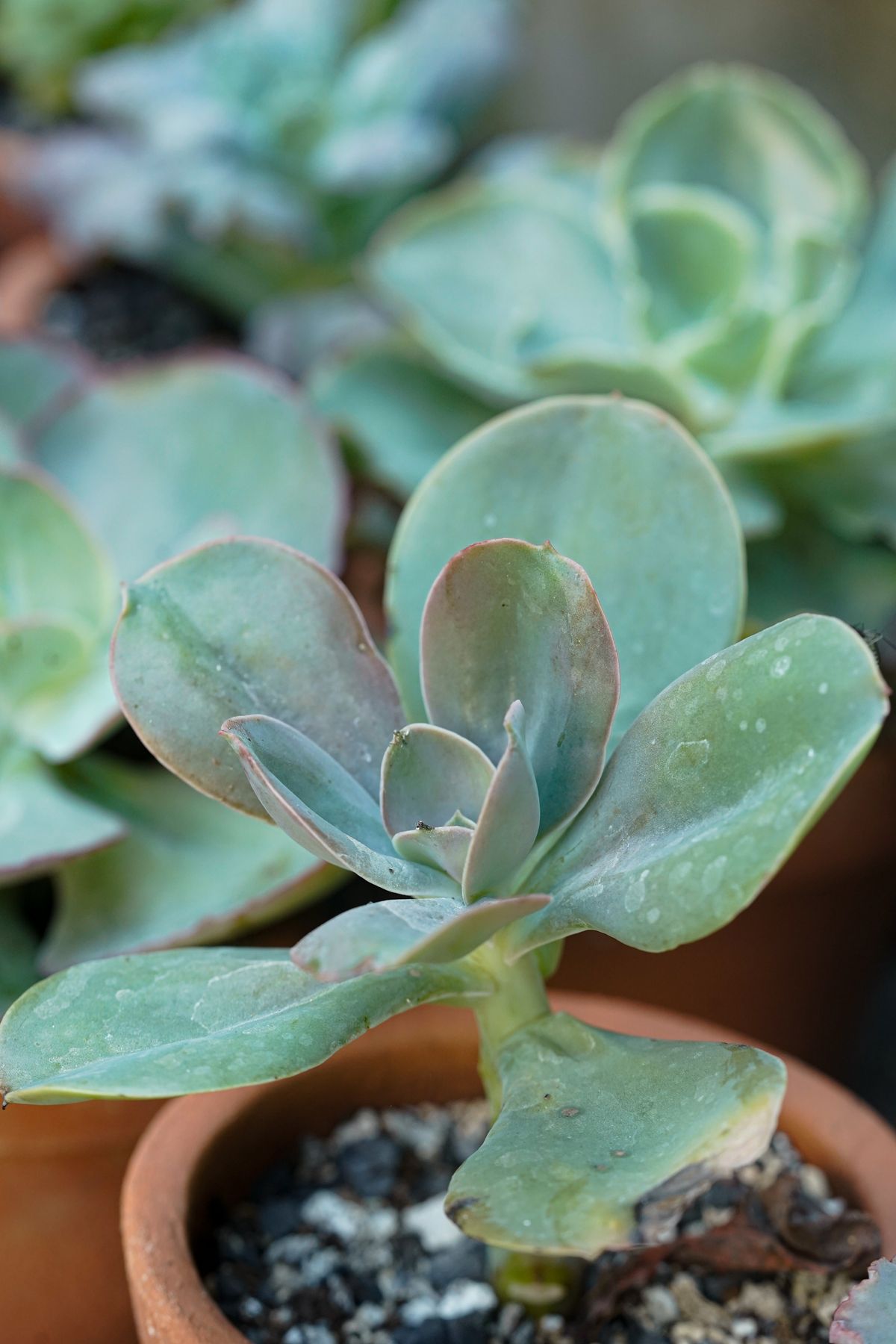
A Moonshine snake plant turning green is almost always one of two normal things: insufficient light thinning the reflective wax layer on new growth, or the leaf simply aging, since even healthy Moonshine leaves lose some silver intensity over time. It is not automatically the same problem as a Laurentii losing its yellow margin — Moonshine's silver color works through a different mechanism entirely, and that difference changes what actually helps.
Most guides borrow their Moonshine propagation advice directly from Laurentii care sheets, warning that leaf cuttings will "revert." That advice was written for a genuinely different kind of coloring, and applying it here without checking is exactly the kind of copy-paste care advice worth being skeptical of. (If you already know your plant is a true chimeral cultivar like Laurentii, the Why Do Variegated Snake Plant Cuttings Turn Green? guide covers that specific, more absolute mechanism.)
Why Is My Moonshine Snake Plant Turning Green in the First Place?
The silvery-pale look is not a lack of chlorophyll spread evenly through the leaf the way some care guides vaguely suggest. It comes primarily from a dense layer of reflective epicuticular wax sitting on top of the leaf's surface, on top of chlorophyll-green tissue underneath. A thick, even wax layer scatters light and reads as pale silver-green. A thinner wax layer lets more of the underlying green show through, which is what "turning green" actually looks like at the surface.
The Real Mechanism: Light and the Wax Layer
This is the part almost no Moonshine care guide explains precisely, and it is genuinely interesting plant physiology, not just a watering-adjacent fact. Epicuticular wax density is a light-responsive trait across many plants, not unique to sansevieria — research on wax accumulation under different light intensities documents measurably denser wax crystal formation under high light compared to low light in cereal crops, consistent with wax acting as a photoprotective layer that plants invest in more heavily when there is more light to protect against. A separate study on cereal leaves found wax crystal density rose substantially when grown at roughly 1,200 µmol of light compared to just 100 µmol — a twelvefold difference in intensity producing a visibly denser wax coat, which is the same general direction Moonshine's wax response follows, even without an equivalent controlled study on sansevieria specifically.
A Moonshine grown in consistently bright indirect light lays down a thicker wax layer on each new leaf, producing the strong silvery finish the cultivar is known for. One grown in dim, indirect light nearer a wall or a north-facing room still survives, but each new leaf comes in with a thinner wax layer, and reads as noticeably greener from day one.
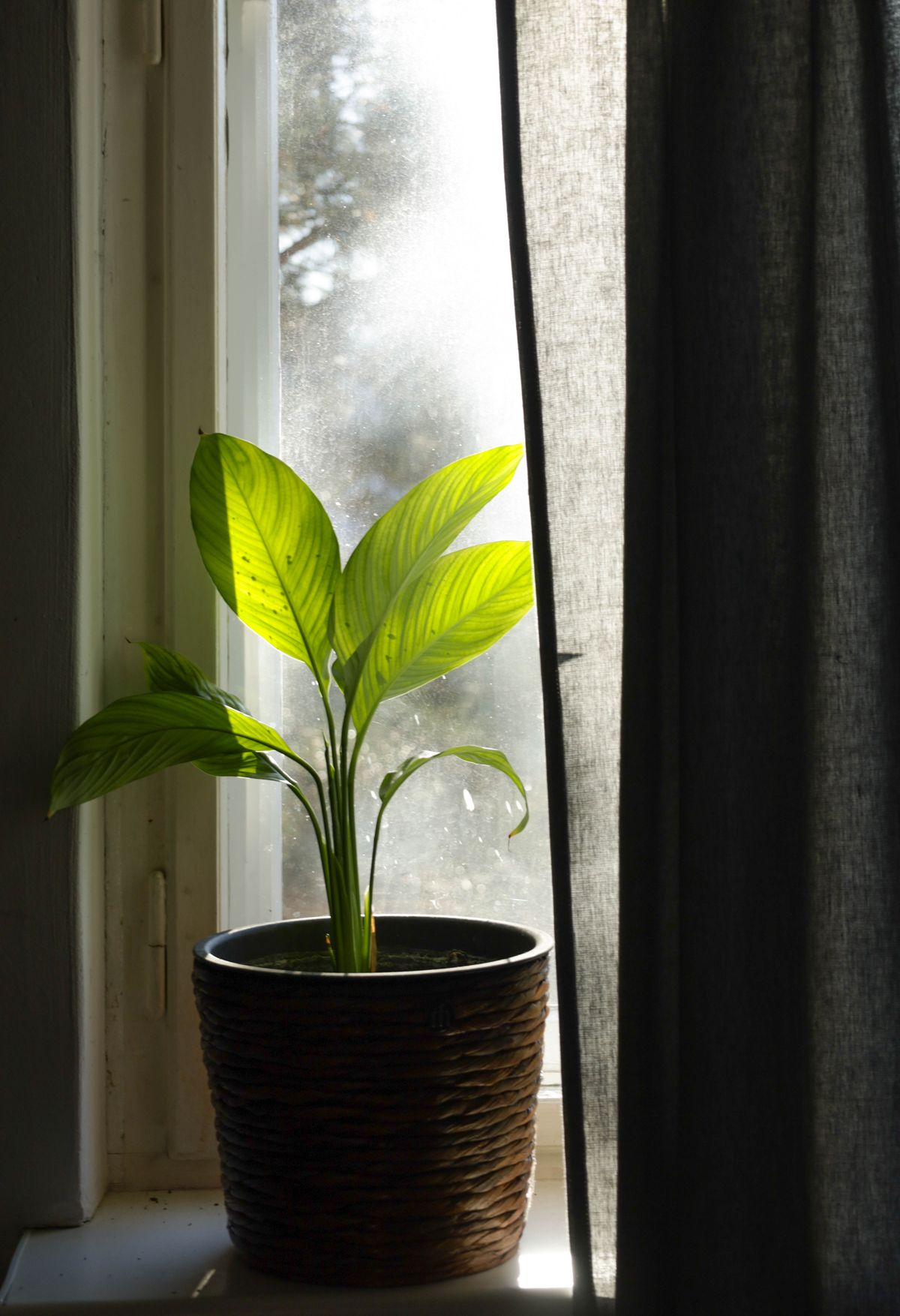
The practical upshot: 8-10 hours of bright indirect light a day is the direct fix, and it only affects leaves grown after the change. A leaf that already emerged thin-waxed and green will not thicken its wax layer retroactively just because the light improved.
Is Some Greening Just Normal Aging?
Yes, and this deserves to be said plainly, since plenty of owners assume every greener leaf signals a care mistake. Even a Moonshine kept in excellent light will show its newest leaves as the most vividly silver, with older leaves gradually reading duller and greener over months as the wax layer weathers from handling, dust, humidity, and simple time. This is not a symptom of anything going wrong. It is the same reason a car's wax finish looks best right after a fresh coat and gradually looks flatter before the next one — the surface layer wears, not the material underneath.
Is This the Same Kind of Color Loss as Laurentii?
No, and conflating the two explains most of the confusing, contradictory Moonshine care advice online. Laurentii's yellow margin is chimeral variegation: two genetically distinct cell layers occupying the leaf, one confined to a specific outer position, producing a distinct, sharply bordered margin pattern, as the Chimeral Variegation in Snake Plants Explained guide covers in full. University of Florida's plant propagation program describes exactly this kind of margin as characteristic of a periclinal chimera. Moonshine's color runs uniformly across the whole leaf with no comparable sharp margin or two-tone pattern — consistent with a wax-and-pigment trait rather than a layered chimeral structure.
That distinction matters directly for propagation. A true periclinal chimera like Laurentii cannot pass its outer color layer through a leaf cutting, full stop, as the Why Do Variegated Snake Plant Cuttings Turn Green? guide covers in detail. Moonshine has not been established to work the same way, and reports of "greener" cutting-grown Moonshine plants are just as plausibly explained by ordinary juvenile leaf coloring and the light conditions a young cutting happened to be under, rather than a guaranteed structural loss. Division remains the safer choice if preserving an established plant's exact appearance matters to you, simply because it carries a mature, already-silvery growing point forward intact rather than asking new tissue to develop the trait from scratch — the Rhizome Division guide covers that process.
Could Something Else Be Causing It?
Light and age explain the overwhelming majority of Moonshine greening, but it is worth ruling out two other possibilities before assuming that is all it is. Overwatering and root stress can produce a dull, unhealthy-looking green tinged with yellow, usually alongside softness at the base or a generally weak appearance — a different pattern than the clean, uniform green of a simple low-light or aging effect, and one that calls for checking the roots rather than adjusting a grow light. Pest infestations, particularly spider mites feeding on leaf sap, can also dull a leaf's surface and interfere with how the wax layer reflects light, usually alongside visible stippling or fine webbing rather than an even color shift across the whole leaf. If the greening is even, gradual, and the plant otherwise looks firm and healthy, light and age remain the far more likely explanation than either of these.
What Actually Helps
Move the plant to bright indirect light for 8-10 hours a day, and be patient — the fix shows up in new growth, not existing leaves. Wipe leaves occasionally with a damp cloth to remove dust, since a dust-coated surface reads as dull regardless of the wax layer underneath it, and dust buildup on the cuticle generally interferes with the plant's light absorption, as covered in the Sansevieria Adaptations guide. Do not assume older, greener leaves are failing or diseased — they are simply older leaves.
One thing not to do: repot preemptively in the hope that fresh soil restores the color. Moonshine's coloring has nothing to do with pot size or root crowding, and sansevieria generally does better slightly root-bound than freshly repotted into an oversized pot holding excess moisture. Repot only every 2-3 years, and only when roots are visibly escaping the drainage holes — not as a color fix.
For the species' complete profile and how Moonshine fits among the other cultivars, the Sansevieria Plant Botanical Guide, the Sansevieria Trifasciata guide, and the Sansevieria Classification guide cover it in full.
Check your Moonshine's newest leaf against its oldest one right now. If the newest leaf is noticeably silvery and only the oldest ones look flat green, that is normal aging — leave it alone. If even the newest leaf is coming in green, move the plant to brighter indirect light and judge the next leaf that grows, not the ones already out.
Care FAQ
Why is my Moonshine snake plant turning green?
Almost always one of two normal causes: insufficient light thinning the reflective wax layer on new leaves, or natural aging as older leaves gradually lose their silvery sheen over time. Both are common and neither means the plant is unhealthy. A move to brighter indirect light fixes the light-related cause in new growth going forward.
Does Moonshine losing its silver color mean the plant is dying?
No. A Moonshine turning greener is a cosmetic color change, not a health problem. The plant photosynthesizes and grows normally either way. Treat it the same way you would treat any other snake plant's general care — the color shift alone is not a symptom to panic about.
Will a Moonshine leaf that has turned green go silver again?
No, not that specific leaf. Once a leaf's wax layer has thinned and it has taken on a greener appearance, that leaf does not regain its earlier silver intensity. Improving the light only affects new leaves grown afterward, which should emerge with a stronger silvery sheen if conditions are good.
Is Moonshine's silver color the same kind of variegation as Laurentii's yellow edges?
No, and this is a common mix-up. Laurentii's yellow margin is chimeral variegation — two genetically distinct layers of tissue existing side by side. Moonshine's silver color is uniform across the entire leaf with no distinct margin or pattern, consistent with a reflective wax layer rather than a layered genetic structure. That difference is exactly why the two cultivars do not necessarily behave the same way in propagation.
Do Moonshine leaf cuttings really lose their silver color?
This is less clear-cut than it is for Laurentii. Since Moonshine's color is not confirmed to be chimeral, greener growth from a cutting-grown plant may reflect normal juvenile leaf coloring and early-stage light conditions rather than a structural genetic loss the way a Laurentii cutting reliably reverts to plain green. Division remains the lower-risk propagation choice either way, since it carries an established, already-silvery growing point forward.
How much light does Moonshine need to keep its silver color?
8-10 hours of bright indirect light daily, the same general range recommended for sansevieria overall. Moonshine specifically needs consistent bright light to maintain a strong wax layer on new growth; in dimmer conditions it still survives, but new leaves come in visibly greener and less reflective.