
Chimeral Variegation in Snake Plants Explained
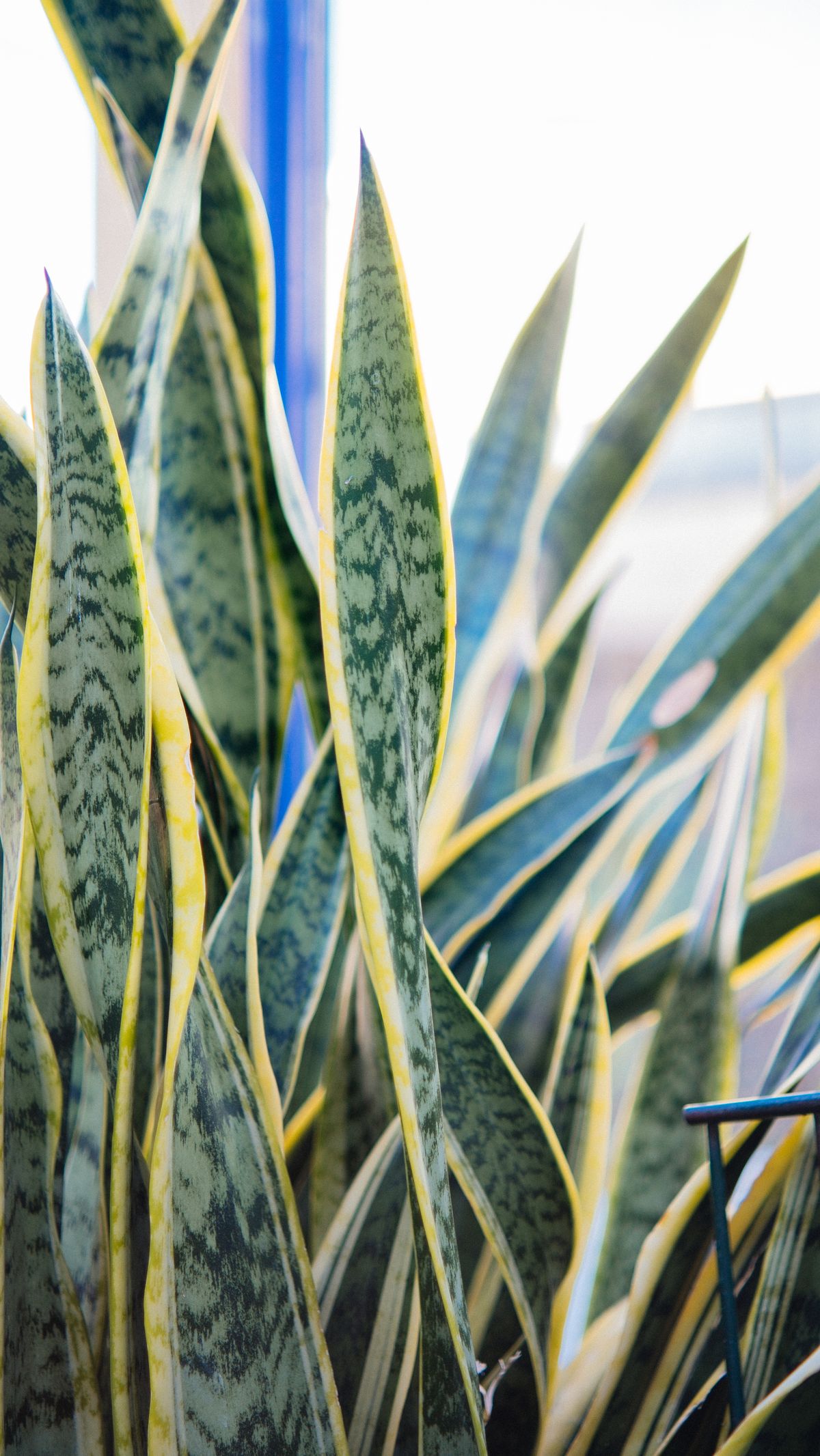
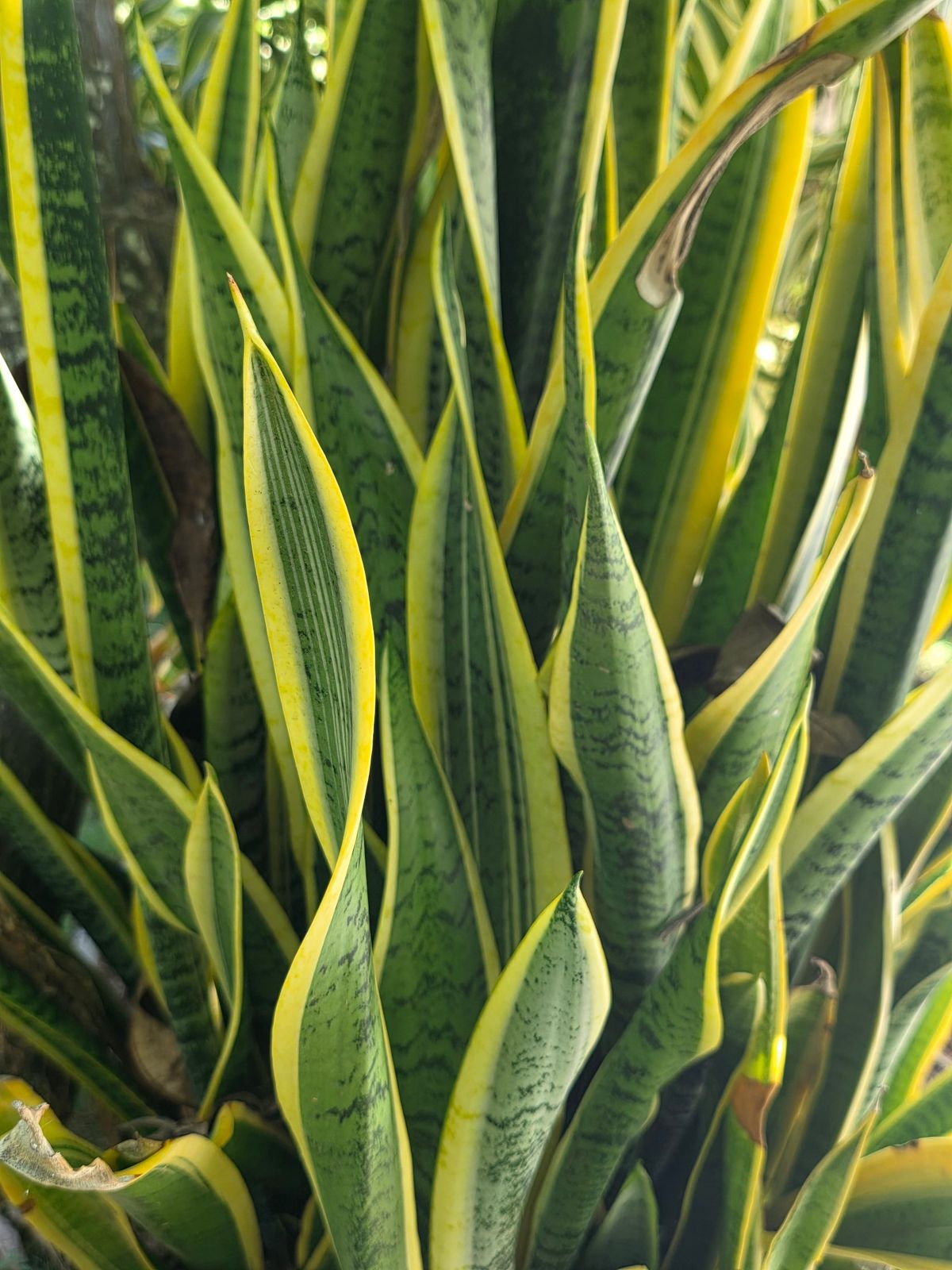
Chimeral variegation means a plant is built from two genetically distinct populations of cells growing side by side, rather than one uniform genotype expressing a color pattern. In snake plants, this shows up as the gold margins of Laurentii and the white striping of Bantel's Sensation — both descended from a single mutated cell in a growing point long ago, now preserved indefinitely through division. Not every colorful snake plant works this way, and knowing which kind you have changes what to expect from it.
Most descriptions of a variegated snake plant stop at "it has stripes." Chimeral variegation is a specific, testable genetic structure — and the word "chimera" is doing real work here, borrowed from the mythological creature stitched together from parts of different animals, because that is genuinely what is happening at the cellular level. (If you have already run into a leaf cutting that came up plain green, the Why Do Variegated Snake Plant Cuttings Turn Green? guide covers that specific consequence in full — this article covers the broader genetics behind it.)
How Does Chimeral Variegation Actually Start?
Every chimera begins the same way: a spontaneous mutation in a single cell inside the shoot apical meristem, the cluster of undifferentiated tissue at a growing point responsible for producing everything the plant makes afterward. That one mutated cell loses the ability to produce chlorophyll in some or all of its descendants. What happens next depends entirely on where in the meristem that mutation landed, and how much of it that one cell's lineage ends up covering.
Laurentii's origin traces back to exactly one such event, in one wild plant, rather than to deliberate breeding. It was collected from Central Africa around 1900 and brought into cultivation because its distinctive gold margin was worth propagating on purpose — every Laurentii sold today descends from divisions and further divisions of that same original chimeral lineage, not from a repeatable breeding cross.
Three Types of Chimera — and Why Only One Is Reliable
This is the part most care guides skip, and it explains a lot of confusing, contradictory reports about "unpredictable" variegated snake plants. Chimeras come in three structural types, and they do not behave the same way at all.
Periclinal chimeras have one complete cell layer carrying the mutation, running continuously around the entire growing point. Every new growing point that later develops from that meristem carries the same layer arrangement forward, which is why Laurentii breeds true through division, generation after generation, without drifting. This is the only chimera type stable enough to become a commercially reliable cultivar.
Mericlinal chimeras have the mutation covering only part of one layer, not the whole thing. New growth from this kind of meristem can vary leaf to leaf, since different growing points inherit different proportions of mutated versus normal tissue.
Sectorial chimeras have the mutation running through all layers, but only in one wedge-shaped section of the meristem rather than uniformly around it. These are the least stable of the three — the boundary between mutant and normal tissue can shift as the plant grows, producing leaves that swing between heavily variegated, evenly striped, and plain green on the same plant.
A named, mass-propagated cultivar like Laurentii or Bantel's Sensation is functionally guaranteed to be the periclinal type. That stability is the entire reason it could become a cultivar in the first place — a mericlinal or sectorial plant would produce inconsistent, unsellable results from the very first division.
Not Every Colorful Snake Plant Is a Chimera
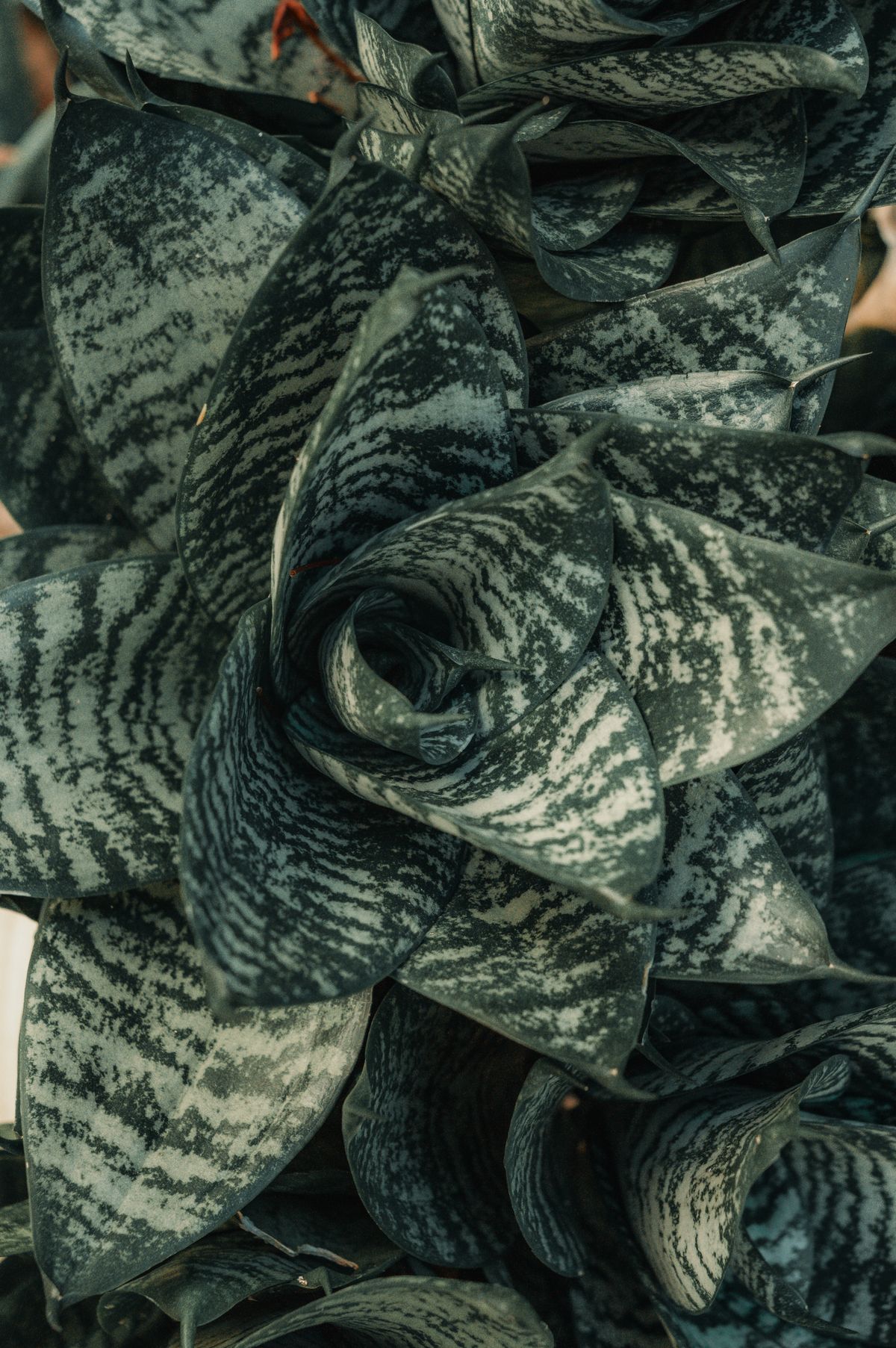
This is worth stating directly, because it is a common point of confusion. Moonshine's uniform silvery-green color is not a chimera — there is no layered structure of genetically distinct tissue involved. It is a stable, uniformly expressed pigment and wax trait shared by every cell, which is a completely different mechanism from Laurentii's layered margin. That mechanistic difference is exactly why Moonshine and Laurentii behave differently when propagated, and why Moonshine's color loss follows its own separate rules — the Why Is My Moonshine Snake Plant Turning Green? guide covers that specific mechanism in full.
It is also worth ruling out a less pleasant possibility: viral variegation. The Plant Network's guide to variegation draws a clean line between the two — chimeral variegation is "a stable genetic condition," while viral variegation is "an active plant disease" caused by a virus disrupting pigment production, historically infamous in the Tulip Breaking Virus, and transmissible between plants through sap-feeding insects. No commonly sold snake plant cultivar's variegation is viral in origin. If a plant develops sudden, irregular, mottled discoloration unlike the clean margins or stripes of a known cultivar, that is worth investigating separately rather than assuming it is simply "more variegation."
How Can You Tell Which Type of Chimera You Actually Have?
You do not need a lab to make a reasonable call here — the pattern itself tells you most of what you need to know. Check several leaves across the whole plant, not just one. A periclinal chimera produces a consistent margin or stripe pattern on essentially every leaf, in roughly the same position and proportion each time, because every growing point is drawing on the same intact layer arrangement. If every leaf on your Laurentii shows the same gold-edged pattern, that consistency is itself the evidence of a stable periclinal structure — you do not need to see the cell layers directly to trust the pattern.
A mericlinal or sectorial chimera looks different in a telling way: patterns that vary noticeably from leaf to leaf on the same plant, some leaves heavily marked and others nearly plain, or a wedge-shaped patch of different color running through an otherwise uniform leaf rather than a clean, even margin. If you bought a plant marketed as "rare" or "one of a kind" specifically because of an unusual, irregular pattern, there is a reasonable chance it is a mericlinal or sectorial chimera rather than a periclinal one — which is worth knowing before you count on future divisions looking identical to what you have now.
Why Stability Matters More Than the Pattern Itself
University of Illinois Extension's classification of chimera types makes the practical stakes clear: periclinal chimeras "can be vegetatively propagated" reliably, while mericlinal and sectorial types are flagged as unstable specifically because normal, more vigorous tissue tends to outcompete the mutated portion over time if left unmanaged. A grower who buys a periclinal cultivar like Laurentii is buying predictability — every correctly propagated division looks like the parent. A sectorial novelty plant, by contrast, is being sold on the appeal of instability itself, and the buyer should expect that appeal to fade as the plant matures and the pattern shifts.
If an otherwise-stable periclinal plant does send up a plain green or unusually pale shoot from one growing point, that single shoot has lost the mutated layer at that specific point — a separate, later event from the plant's overall chimeral structure, not proof the whole plant is unstable. University of Illinois Extension's practical fix applies here too: since ordinary green tissue tends to grow more vigorously than variegated tissue, cutting that reverted shoot out at the rhizome keeps it from gradually outcompeting the rest of the plant for resources, rather than leaving it to spread.
What This Means for Propagating or Buying a Variegated Snake Plant
If a chimeral cultivar is periclinal, division is the only propagation method that reliably reproduces the parent's exact pattern, since it carries an intact growing point — and therefore an intact layer arrangement — forward without needing to regenerate anything. The Rhizome Division guide covers the mechanics of that process, and the Why Do Variegated Snake Plant Cuttings Turn Green? guide covers exactly why the alternative method fails. Laurentii remains the cultivar this chimeral structure is best studied on, and the Sansevieria Trifasciata guide covers its full care profile alongside the species' other cultivars. For the full species picture this chimeral structure sits within, the Sansevieria Plant Botanical Guide and the Sansevieria Classification guide cover it in depth.
If you are buying a variegated snake plant and want it to stay that way: ask whether it is a named, established cultivar like Laurentii rather than an unnamed "rare variegated" novelty. The named cultivar is almost certainly a stable periclinal chimera. The novelty plant might just be a sectorial chimera that has not finished drifting yet.
Care FAQ
What does chimeral variegation mean in a snake plant?
It means the plant is built from two genetically distinct populations of cells growing side by side — one capable of producing yellow pigment, one not — rather than a single uniform genotype expressing a color pattern. The name comes from the Chimera of Greek mythology, a single creature made of parts from different animals.
How does a chimeral snake plant form in the first place?
It starts as a spontaneous mutation in a single cell within the shoot apical meristem — the growing point that generates all new tissue. If that mutated cell happens to sit in a position where its descendants form an entire outer layer, the result is a stable periclinal chimera. Laurentii is the most famous example, first collected as a single wild plant rather than bred deliberately.
Are all variegated snake plants chimeras?
No. Cultivars with distinct stripes or margins that differ sharply from the rest of the leaf, like Laurentii and Bantel's Sensation, are chimeras. Solid silvery cultivars like Moonshine work through a different mechanism — a uniform, genetically stable pigment expression rather than layered, genetically distinct tissue — so they behave differently in propagation.
Is chimeral variegation the same as virus-caused variegation?
No, and this distinction matters for plant health. Chimeral variegation is a stable genetic condition involving distinct cell layers, not a disease. Viral variegation, historically famous in tulips, comes from an active plant virus disrupting pigment production and is transmissible to other plants. No commonly sold snake plant variegation is viral.
Why are some chimeras more stable than others?
Stability depends on how much of the growing point the mutation covers and which layer it sits in. A periclinal chimera, where one entire cell layer carries the mutation, is the most stable type and breeds true through division indefinitely. Mericlinal and sectorial chimeras involve only part of a layer or an uneven wedge through multiple layers, making their patterns unpredictable and prone to drifting toward solid green or solid pale growth.
Can a chimeral snake plant ever become genetically uniform again?
Yes, in the sense that any given new growing point either carries the full chimeral structure or does not — there is no partial or intermediate outcome for that specific point. A growing point that loses the outer mutated layer produces a plain green, genetically uniform shoot from then on, and that shoot cannot regain the lost layer on its own.