
Why Are Snake Plant Leaves So Stiff and Upright?
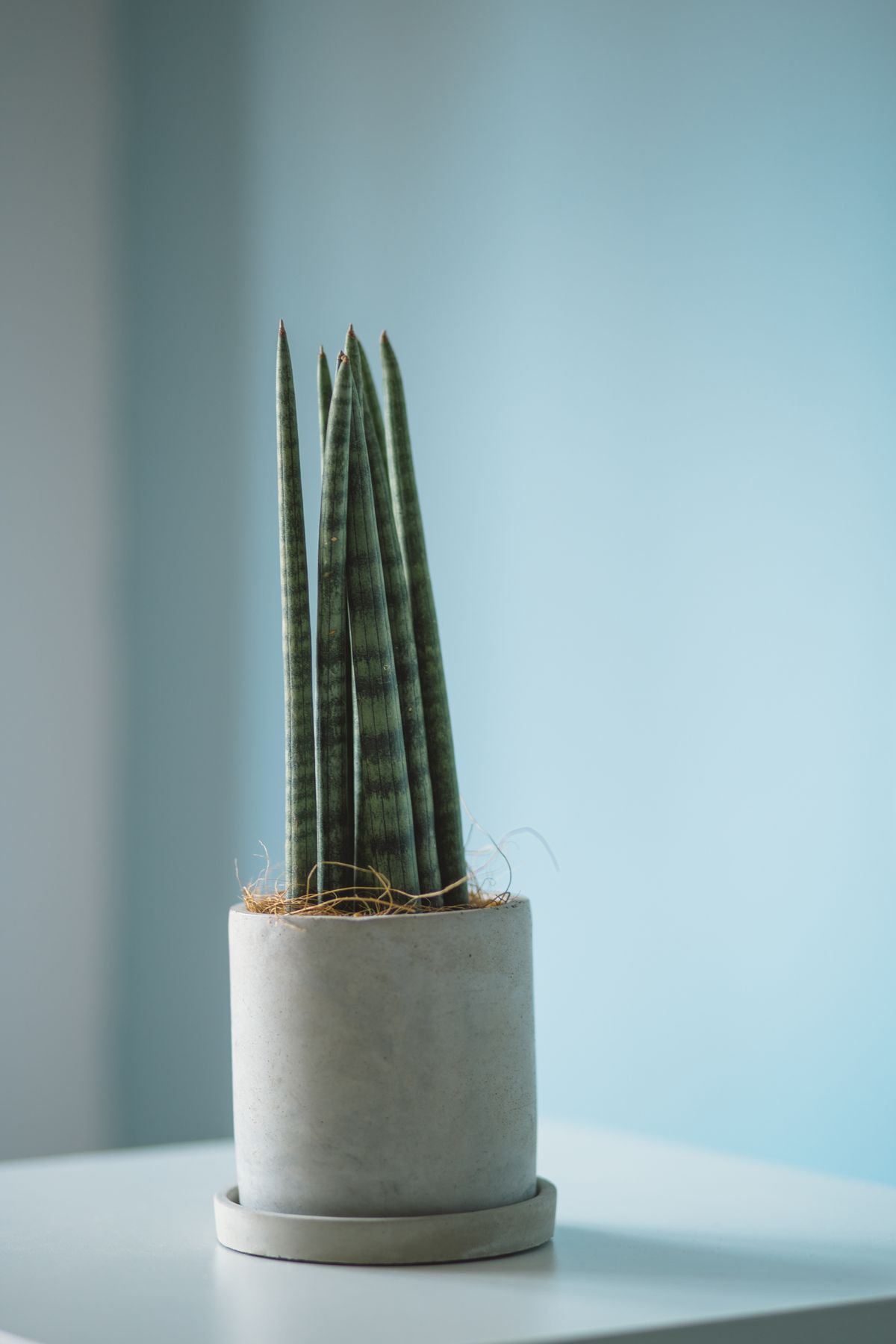
Snake plant leaves stay stiff and upright through two mechanisms working together, not one. Dense structural fiber bundles running the leaf's length resist stretching, the same way steel rebar resists tension in concrete. Internal water pressure — turgor — keeps the surrounding tissue firm and pushing outward, the same functional role the concrete matrix plays around the rebar. Remove either one, and the leaf loses rigidity, even though only water pressure actually reverses when the plant gets thirsty.
There is no woody stem here, no bark, nothing that looks like conventional plant support — and yet the leaves stand upright on their own, sometimes for years. (For the internal fiber bundles specifically, the Snake Plant Leaf Cross-Section guide maps exactly where they sit; this article covers how they combine with water pressure to actually produce rigidity.)
Why Are Snake Plant Leaves Stiff in the First Place?
The honest answer involves two separate mechanisms most explanations flatten into one. Structural fiber bundles — bands of thick-walled cells running the length of the leaf — provide tensile reinforcement, resisting stretching the way a cable resists being pulled apart. Turgor pressure, water pushing outward against cell walls throughout the leaf's living tissue, provides the internal pressure that keeps everything taut. A leaf needs both. Fiber alone, without internal pressure keeping the surrounding tissue firm, would be floppy cable with nothing holding its shape. Pressure alone, without fiber resisting the pull of the leaf's own weight, would bow and sag the moment the leaf got tall enough.
This is also a genuinely different support system from a woody-stemmed plant, worth clarifying since the comparison comes up naturally. A tree trunk gets rigid mainly from lignified secondary xylem — wood, essentially a permanent, dead, mineralized scaffold that does not depend on ongoing water pressure to stay stiff once it has formed. A snake plant leaf has no equivalent woody tissue at all. Its rigidity depends on living tissue staying pressurized, which is exactly why it can soften with dehydration in a way a wooden branch never would, and exactly why the leaf is doing active, ongoing structural work rather than simply resting on a permanent skeleton built earlier in its life.
The Rebar-and-Concrete Analogy, and Why It Actually Holds Up
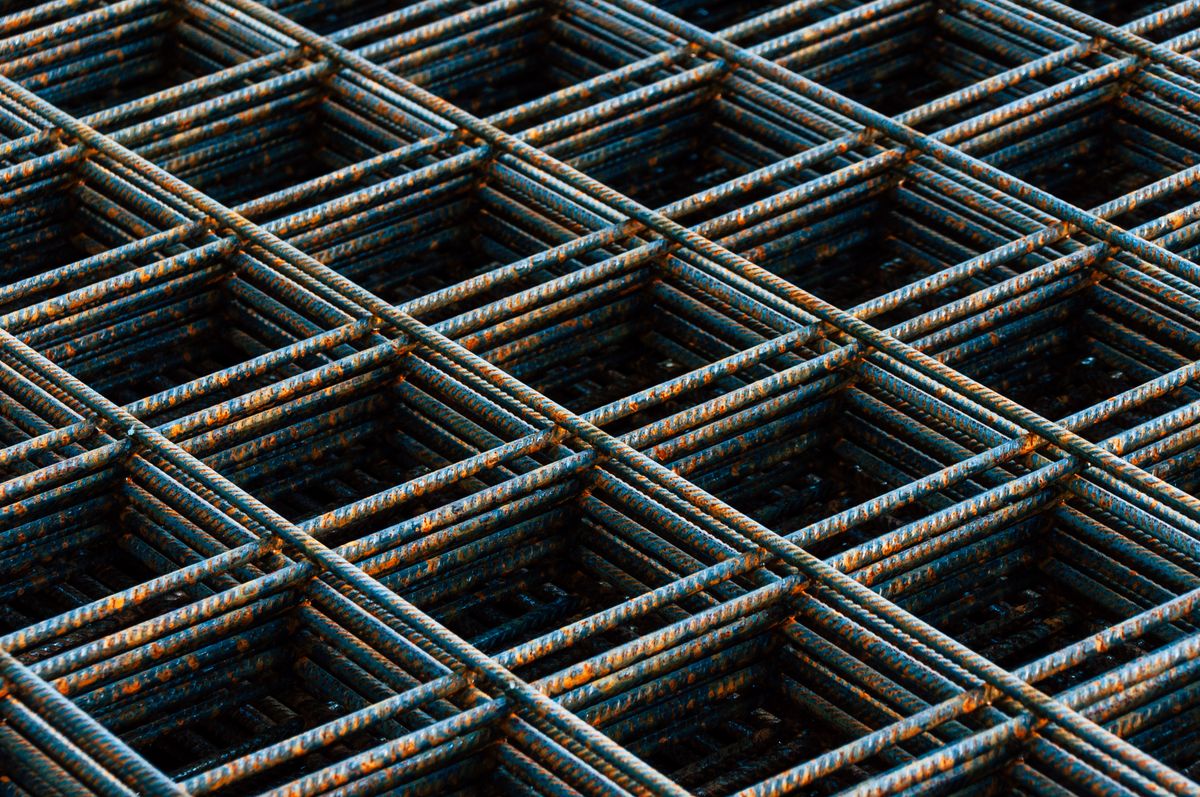
This is not just a loose comparison — the underlying mechanics genuinely overlap. Research on cell wall mechanics treats plant cell walls as elastic materials with measurable stiffness, in the range of roughly 100 to 500 megapascals of Young's modulus, embedded with reinforcing fiber structure — mechanically comparable to how a composite material's matrix and reinforcement work together. In a snake plant leaf, the fiber bundles play the reinforcement role, resisting tension along the leaf's length, while the turgor-pressurized tissue around them plays the matrix role, staying firm and transmitting force between the fibers rather than collapsing around them. Separately reinforced concrete: steel rebar resists tension, the surrounding concrete resists compression and holds the rebar in position, and neither material alone performs anywhere near as well as the combination.
The Genuinely Interesting Part: Pressure Alone Creates Rigidity
Here is the mechanism most explanations skip past. Turgor pressure does not just make tissue feel firm to the touch — it actively generates what biomechanics researchers call geometric rigidity. Research modeling turgor pressure's effect on plant rigidity describes how internal pressure creates an axial tension force that stiffens a plant structure independent of the material's own inherent stiffness — meaning a leaf under higher turgor pressure resists bending more, even before accounting for what the fiber network is doing. This is part of why a slightly underwatered leaf can feel a little less rigid at the tip before it looks visibly wrinkled: the pressure-driven component of rigidity starts declining before the shape-driven symptom becomes visible.
Can You Actually Feel Stiffness Change Before a Leaf Looks Wrinkled?
Yes, and it is a genuinely useful, underused diagnostic. Because turgor pressure contributes to rigidity as its own separate mechanism, a drop in internal water pressure can make a leaf feel marginally softer or more flexible near the tip days before any visible wrinkling appears on the surface. Gently flexing a leaf tip between two fingers — not hard enough to damage it, just enough to feel resistance — can pick up on early water depletion sooner than a purely visual check. This does not replace checking the soil directly, but it is a genuinely informative secondary signal, especially for leaves in less-visible parts of a pot where a wrinkle would be easy to miss anyway.
Does Every Snake Plant Leaf Have the Same Stiffness?
No, and the variation tracks two things covered elsewhere on this site. Cultivars with denser fiber bundles — Laurentii's roughly 150-cell marginal bundles compared to Hahnii's 29 or fewer — produce noticeably stiffer leaves independent of watering. Leaf cross-sectional shape matters just as much: a cylindrical leaf resists bending in every direction at once, the same reason a tube outperforms a flat blade of equivalent material, which the Why Do Snake Plant Leaves Lean or Fall Over? guide covers in the context of why some leaves lean more than others as they grow taller.
Age matters too, and it is worth distinguishing from the cultivar differences above. A newly emerged leaf has neither its fiber network nor its turgor-driven rigidity fully developed — both take time to build out after the leaf finishes elongating, which is why a young leaf noticeably flexes more than a mature one of the same cultivar. The Snake Plant Growth Cycle guide covers this hardening stage in full, including why it takes noticeably longer than the visible elongation phase people usually associate with "growth."
For the complete internal structure this rigidity depends on, the Sansevieria Plant Botanical Guide and the Sansevieria Trifasciata guide cover the species in full.
Try this right now: gently flex the tip of your snake plant's newest leaf, then an older one nearby. If the newer leaf gives noticeably more, that is normal — full rigidity is one of the last things a leaf develops, well after it has already reached full length.
Care FAQ
Why are snake plant leaves so stiff and upright?
Two mechanisms working together: dense structural fiber bundles running the length of the leaf that resist stretching, and internal water pressure (turgor) inside the leaf tissue that pushes outward against those fibers and the cell walls around them. Neither mechanism alone would keep the leaf upright without a woody stem — the combination is what does it.
Is it the fiber or the water pressure that makes the leaf stiff?
Both, working as a composite structure. The fiber bundles resist stretching along the leaf's length, similar to steel rebar resisting tension in concrete. Turgor pressure keeps the surrounding tissue firm and pushing outward, similar to the concrete matrix itself. Removing either one — fiber damage or a drop in internal water pressure — reduces rigidity, but the fiber network stays intact even when turgor drops, which is why a thirsty leaf softens without falling apart structurally.
Can a snake plant leaf lose stiffness before it looks wrinkled?
Yes, and this is a genuinely useful early warning sign. Since turgor pressure contributes to rigidity independently of visible shape, a leaf can feel slightly less firm or slightly more flexible near the tip before any wrinkling is visible on the surface. Checking firmness by gently flexing a leaf can catch early water depletion sooner than waiting for a visual change.
Do all snake plant leaves have the same stiffness?
No. Stiffness varies by cultivar and leaf shape. Tall, narrow cultivars and leaves with denser fiber bundles are noticeably more rigid than compact, softer-leaved types like Hahnii, and cylindrical leaves generally resist bending better than flat ones of similar length due to their cross-sectional shape.
Does a snake plant leaf become stiffer as it matures?
Yes. A newly emerged leaf is notably softer and more flexible than a fully mature one, since both its fiber network and its full turgor-supported structure take time to develop after the leaf finishes elongating. Full rigidity is one of the last things a new leaf achieves, after it has already reached its final length.
Why do snake plant leaves stay upright without a stem, unlike most other plants?
Most upright plants rely on a rigid woody or fibrous stem for vertical support, with leaves as a separate, often flexible structure attached to it. Snake plants skip that separate stem entirely — each leaf is its own self-supporting structure, combining fiber reinforcement and turgor pressure to do the job a stem would normally do elsewhere.