
Snake Plant Sunburn vs Fungal Leaf Spot
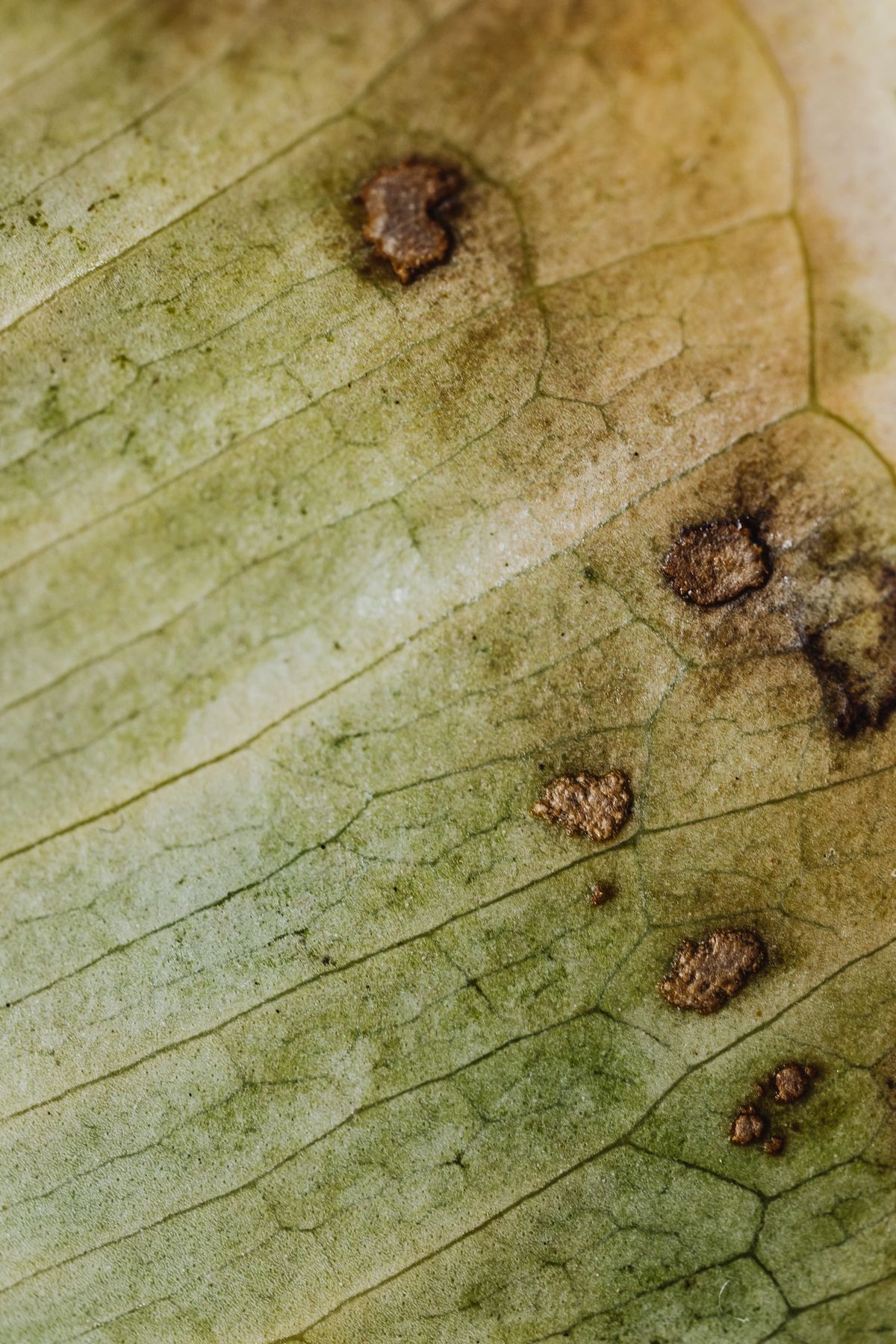
Snake plant sunburn vs fungal spot comes down to one quick, reliable clue: texture and pattern. Sunburn shows up as dry, flat, papery tan patches on the side of the leaf that faced direct light, and it never spreads. Fungal leaf spot shows up as a darker center ringed by a yellow halo, often with tiny raised dots, and it slowly spreads to new leaves. Read the spot in front of you, and the cause is clear in seconds.
If you've been squinting at a brown mark and worrying, here is how to tell the two apart, side by side, with the fix for each.
Snake Plant Sunburn vs Fungal Spot: The Fast Answer
Ask two questions about the spot. First, is it dry or ringed? Sunburn is dry, flat, and bleached-looking, with no halo. Fungal spot has a dark center wrapped in a yellow ring. Second, is it spreading? Sunburn stays put forever. Fungal leaf spot creeps to nearby leaves over days and weeks.
That's the whole diagnosis in two questions: dry-and-still means sunburn, ringed-and-spreading means fungus.
What Snake Plant Sunburn Looks Like
The damage appears as flat, tan-to-brown patches with a slightly bleached, sun-faded feel. The texture is crisp and dry, never wet or mushy. Sunburn shows up specifically on the side of the leaf that faced a window or grow light — it won't scatter randomly across the whole plant.
- Color: Pale tan, bleached, or light brown, sometimes almost white in the center.
- Texture: Dry and papery, flat against the leaf surface.
- Shape: Broad, irregular patches, not neat circles.
- Location: Only on sun-facing sides, right where the light hit hardest.
Sunburn is purely cosmetic once the plant is moved — it never spreads to healthy leaves.
What Fungal Leaf Spot Looks Like
The classic lesion starts as a small yellowish patch, then darkens to brown at the center while a yellow halo lingers around the edge. Look closely and tiny raised dots may appear inside the lesion — the fungus's fruiting bodies, confirming an active infection rather than a one-time mark. The most common culprit is Phoma draconis, a frequent leaf-spot fungus on Dracaena trifasciata — the Snake Plant Brown Spots guide covers this and four other spot patterns in full.
If the ring pattern is more pronounced — darker concentric bands, a sunken feel, sometimes a sticky orange residue — that's likely a faster-moving, more specific disease called anthracnose, caused by Colletotrichum. The Snake Plant Anthracnose guide covers that distinct fungus and its symptoms in depth. Unlike sunburn, fungal spot loves wet, humid, crowded conditions and tends to hit older leaves first — and unlike sunburn, it spreads: leave it unchecked, and new spots appear on nearby leaves.
Side-by-Side Comparison Table
| Feature | Snake Plant Sunburn | Fungal Leaf Spot |
|---|---|---|
| Texture | Dry, papery, flat | Sometimes sunken, may have raised dots |
| Color | Pale tan to bleached brown | Dark brown center, yellow halo |
| Shape | Broad, irregular patches | Rounder lesions, often ringed |
| Yellow halo? | No | Yes, a telltale ring |
| Location | Sun-facing side of leaf | Anywhere, older leaves first |
| Does it spread? | Never | Yes, to nearby leaves |
| Main cause | Direct hot sun, sudden light change | Fungi like Phoma draconis, Colletotrichum |
| Triggered by | Sun scald | Wet leaves, humidity, poor airflow |
| Danger level | Cosmetic only | Spreads, but rarely fatal |
Quick Visual Diagnosis Checklist
- Touch it. Dry and papery? Lean sunburn. Sunken or dotted? Lean fungal.
- Look for a ring. No halo means sunburn. A yellow halo means fungus.
- Check the location. Only on the sun-facing side? Sunburn. Scattered or on older leaves? Fungal.
- Watch for spread. Same spot for weeks? Sunburn. New spots appearing? Fungal.
- Recall recent changes. Just moved it to a bright window? Sunburn. Been misting or overwatering? Fungal.
What Causes Snake Plant Sunburn
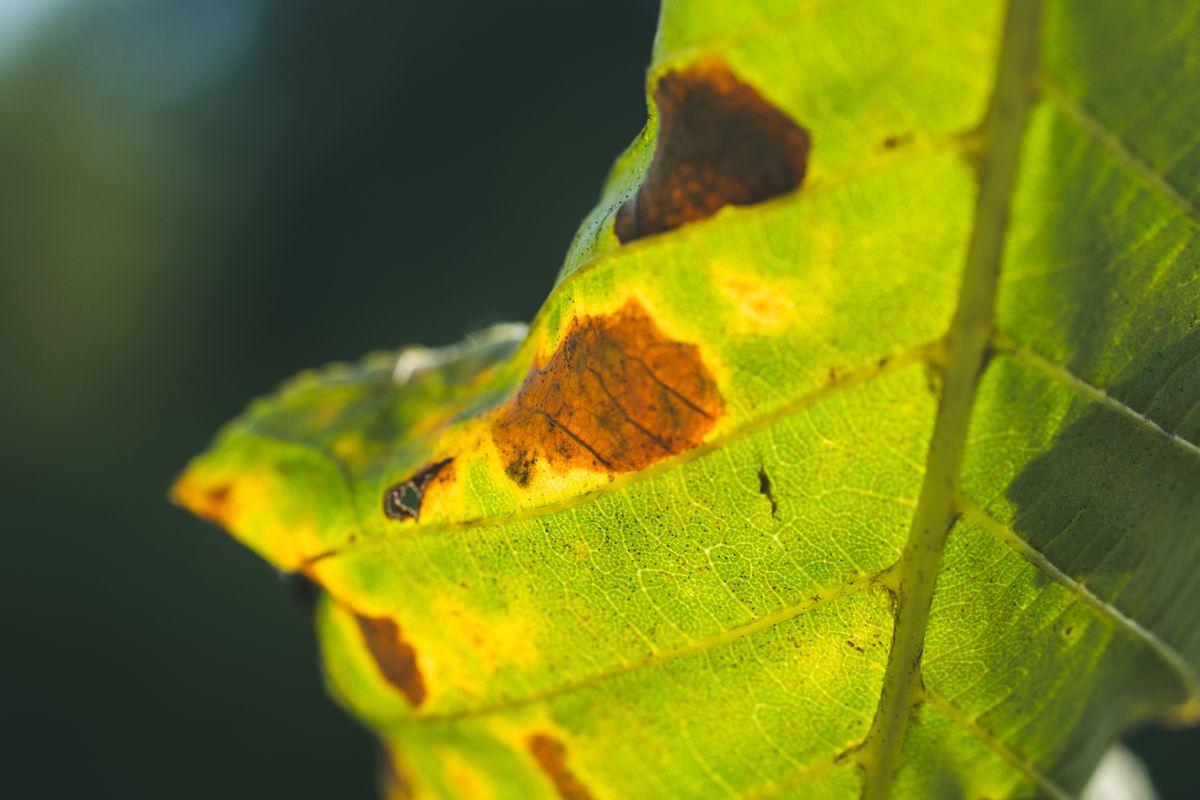
Too much direct, intense light is the whole story. Snake plants are adapted to bright, indirect light, not harsh rays. Trouble strikes most often when a plant moves from a dim corner straight into blazing afternoon sun — the leaves have no time to adjust, and the exposed tissue scorches. Other common setups: a grow light placed too close, a south-facing window with unfiltered midday sun, or a plant taken outdoors too quickly in summer.
What Causes Fungal Leaf Spot
Fungi like Phoma draconis and Colletotrichum need water to spread and take hold, landing on leaves through spores carried by water splashes, air, or contaminated tools. The most common triggers: wet foliage from misting or splashing, overwatering and high humidity, and poor airflow that keeps leaves damp longer. Fix these conditions, and the fungus loses its foothold.
How to Fix Snake Plant Sunburn: Step by Step
- Move the plant. Shift it to a spot with bright, indirect light, away from harsh afternoon rays. A sheer curtain over a sunny window works well.
- Leave the damaged tissue alone. Scorched patches won't turn green again, but they won't spread. Trim them only if the look bothers you.
- Acclimate slowly next time. When moving a plant to brighter light, do it gradually over one to two weeks so leaves can adjust.
- Water normally. Keep the usual routine, letting the soil dry between drinks — no special watering needed.
Sunburn is a one-and-done problem once the light is fixed.
How to Fix Fungal Leaf Spot: Step by Step
- Remove infected leaves. Using clean, sharp scissors, snip off badly spotted leaves at the base. Dispose of them in the trash, not compost.
- Stop wetting the foliage. Water at the soil line only, and skip misting entirely.
- Improve airflow. Space plants out and open up crowded spots. A gentle fan nearby helps leaves dry fast.
- Ease up on watering. Let the soil dry well between waterings to lower humidity around the plant.
- Clean tools. Wipe scissors with 70% alcohol or a 10% bleach solution before and after use, so spores don't spread.
- Watch for new spots. Check weekly — once conditions are dry and airy, the fungus stops advancing.
Fungal leaf spot rarely kills a snake plant. Remove its favorite damp conditions, and it fades fast.
When to Act vs. When to Ignore Brown Marks
Ignore, or just trim for looks: dry, papery sunburn patches that haven't changed in weeks are purely cosmetic. Old, isolated marks that aren't spreading are fine to leave — the plant is healthy underneath.
Act quickly: spreading spots with yellow halos need prompt attention before they hop to more leaves. Soft, mushy, foul-smelling spots near the base signal root rot, the one truly serious problem — the Why Are My Snake Plant Leaves Soft and Mushy? guide covers that separately and it calls for stopping watering right away. Tiny clustered specks may mean pests, so check the leaf undersides.
The rule of thumb: dry and stable can wait, wet or spreading needs action.
Telling snake plant sunburn vs fungal spot apart comes down to the two-question trick: dry or ringed, and spreading or still. Sunburn is dry, papery, sun-facing, and harmless once the plant is moved. Fungal leaf spot is ringed, creeping, and moisture-loving, but it fades fast when infected leaves are removed, foliage stays dry, and airflow improves. Read the pattern first, match it to the right fix, and a Dracaena trifasciata stays healthy and spot-free for years to come.
Care FAQ
How do I know if my snake plant has sunburn or fungal leaf spot?
Check texture and spread. Sunburn is dry, flat, and papery, appears only on the sun-facing side of the leaf, and never spreads. Fungal leaf spot has a dark center with a yellow halo, sometimes tiny raised dots, and slowly moves to nearby leaves. Dry-and-still means sunburn; ringed-and-spreading means fungus.
Can a snake plant recover from sunburn?
The scorched tissue will not turn green again, but the plant will be perfectly fine. Sunburn is cosmetic and never spreads. Move the plant to bright, indirect light and keep the normal care routine. Trim the damaged patches for looks if desired, though it is not required for the plant's health.
Will fungal leaf spot kill my snake plant?
Rarely. Fungal leaf spot spreads slowly and responds well to simple changes. Remove infected leaves, stop wetting the foliage, and improve airflow, and the infection usually stops advancing. Root rot, not leaf spot, is the problem that can actually be fatal, so watch for soft, mushy spots near the base.
What does anthracnose look like on a snake plant?
Anthracnose, caused by the fungus Colletotrichum, often shows darker concentric rings, a sunken feel, and sometimes tiny black dots or a sticky orange residue. It is a faster-moving form of fungal leaf spot. Remove affected leaves promptly, keep foliage dry, and boost airflow to stop it from spreading.
Should I mist my snake plant to prevent brown spots?
No, never mist a snake plant. These plants prefer dry leaves and low humidity. Misting keeps the foliage wet, which is exactly what fungal spores like Phoma draconis need to take hold. Water at the soil line only, and let the soil dry between waterings to keep leaves healthy and spot-free.
Why does my snake plant have brown spots after moving it to a sunny window?
That is classic sun scald. Moving a plant from low light to intense direct sun too quickly scorches the exposed tissue, leaving dry, papery tan patches on the sun-facing side. Move it to bright, indirect light, and next time acclimate it gradually over one to two weeks to prevent new sunburn.