
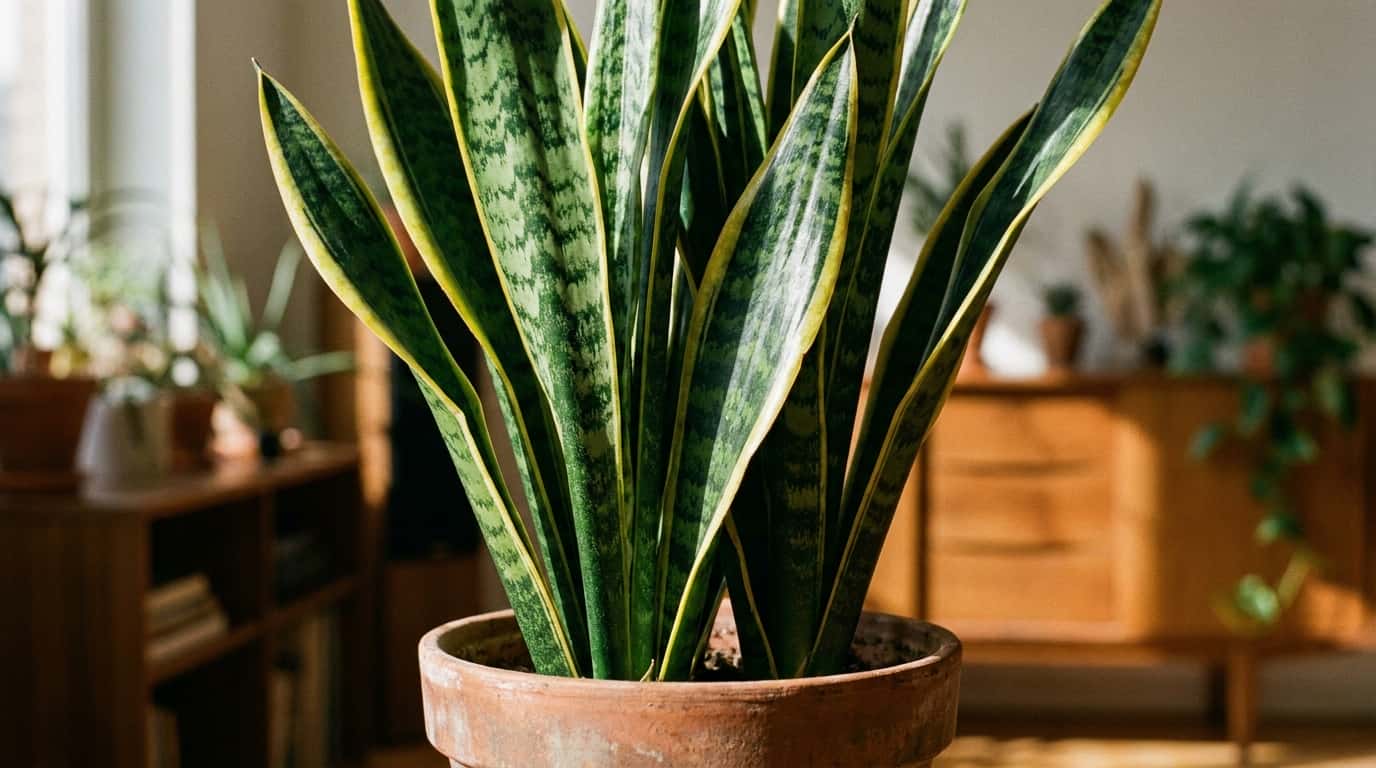
Last Updated on April 23, 2026 by Umar Farooq
This Sansevieria plant botanical guide is written for readers who want the science behind the snake plant—not just care tips, but how Sansevieria botany fits angiosperm classification, why names changed, and how leaf form, underground structure, and metabolism respond to dry habitats. The everyday term sansevieria plant still matches what people grow and search for; formally, much of that diversity now sits in Dracaena, with Dracaena trifasciata the flagship example.
What This Guide Covers
- Sansevieria taxonomy in modern systems (Asparagaceae, molecular data, and the merger into Dracaena)
- Leaf and underground plant morphology (snake plant architecture in plain terms)
- CAM photosynthesis and how it links to water-use efficiency and habitat
- African distribution, ecological niche adaptation, and optional notes on flowers and fruit
Throughout, sansevieria is treated as a monocotyledonous plant: one seed leaf, parallel-veined leaves, flower parts in threes where you see them, and a growth habit built around rhizomes and fibrous roots rather than a woody trunk.
1. Introduction: Sansevieria as a Monocot in the Angiosperms
The sansevieria plant—snake plant, mother-in-law’s tongue—is one of the most recognizable monocotyledonous plants in homes and collections. Its strap-like or cylindrical leaves and extreme toughness are not accidents; they are the visible side of xerophytic adaptations that evolved in seasonal, often dry landscapes.
In angiosperm classification, sansevieria-type taxa belong to the family Asparagaceae (within the order Asparagales). They are closer to garden asparagus and many “lily-like” lineages than to true grasses or palms, but they share the monocot body plan: leaves with parallel venation, scattered vascular bundles in the stem (when a stem is present), and—critically for this guide—a strong tendency toward vegetative reproduction in monocots when conditions favor persistence over seedling recruitment.
This article keeps pure botanical intent: names, structure, physiology, and ecology—not a substitute for a houseplant watering schedule.
2. Sansevieria Taxonomy and the Dracaena Merger
2.1 Historical genus Sansevieria and sansevieria reclassification
For decades, horticulture and field guides used the genus Sansevieria for the snake-plant alliance. Sansevieria taxonomy was stable in practice but fragile in phylogenetic terms: specialists suspected the group did not stand alone relative to Dracaena.
Molecular phylogenetics in plants—using DNA to reconstruct Dracaena phylogeny—showed that separating Sansevieria from Dracaena left Dracaena in a biologically awkward state. In cladistic classification, groups are expected to include an ancestor and all of its descendants. Keeping Sansevieria separate produced paraphyly in plant taxonomy for Dracaena: some descendants of the same ancestral lineage were labeled as two genera. That conflict, not a whim of nomenclature, drove the sansevieria reclassification that folded these species into Dracaena (with new combinations such as Dracaena trifasciata for the classic banded snake plant).
2.2 Asparagaceae classification and Nolinoideae subfamily
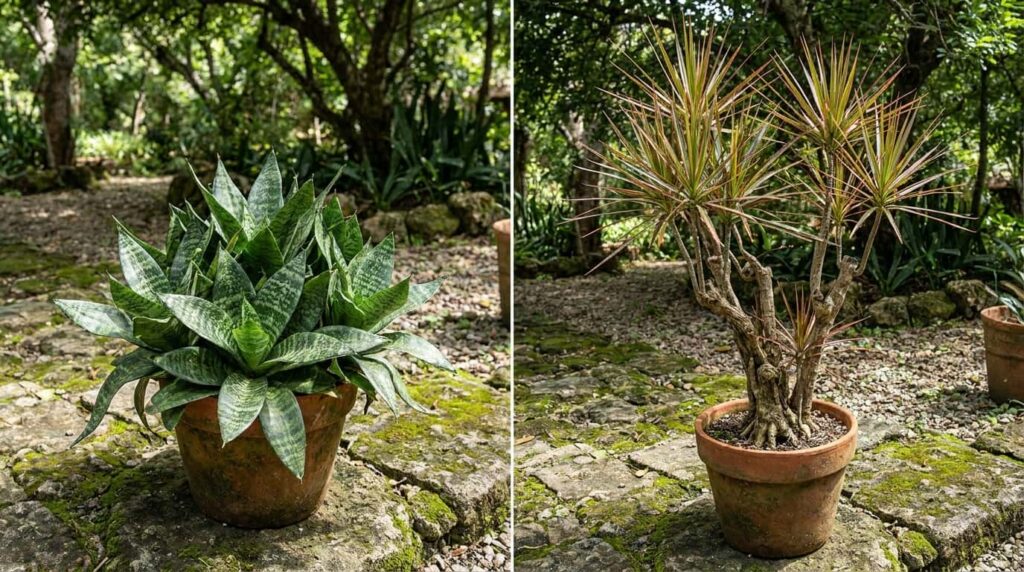
Within the Asparagaceae classification, sansevieria-type plants fall in the Nolinoideae subfamily—the same subfamily that houses many Dracaena species you may know as dragon trees or shrubby dracaenas. Nolinoideae is a useful bookmark: it tells you these plants share a recent common ancestry with other often-leathery, drought-tolerant, or shade-tolerant Asparagaceae lineages, even when leaf shape differs wildly.
You do not need to memorize every branch of the tree. For this guide, the practical takeaway is: modern sansevieria botany treats these species as Dracaena in official nomenclature, while “sansevieria” remains the everyday name for the same monocotyledonous plant complex.
3. Native Range and Ecological Context (Without Keyword Dumping)
3.1 African flora distribution and neighbors
Sansevieria-type Dracaena species are overwhelmingly part of the African flora distribution, with extensions into nearby regions for some taxa. Dracaena trifasciata is associated with West and West–Central Africa; other species occupy rocky hills, woodland understories, or more open ground elsewhere on the continent and beyond.
3.2 Tropical savanna vegetation, semi-arid edges, and niche

In the field, you often meet these plants where tropical savanna vegetation grades into drier pockets: grass–tree mosaics, rocky slopes, and well-drained soils that dry between rains. They are classic semi-arid ecosystem plants only in the sense that many populations experience seasonal water shortage—not necessarily desert, but rarely boggy for long.
Their ecological niche adaptation is easiest to read from the whole organism: leaves that resist desiccation, rhizomes that survive bad years, and CAM (below) that improves drought tolerance mechanisms when the air is dry, and the soil is intermittently moist, not continuously wet.
3.3 Edaphic adaptation (soil, briefly)
Where edaphic adaptation matters for sansevieria, it is usually simple: shallow, fast-draining substrates, rock crevices, or sandy pockets that limit root drowning. The plant is not asking for rich mud; it is asking for gas exchange at the root and a rhythm of wet–dry cycles.
4. Plant Morphology (Snake Plant): Leaves, Cuticle, and Underground Architecture
This section concentrates on the strongest morphological terms and what they do.
4.1 Leaf morphology (linear-lanceolate vs. cylindrical)
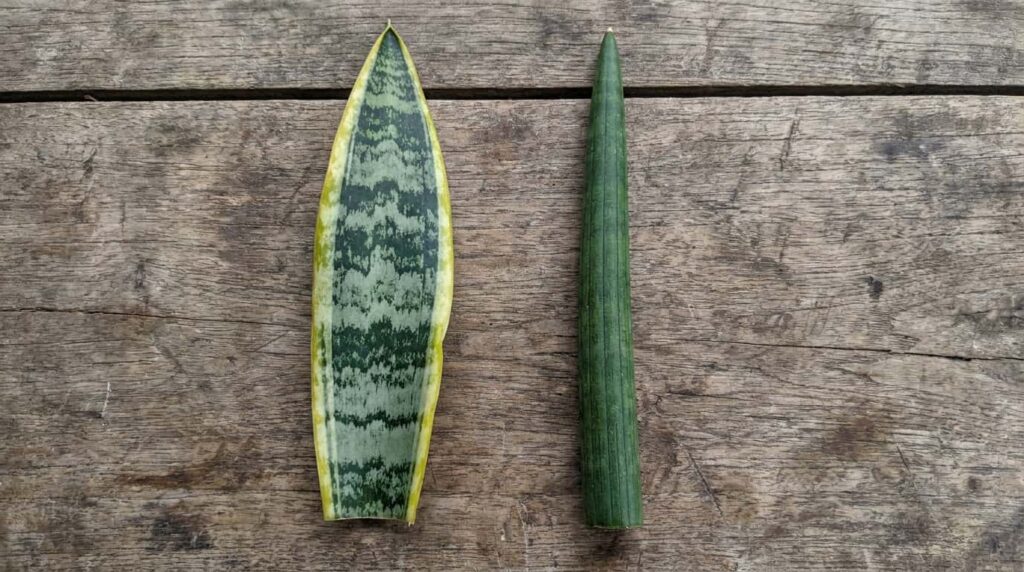
Two leaf themes dominate plant morphology. Snake plant collectors notice:
- Linear-lanceolate leaves are long, narrow, and tapering—think of the classic sword-shaped blade of Dracaena trifasciata: stiff, erect, and often cross-banded.
- Cylindrical leaves reduce flat surface area exposed to sun and dry air—useful where exposure is brutal. Tubular or semi-tubular forms are part of the same xeromorphic leaf structure toolkit: manage light, heat load, and boundary-layer dynamics differently than a broad blade.
Both forms are xeromorphic: built for dry-side life even when the plant is not a cactus.
4.2 Cuticle thickening in plants and hypodermal water storage tissue
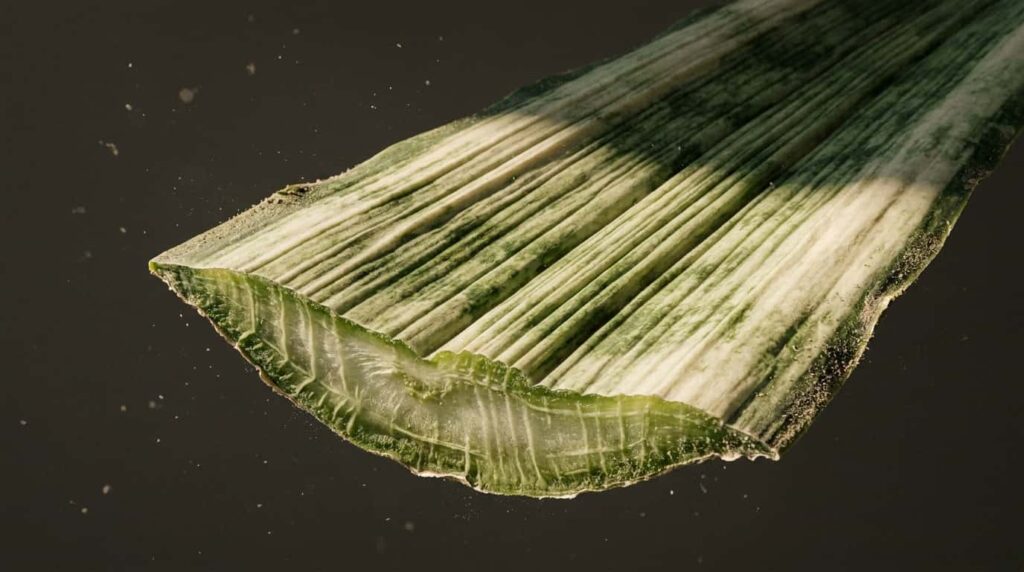
A thick, waxy cuticle is standard equipment here. Cuticle thickening in plants is one of the first lines of transpiration reduction mechanisms: it raises the barrier to uncontrolled water vapor loss. Beneath the epidermis, many sansevieria-type leaves develop hypodermal water storage tissue—a region of cells that can hold water and buffer the leaf against short droughts. Together, cuticle + hypodermis explain the leathery feel and the “succulent function” people describe, even when the plant is not a stem succulent in the cactus sense.
4.3 Rhizomatous growth habit, underground rhizomes, adventitious roots

Above ground, you see leaves; below ground, the story is often a rhizomatous growth habit. Underground rhizomes are horizontal storage stems that creep or cluster, sprouting new shoots and adventitious roots (roots arising from non-root tissue, here the rhizome). That architecture powers clonal propagation via rhizomes: one genetic individual can spread across a patch, an advantage when seed establishment is unreliable.
In cultivation, division works because you are splitting the same modular system nature uses—vegetative reproduction in monocots at its most practical.
5. CAM Photosynthesis and Carbon–Water Tradeoffs
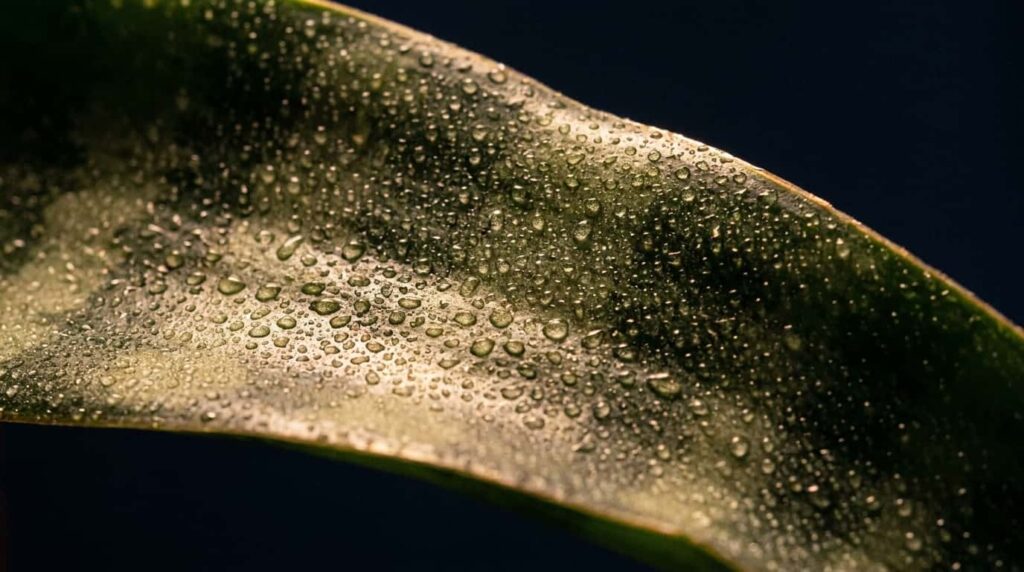
Many sansevieria-type species use CAM photosynthesis—Crassulacean Acid Metabolism—or show strong CAM tendencies. Stated for habitat context, not laboratory detail:
- Nocturnal stomatal opening allows CO₂ uptake when temperatures are lower and evaporative demand is reduced.
- Acid storage overnight and decarboxylation by day tie CAM to carbon fixation pathways that separate CO₂ capture from the Calvin cycle in time, not only in space.
- The payoff is water-use efficiency in plants living through long dry spells or low-humidity air: gas exchange is timed to waste less water per unit carbon gained.
CAM is not magic indoors; it is evolutionary plant physiology meeting xerophytic adaptations that originated in seasonal environments. It also clarifies why overwatering injures the root system: the shoot is built for a wet–dry rhythm, not permanent sogginess.
6. Growth, Persistence, and Optional Reproductive Detail
6.1 Slow perennial life and clonal persistence
Growth is typically slow, favoring tough tissue over soft, fast expansion. Clonal propagation via rhizomes can let a genotype persist for many years, with new leaves emerging from the center of the rosette while older leaves age outward.
6.2 Flowers, inflorescence spike morphology, and berry fruit development
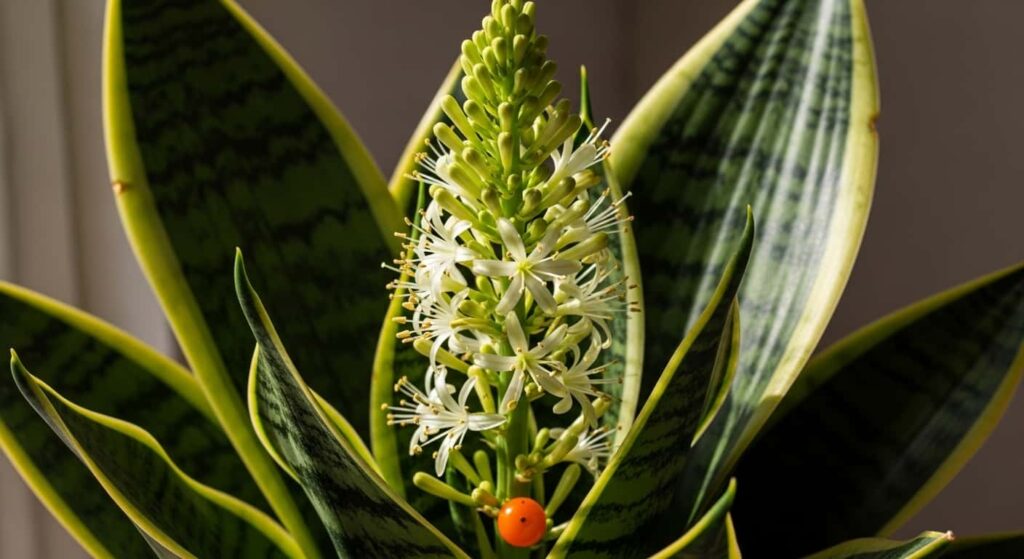
Flowering is sporadic indoors but informative botanically. Mature plants may produce a tall inflorescence—often described as a spike of small, pale, fragrant flowers. Inflorescence spike morphology here is part of the sansevieria signature: a vertical scaffold that lifts flowers into the air column visited by night-flying visitors, where they exist.
In nature, nocturnal pollination syndrome traits—night fragrance, pale coloration—align with entomophily (insect pollination), often associated with moths or other visitors adapted to dark hours. After successful pollination, berry fruit development can yield fleshy fruits (orange-toned in some taxa), a modest investment in sexual reproduction alongside the dominant vegetative strategy.
7. Advanced Themes (Used Sparingly)
Two ideas belong here only as explanation, not decoration.
Convergent evolution in succulents is visible when sansevieria-type leaves echo cactus-like water-saving tactics—thick cuticle, succulence, CAM—without implying a close relationship to cacti. The match is functional, not familial.
Adaptive radiation in dry habitats is a big phrase; for this group, the modest version is enough: within Asparagaceae and Nolinoideae, lineages diversified leaf form and habit to exploit rocky, seasonal, and semi-open sites across African flora distribution—a pattern of divergence you can read as habitat-driven, without turning the article into a textbook chapter.
8. Horticultural Snapshot (Names You Will See)
- Dracaena trifasciata — classic flat, banded sansevieria plant; baseline for sansevieria botany introductions.
- Dracaena angolensis (formerly Sansevieria cylindrica) — cylindrical leaf morphology in fan-like arrays.
- Dracaena masoniana, Dracaena hahnii, and allies — broad or dwarf rosettes illustrating how one evolutionary theme spans many silhouettes.
Formal names follow sansevieria reclassification; common names follow living rooms.
9. Summary
This Sansevieria plant botanical guide ties everyday language to rigorous Sansevieria taxonomy: a monocotyledonous plant lineage in Asparagaceae, Nolinoideae, now largely treated as Dracaena because molecular phylogenetics resolved paraphyly in plant taxonomy and aligned names with cladistic classification. Dracaena trifasciata remains the emblematic species.
Morphology—linear-lanceolate or cylindrical leaves, cuticle thickening in plants, hypodermal water storage tissue, underground rhizomes, and adventitious roots—supports clonal propagation via rhizomes and vegetative reproduction in monocots. CAM photosynthesis (Crassulacean Acid Metabolism) links nocturnal stomatal opening to water-use efficiency in plants and clarifies drought tolerance mechanisms in semi-arid ecosystem plants and tropical savanna vegetation contexts across African flora distribution.
Optional but real: inflorescence spike morphology, nocturnal pollination syndrome, entomophily, and berry fruit development complete the picture of a genus better known for leaves than for flowers—but fully, undeniably, an angiosperm story.
If you take one scientific message home, let it be this: the sansevieria plant is not merely decorative. It is a xeromorphic monocot whose ecological niche adaptation, CAM physiology, and rhizomatous body plan are the same reasons it tolerates the imperfect environments we give it.

Leave a Reply